
By: Sarah Nilsson, AG Ambassador – Drone and AAM Law
If you are hoping to see electric vertical takeoff and landing (eVTOL) aircraft finally moving from test programs to real routes in 2026, you should watch Joby, Archer, BETA and Wisk. While each continues to advance along a slightly different path, together they seem to be defining what early advanced air mobility (AAM) will actually look like in U.S. and global airspace.
Joby Aviation: 2026 eVTOL Air Taxi Launch and Pilot Pipeline

Joby Aviation (NYSE: JOBY) enters 2026 with its FAA‑conforming S4 test aircraft progressing through Type Inspection Authorization (TIA), a major step in the final stage of type certification (note: it’s about 70% there). The company built this aircraft under its FAA‑approved quality system, with conforming components. Each vehicle undergoes thousands of integration tests that will feed directly into “for‑credit” flight testing with FAA pilots.
The company has already completed more than 600 test flights and expanded its Marina, California facility to 435,000 square feet. The FAA also authorized Joby’s air taxi operating software system known as “ElevateOS.”
It prepares to launch commercial air taxi service in major markets, such as Los Angeles and New York, once certification is complete, potentially as early as next year. Joby’s partnerships with Uber for app integration and Delta Air Lines for airport connectivity indicate its intent to make eVTOL trips a natural extension of existing commercial air travel.
Joby Aviation Academy and 2026 Powered‑Lift Training Readiness
Joby Aviation Academy (JAA), a wholly owned subsidiary of Joby, has positioned itself as a primary source of commercial pilots and maintenance professionals for the company’s future air taxi operations. Located at Watsonville Municipal Airport, California, the Academy currently focuses on single‑engine training in Van’s RV‑12iS aircraft. It also offers an 11-week FAA‑authorized Light Sport Repairman Maintenance Airplane (LSRMA) course that blends online theory with an in‑person, hands‑on final week.
While JAA does not yet offer powered‑lift or S4‑specific training, it has put the structure in place to pivot with such fully defined curricula, once the FAA grants type certification and powered‑lift ratings. That means 2026 could be the year JAA transitions from traditional light‑sport training into a more direct pipeline to support Joby’s eVTOL fleet and maintenance requirements.
Joby Defense Projects, Lawsuit and Global AAM Partnerships
Joby has also built a dual‑use portfolio that extends beyond civil air taxis. It initially forayed into this arena with the U.S. Air Force. In its more recent partnership with L3Harris Technologies, the company has developed a hybrid electric‑and‑gas turbine aircraft for defense missions. Test flights are already underway, with demonstrations planned for 2026.
On the competitive front, Joby filed a lawsuit in November 2025 in Santa Cruz County Superior Court against Archer Aviation and a former employee, alleging misappropriation of trade secrets related to strategy, partnerships and aircraft specifications. Specifically, its complaint alleges that former employee George Kivork downloaded and forwarded confidential files before leaving for Archer, and that those trade secrets were used by Archer in an August 2025 proposal that undercut Joby’s existing real‑estate vertiport agreement. Joby seeks monetary damages and a court order to restrict Archer’s use of the disputed information. Archer has formally denied the accusations and indicated it intends to vigorously defend itself. The case remains in active litigation, with no reported resolution.
At the same time, Joby has expanded its global footprint through partnerships in Japan, the United Arab Emirates and South Korea. As part of a partnership with ANA, it flew publicly at Expo 2025 Japan. The company also collaborated with Ras Al Khaimah Transport Authority and Skyports in Dubai, as well as SK Telecom in South Korea.
Archer Aviation: Midnight eVTOL Air Taxi Growth and 2026 Certification Goals
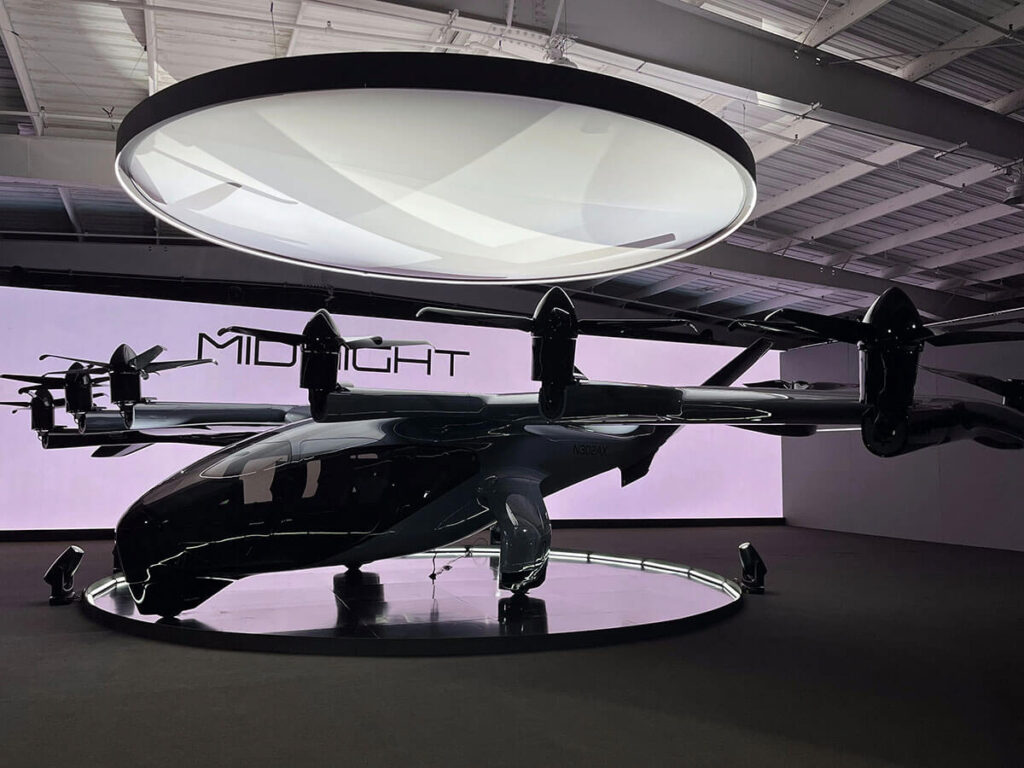
Archer (NYSE: ACHR) has developed the Midnight, a piloted eVTOL designed for four passengers plus a pilot and optimized for short, high‑frequency city‑to‑city or city‑to‑airport hops. As 2026 begins, Midnight is in the final stage of the FAA type certification process. It already passed its final airworthiness criteria and moves now toward compliance and flight test phases which should position it for full certification thereafter.
The company has ambitious plans for a metropolitan air taxi network in South Florida, connecting Miami, West Palm Beach, Boca Raton and Fort Lauderdale through partnerships with major real‑estate projects and innovation districts (Related Ross and Magic City Innovation District). Archer also demonstrated Midnight’s range, low‑noise characteristics and overall performance with a 55‑mile piloted flight and public demonstrations at the California International Airshow.
Archer Manufacturing, Airline Partners and LA Event Operations
To support scaled operations, Archer has opened a high‑volume manufacturing facility in Georgia designed to produce Midnight aircraft at a steady monthly rate. United Airlines’ 10‑million‑dollar pre‑delivery payment for a 100‑aircraft order anchors Archer’s vision of eVTOL as a feeder and connector for airline hubs and seems to validate its commercial air taxi model.
In Los Angeles, Archer continues to align its operational timeline with major events. The company intends to be ready to operate before major 2026 events such as the FIFA World Cup. It has targeted a prominent role as the official air taxi provider for the LA28 Olympic and Paralympic Games, in part, through its $126 million USD acquisition of Hawthorne Municipal Airport as an eVTOL hub and AI test bed.
Archer Defense, Powertrain Licensing and Global eVTOL Networks
Archer continues to also build a strong defense and dual‑use presence. Under a multi‑million‑dollar U.S. Air Force contract through AFWERX Agility Prime, Air Force leaders are evaluating the Midnight aircraft for military applications. As part of this, Archer has collaborated with Karem Aircraft to leverage military‑grade rotor technologies for future VTOL platforms.
In addition, Archer has started to license its proprietary electric powertrain to third parties, beginning with Anduril Industries and EDGE Group for their Omen autonomous air vehicle program.
On the international side, Archer has announced partnerships across the United Arab Emirates, Saudi Arabia, Korea, Japan, Africa and India, with operators such as Jetex, Abu Dhabi Aviation, Falcon Aviation, Air Chateau, Korean Air, Japan Airlines, Ethiopian Airlines, The Helicopter Company, Red Sea Global and InterGlobe set to build eVTOL networks, as certification and infrastructure progresses.
BETA Technologies: ALIA CX300 Electric Aircraft and AAM Charging Network
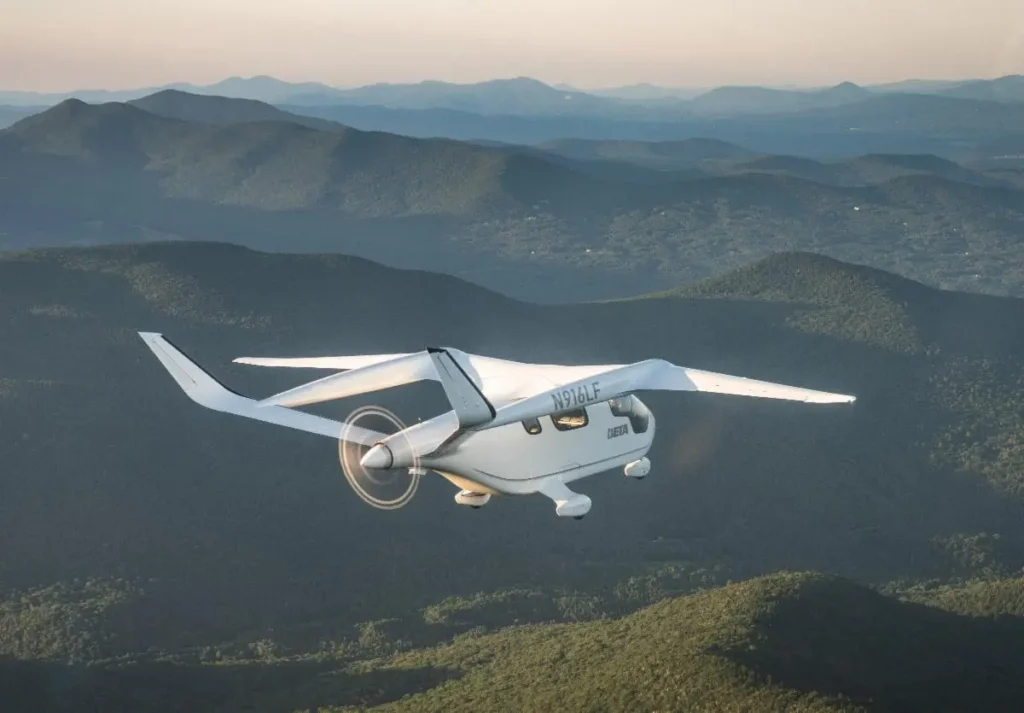
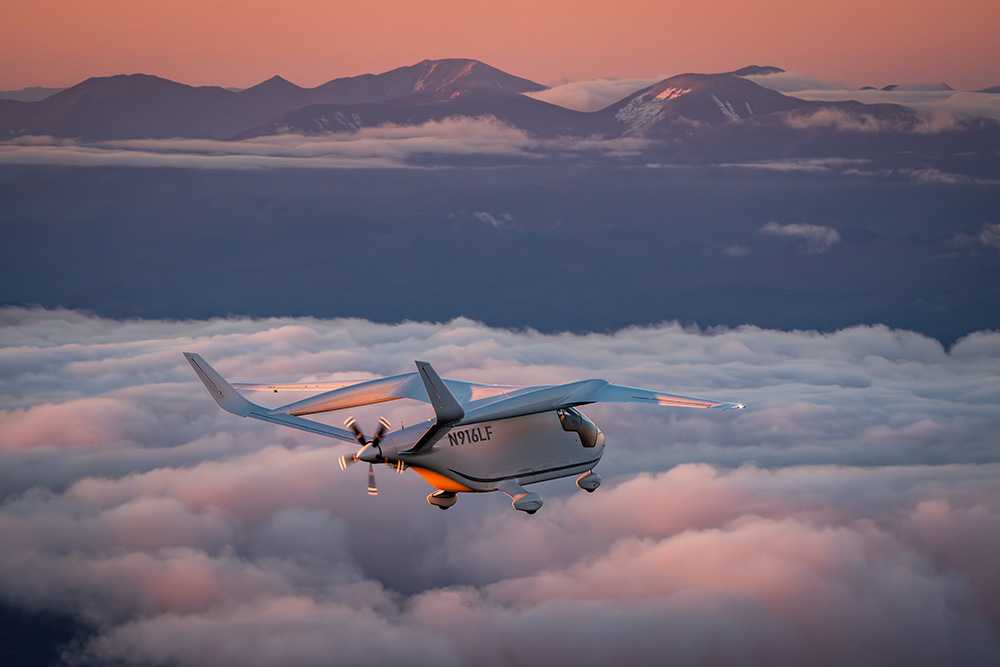
BETA Technologies (NYSE: BETA) is developing a holistic electric aviation ecosystem centered on its ALIA platform and a proprietary, multimodal charging network. The company’s ALIA family includes the CX300 conventional takeoff and landing variant and the ALIA 250 VTOL model. The company designed both for missions ranging from cargo and logistics to passenger, defense and medical operations.
The CX300 is targeting FAA certification in early 2026, with the VTOL ALIA 250 to follow. BETA has already received FAA approval for dual‑seat pilot training in the ALIA 250 to train both company and FAA personnel. BETA develops and manufactures its own propulsion systems and components and supplies them to other original equipment manufacturers (OEMs), including partners such as Eve Air Mobility.
BETA Electric Aviation Charging Network and Training Programs
BETA’s commercial strategy includes an expanding network of “Charge Cubes,” multimodal charging stations that can power both electric aircraft and ground electric vehicles (EVs). As of late 2025, the company had more than 50 sites online across 22 U.S. states, established in partnership with fixed‑base operators (FBOs), airports and public agencies. Most of these are concentrated in the eastern United States.
To support safe operations, BETA offers comprehensive training programs that include simulators and virtual reality (VR)‑based tools for pilots and maintainers. Customers such as the U.S. Air Force, UPS and Bristow already use these tools to prepare personnel ahead of larger‑scale fleet deployments. This gives BETA a head start on operational readiness, as its aircraft near certification.
BETA Defense Missions and Global AAM Collaborations
BETA has built a strong presence in U.S. defense programs through the Agility Prime initiative, working with the Air Force, Army and Marine Corps. The company has delivered manned electric aircraft for testing, and its platforms have supported exercises such as cargo transport and medevac simulations. These provided valuable data on performance and logistics in demanding environments.
Globally, BETA has collaborated with Near Earth Autonomy to develop uncrewed military aircraft and with CAE to deliver integrated pilot and maintenance training solutions. These partnerships position BETA as a versatile AAM provider whose technology can scale from regional logistics and air taxi operations to specialized defense and autonomous missions.
Wisk Aero: Autonomous eVTOL Air Taxi Roadmap and FAA Powered‑Lift Integration
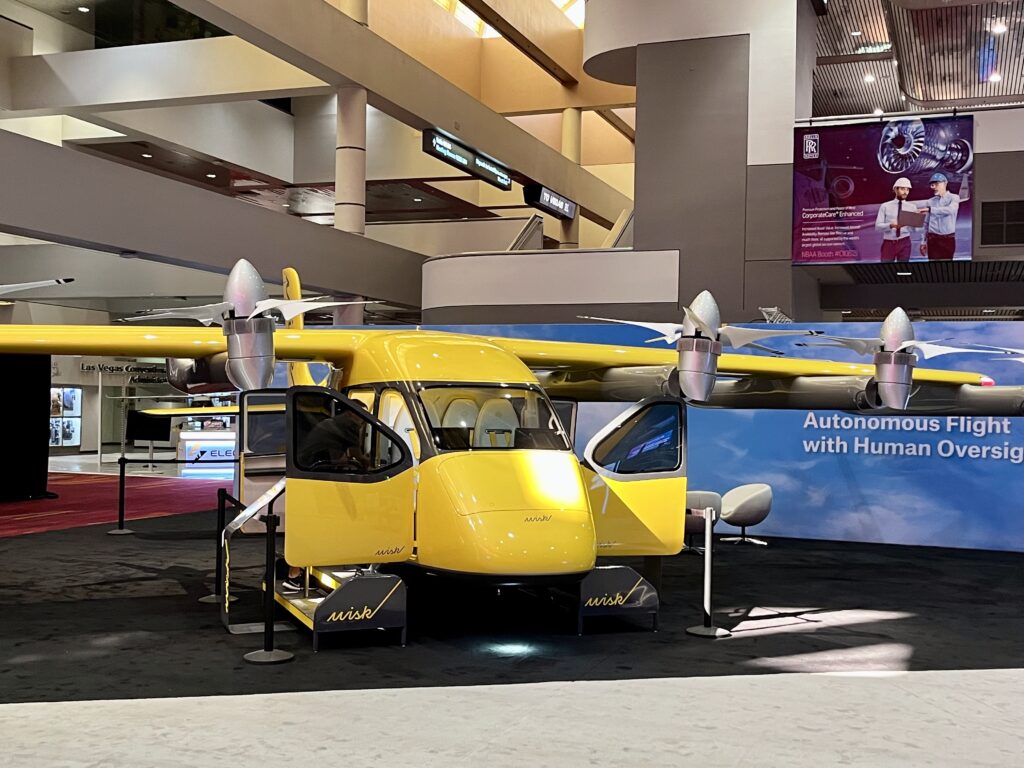
Wisk Aero, a wholly owned Boeing subsidiary, is taking a different path than these others, by focusing on day-one fully autonomous, all‑electric eVTOL air taxis. The company has iterated through six generations of aircraft and completed more than 1,750 test flights, with its four‑seat, sixth‑generation design, with no onboard flight controls and remote supervision.
Wisk’s strategy is to bring the first self‑flying air taxi to market, arguing that autonomy is essential for safety, scalability and economic viability in dense AAM networks. Planned early markets include cities such as Houston, Los Angeles and Miami. Wisk is working closely with NASA on research into how autonomous aircraft will integrate into the national airspace system (NAS). It has partnered with Signature Aviation, the world’s largest network of private aviation terminals, to develop global vertiport infrastructure to support their autonomous air taxi network. The company also targets FAA certification. Given its fully autonomous design, this may take longer than its peers.
Wisk Global AAM Markets and Military‑Related Research Programs
Internationally, Wisk plans autonomous air taxi services in Brisbane, Montreal and additional cities around 2030, once certification and infrastructure are in place. In Australia, it has partnered with Skyports to develop infrastructure in South East Queensland, with an eye on the Brisbane 2032 Olympic and Paralympic Games. In New Zealand, it participates in the government’s Airspace Integration Trials program for advanced uncrewed aircraft.
Through its relationship with Boeing and its work with NASA, Wisk engages in research that has both civil and military relevance, particularly around autonomous operations in complex urban airspace. Expect these efforts to shape the standards, procedures and technology stack for future autonomous AAM systems, both commercial and defense.
FAA Powered‑Lift Regulations and 2026 AAM Milestones
All four companies operate within the FAA’s emerging and supportive powered‑lift regulatory framework, which now includes SFAR No. 120 in 14 CFR Part 194 and associated advisory circulars (ACs 194-1, 194-2) for operations and pilot training, and new Airman Certification Standards (ACS) for various powered-lift ratings (Private, Commercial, Instructor). These rules adapt existing operational frameworks under Parts 91 and 135 to account for eVTOL flight controls, training needs and integration into the NAS.
In 2026, the AAM industry should be watching for several key milestones:
- Type certification decisions for early aircraft
- Progress on powered‑lift ratings and training programs
- Build‑out of vertiports and charging networks and
- The first commercial routes in a handful of U.S. and international cities.
Without a doubt, 2026 holds promise. Whether or not these “Big Four” hit every target date, 2026 seems set to be a pivotal year to turn AAM from vision statements into real operations. The FAA certification office should produce some type certificates. Some vertiports should complete construction. We might even hope for some FAA type-rated pilots to start flying the first eVTOL routes. Too ambitious? Perhaps. But we can still dream, can’t we?