
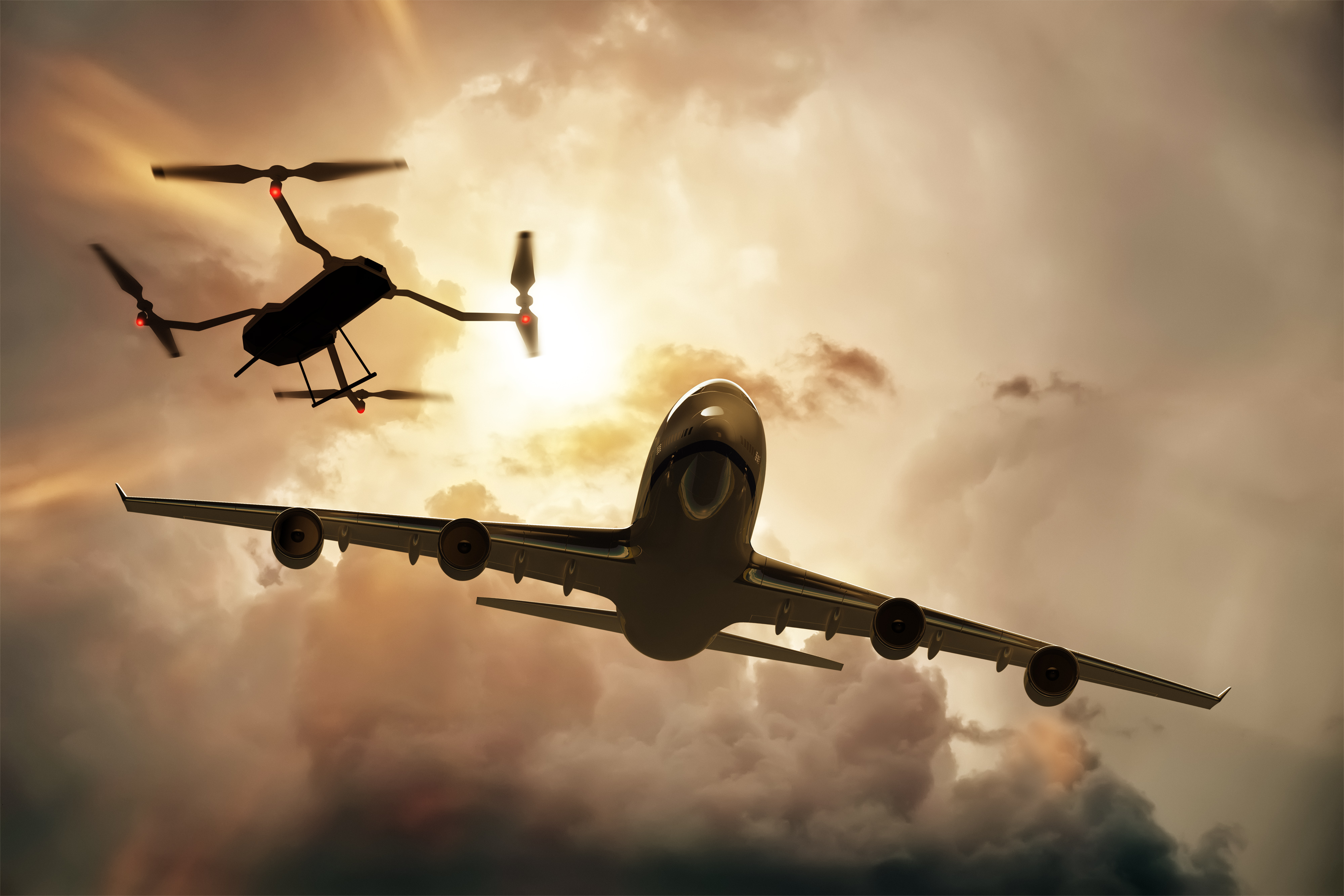
A midair collision between two firefighting helicopters in Greece this August, which resulted in a tragic loss of life, exposed a critical gap in aviation safety. Current collision avoidance technology does little to protect aircraft flying in close coordination at low altitude. Closing that gap requires a new way for aircraft to talk to each other in real time.
Aircraft That “Talk” to Each Other Are Safer
Most airplanes and helicopters avoid midair collisions using two systems, called TCAS II and ACAS X. Both systems only work well when aircraft are cooperative, meaning they carry a working transponder or a technology called ADS-B that constantly broadcasts an aircraft’s location to everyone nearby. Some versions of ACAS X can also try to spot aircraft that aren’t broadcasting their location, using radar, cameras, or even sound sensors, but that kind of detection is much less reliable and only works at short range.
Online sources report 36 midair collisions since 2020, and in only 11 of those, just over 30%, did both aircraft appear to be broadcasting their location at the time of the crash. Eighteen of the 36 collisions happened in U.S. airspace, and only 7 of those 18, or 39%, involved two aircraft that were both broadcasting. That matters because FAA data shows more than 80% of U.S. registered aircraft already carry this broadcasting equipment, and at any given moment, an estimated 85% to 95% of crewed aircraft flying in U.S. airspace are using it. Put simply, the more aircraft that broadcast their position, the fewer midair collisions happen.
Flying Close Together Breaks the Safety System
Here’s the problem: aircraft flying in formation, refueling each other in midair, or working together on a mission like fighting a wildfire, need to fly close to one another on purpose. But TCAS II and ACAS X weren’t built for that. They assume any nearby aircraft is a threat, so they sound constant alarms and issue nonstop “move away” commands, even when the pilots know exactly what they’re doing and want to stay close together.
Making things worse, TCAS II simply turns itself off below 1,000 feet, because avoiding a collision using that system relies on climbing or descending, which isn’t safe that close to the ground. ACAS X can move sideways instead of just up and down, but it also stops working well within a few hundred feet of the ground. That’s exactly the altitude where firefighting aircraft have to operate, which means today’s technology offers them essentially no protection. This problem is why in August of this year two helicopters fighting a wildfire in Greece collided and crew members lost their lives.
A Fix Already Exists
ADS-B, the technology that broadcasts an aircraft’s position, genuinely helps prevent collisions. But it has a built-in flaw: a delay of up to two seconds between when a plane sends its location and when another plane receives it. Two seconds sounds tiny, but at the speeds and distances involved in close formation flying, that’s enough time for aircraft to collide before either pilot even gets a warning. That delay makes ADS-B useless for the kind of close, coordinated flying firefighting missions require.
The fix is a more direct radio connection called Vehicle-to-Vehicle technology, or V2V. Think of it like a private, instant phone line between two aircraft instead of a public radio broadcast that takes time to reach and process. V2V removes the delay almost entirely, so aircraft can fly close together safely while still getting an immediate warning if something actually goes wrong.

My company, Sagetech Avionics, which builds airspace safety equipment, teamed up with an Israeli company called Ciconia Ltd to build a system called C&CAS, short for Coordination and Collision Avoidance System, that runs on this V2V technology. It gives pilots real-time awareness of nearby aircraft, warns them before a collision happens, and can even send automatic commands to a drone’s autopilot to steer it out of danger. A joint U.S.-Israeli government research fund from The BIRD Foundation, tied to both countries’ homeland security departments, helped pay for the system’s development.
This past summer, engineers installed C&CAS on several crewed helicopters and a firefighting drone. The San Bernardino County Fire Department then hosted a live test, watched by several other California fire agencies, that recreated the kinds of close encounters that happen during real wildfire response, both between two crewed aircraft and between a crewed aircraft and a drone. The test showed that C&CAS gave pilots and drone autopilots enough warning time to avoid a collision, even while multiple aircraft flew coordinated maneuvers close to one another.

Something Is Still Missing
NASA runs a program called ACERO that helps firefighting agencies plan and manage aircraft more effectively during wildfires, using tools like a system called PAMS to organize airspace from the ground up. That’s valuable, but it’s a planning tool, not a last-second safety net.
What’s still missing is technology onboard the aircraft itself that can step in as a final safeguard if a collision is about to happen. A V2V system like C&CAS fills that role. It works even at low altitude, and just as important, it stays quiet unless a real emergency is unfolding. That last point is more crucial than it might seem. If a safety system cries wolf too often in busy airspace, pilots start ignoring it. Previous tests with the Israeli Defense Force, aircraft manufacturers, and San Bernardino firefighters show that C&CAS earns pilots’ trust by only speaking up when it truly needs to.
The System Needs Its Own Radio Channel
Right now, C&CAS sends its V2V signals over an open, unlicensed radio frequency that anyone can use for all sorts of everyday devices. That’s a real risk for a system this important. Imagine if a life-saving alert got drowned out or delayed because too many other devices were crowding the same frequency. To fully solve this problem, regulators need to set aside a dedicated radio frequency reserved just for C&CAS and similar safety systems, so the signal is never at risk of interference.
As the skies get busier with both crewed and uncrewed aircraft, protecting this kind of safety technology becomes essential. Giving V2V systems their own dedicated radio frequency would let more aircraft, whether flown by a human or a computer, safely fly close together on shared missions like firefighting, without putting lives at risk.