
By Arie Egozi, Autonomy Global – Ambassador for Israel
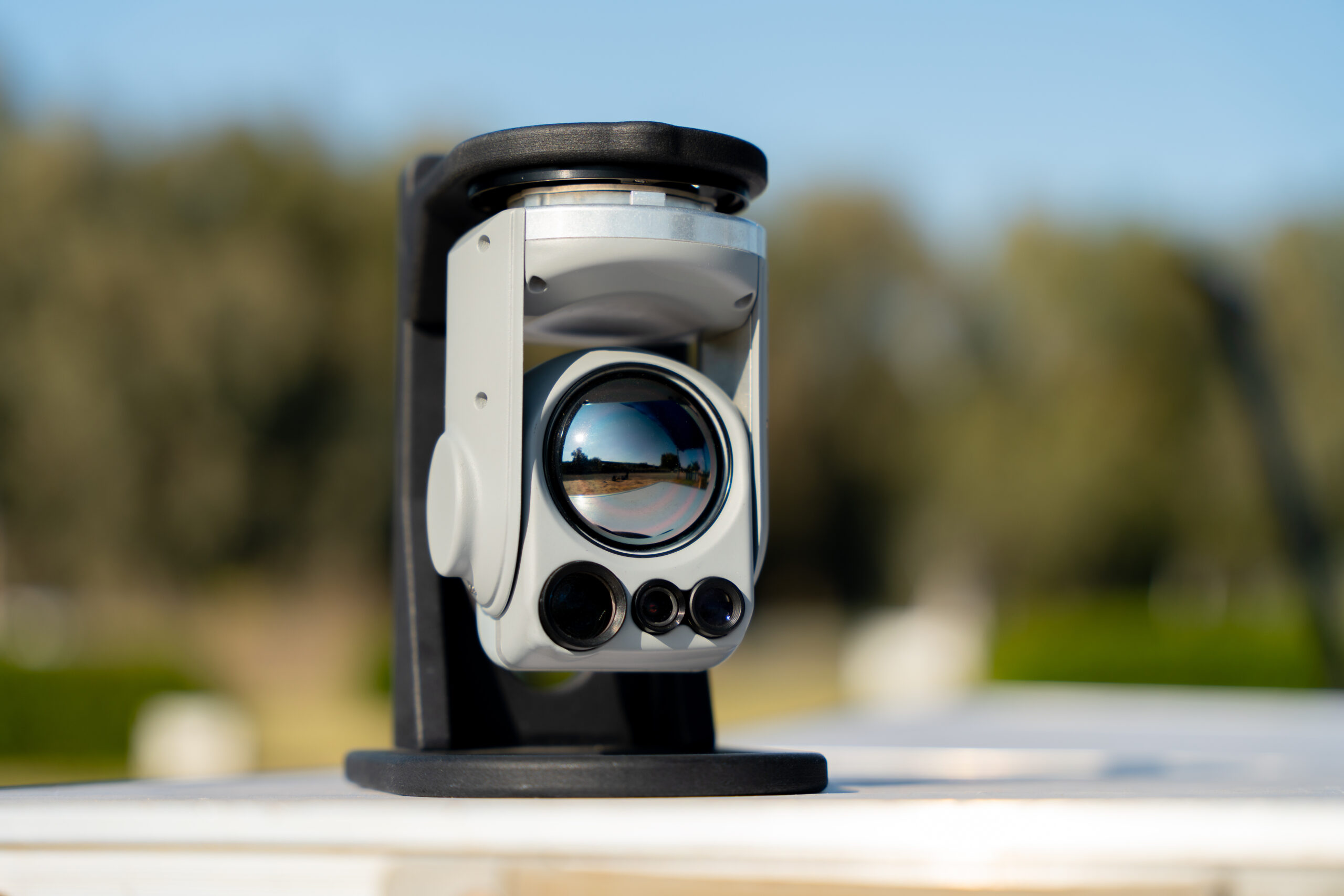
The demand for the small, lightweight payloads developed by Israeli company NextVision Stabilized Systems continues to reach new heights as militaries race to field more drones and loitering munitions. The company’s integration of AI into ultra-light Electro-Optical and Infrared (EO/IR) gimbals is giving its systems a decisive performance edge in current conflicts.
In an exclusive discussion with Autonomy Global, Chen Golan, NextVision’s chairman and founder, said that the unprecedented increase in the use of different types of drones in recent military conflicts has made the company’s compact optical payloads a much-wanted item across many armed forces, especially given cost, flexibility and platform-agnostic integration. “When you compare size and weight to performance, the reason for the big demand for our payloads is clear,” he said.
Golan added that many armed forces have accelerated the acquisition of drones and loitering weapon systems. This has created urgent demand for affordable, high-performance mission-ready sensors without adding significant weight or power burden. “We offer light and small payloads that give any unmanned aerial system the needed capabilities to perform its missions,” he said.
NextVision’s AI-Driven Payload Portfolio
NextVision, based in Israel, specializes in micro-stabilized gimballed EO/IR payloads for drones, ground vehicles and maritime platforms, with a primary focus on military surveillance, reconnaissance and targeting missions. The company’s systems emphasize ultra-lightweight design, advanced image stabilization, AI-enhanced tracking and long-range zoom for ISR operations in contested environments.
The portfolio spans lightweight cameras under 350 grams up to high-end systems of around 2 kg, enabling integration on everything from small quadcopters to larger Group 2 and 3 unmanned aircraft. The X80 series stands out with a 145-gram payload offering ×80 optical zoom, HD resolution (720p/1080p), and object tracking for long-range observation, while newer variants add laser capabilities for targeting and designation.
Flagship Systems for UAV and Loitering Munition Operators
NextVision’s lineup includes several flagship systems tailored to different platform classes and mission profiles. Among them:
- Raven 2.5: A 2 kg dual EO-MWIR system with cooled thermal imaging and an optional 1 km laser rangefinder for day/night targeting.
- Condor: A 1.5 kg gimbal with ×80 zoom for persistent ISR from larger UAVs and manned platforms.
- Raptor: A 640 g dual EO-LWIR payload with 80× EO and 22× IR zoom and an optional laser illuminator for enhanced low-light and night operations.
Across these families, the systems provide geolocation, onboard video recording with GPS metadata and AI-based tools for detecting and tracking humans, vehicles and other threats at distances up to 2 km. This combination is designed to support roles ranging from tactical battlefield ISR to border security and critical infrastructure protection.
AI for Detection, Tracking and Targeting
AI is now central to NextVision’s value proposition, enabling its cameras to automatically scan wide areas, detect objects of interest, zoom in and maintain persistent track with minimal operator workload. Systems can identify humans at 2 km, read license plates and alert operators to potential threats such as escape vehicles or suspicious movements in complex, cluttered scenes.
A patented stabilization engine combines EO technology with AI to maintain stable deep-zoom imaging from fast-moving platforms, even in turbulence or high winds. AI improves target imaging and tracking during flight while keeping payload weight low, helping to maximize UAV endurance and mission duration.
Recent models integrate laser designation with AI-enhanced tracking to enable more accurate cueing of effectors and manned or unmanned shooters in multi-domain engagements. These sensing and targeting capabilities are increasingly important for drone swarms, loitering munitions and manned-unmanned teaming concepts that depend on fast, machine-assisted situational awareness.
Beyond the Battlefield: Fire, Smoke and Environment
NextVision is also extending its AI capabilities into non-kinetic and civilian applications such as fire detection and environmental monitoring. In the TRIP system, AI-driven heat and smoke detection provides real-time classification, labeling fire or smoke even when obscured by vegetation, structures, or crowds.
Computer vision algorithms developed by the company’s deep learning team support detection, tracking, and 3D reconstruction for richer situational understanding from a single airborne sensor. These capabilities open the door to use cases in disaster response, border patrol, search-and-rescue and critical infrastructure surveillance where early detection and rapid response are essential.
Strategic Collaborations and Global Outlook
NextVision’s technology is increasingly embedded in advanced UAV and drone platforms through collaborations with leading defense and aerospace companies, including Elbit Systems. These partnerships help integrate AI-enabled cameras into turnkey solutions for government and defense customers worldwide.
With global demand for drones, loitering munition, and autonomous ISR platforms continuing to accelerate, NextVision’s combination of lightweight gimbals, robust stabilization and AI-based perception places the company in a strong position for further growth. As armed forces and security agencies seek to expand ISR coverage without increasing risk to personnel, the role of compact, intelligent sensors like NextVision’s is set to expand across every domain.