
By: Ron Leach, CEO Leach Strategic Partners & Autonomy Global Guest Contributor
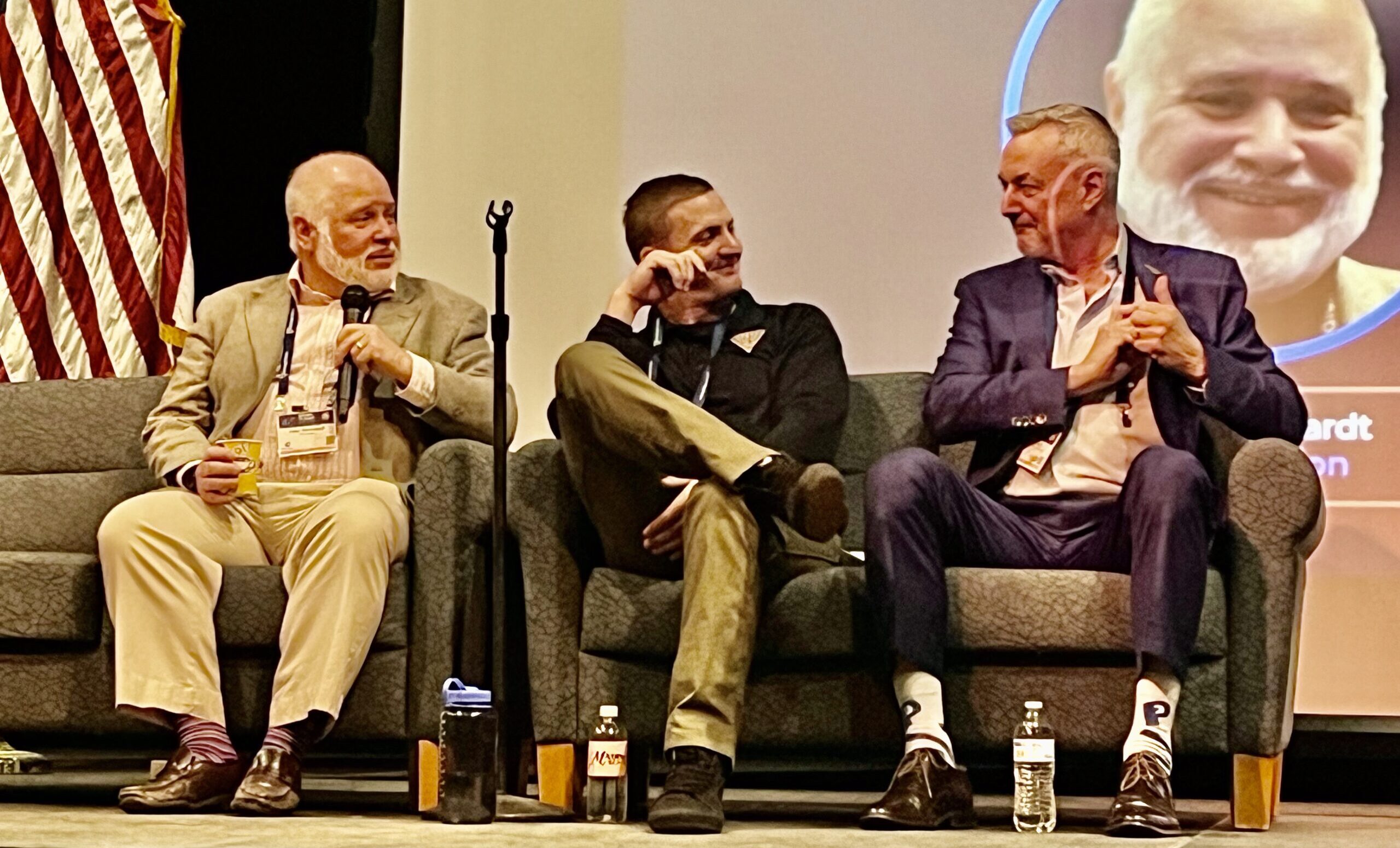
Coordination can mean the difference between an aerial mission that saves lives and one that nearly ends them. At the Shore to Soar (S2S) conference in Cape May, New Jersey, I participated on a panel focused on the progress and the persistent gaps facing public safety drone programs across the country, especially when it comes to industry, law enforcement and Department of Defense coordination of UAS operations. John Eberhardt, Managing Director of ATA Aviation moderated, and New Jersey State Police (NJSP) Sgt. Brett McCormick joined me on the stage. We walked through hard-earned lessons that every agency launching or maturing a drone program needs to internalize, from shared airspace protocols to the counter-drone reckoning that hit New Jersey harder than almost anywhere else.
Security: Airspace vs. Officer Safety
Public safety drone operations often have two simultaneous competing obligations. Agencies must protect operational security. You don’t broadcast a search warrant execution or a tactical surveillance flight. But the moment you go dark in the airspace, you become an invisible hazard to every other aircraft operating legally above your jurisdiction.
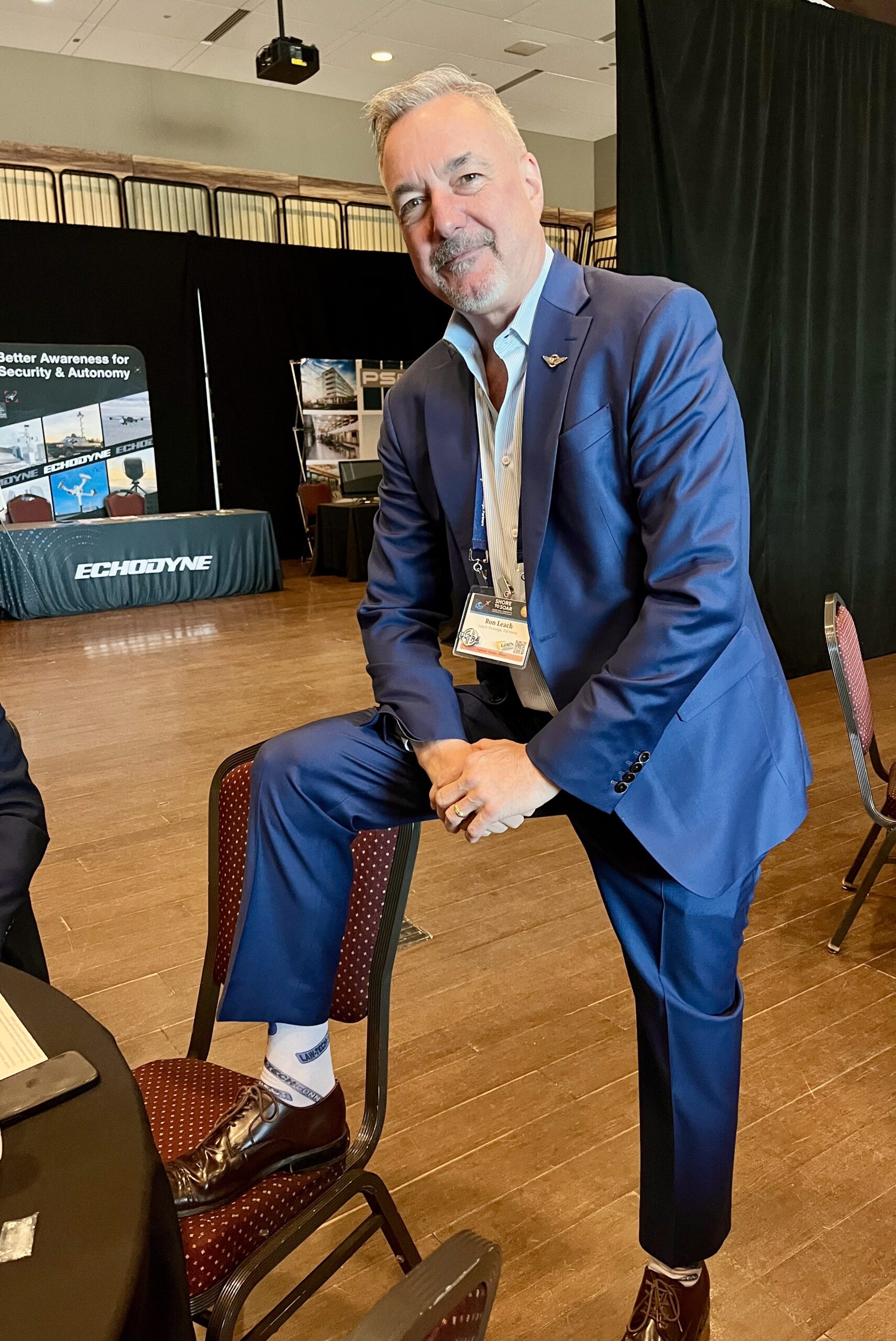
McCormick, who started out as a general road duty Trooper working as all who have gone before at road stations, performing regular police work. He progressed his way up to the tactical side, working as a member of the TEAMs Unit, the NJSP version of SWAT, said he always draws the line at Trooper safety. If officers are at risk, operational details must stay tightly held, but that does not mean proper FAA paperwork is not filed, or remote ID is turned off. Simply, certain information related to the job may not be published for all to see. For routine operations, though, broadcasting, whether through ADS-B or local systems like New Jersey’s Outer Link, which connects dispatch centers and hospitals to medical helicopter positions, is absolutely the right thing to.
I agree. He continues the work I started when I led the NJSP UAS Working Group investigating how drones could fit into the NJSP operations. Brett continues growing the program along with Lt. Mike Ward who was my right-hand man and was a significant force in helping stand up NJSP’s drone program.
For me, a formative moment from my days as a helicopter pilot crystallized why coordination matters. I was involved in a 40-plus-day manhunt for a gunman who shot two Pennsylvania troopers. The search involved aircraft from New York State Police, Pennsylvania State Police, New Jersey State Police, the FBI and other federal agencies who all shared the same sky with no clear delineation of who owned which altitude. While we communicated with each other on aviation frequencies, there was no central command structure to coordinate aircraft. The near-miss potential was obvious, well before drones were even part of the equation.
Takeaway: Squawk when you can. But if you need to protect yourself, your team or your op, maintain operational security, while letting those with a need to actually know what you’re doing.
Build the Air Boss Role First
McCormick explained that his team works to establish someone in charge of the airspace at every operation. That person assigns altitudes, determines who flies where, and sequences launches and recoveries. It doesn’t always end up written on an Incident Command System board, but the role exists. Somebody gives the orders.
This mirrors how manned aviation handles shared airspace at incidents. When a helicopter rolls in, everyone backs off, and communication opens immediately. The drone world needs the same discipline, and the “air boss” role, however informally, and how it operates today, is the mechanism that makes it work at the scene level. In a perfect world, McCormick envisions law enforcement drones triggering the same response as traditional aviation: commercial and recreational operators clear out, the same way manned aircraft do now.
Takeaway: Designate an air boss before the first aircraft lifts off.
Drone Gate and What It Changed
“Drone Gate,” the wave of unidentified drone sightings that swept across the state in late 202 shaped New Jersey’s approach to airspace coordination. It triggered a near-panic among the public, scrutiny from elected officials at every level, and a full-court press from federal agencies trying to explain what was in the sky.
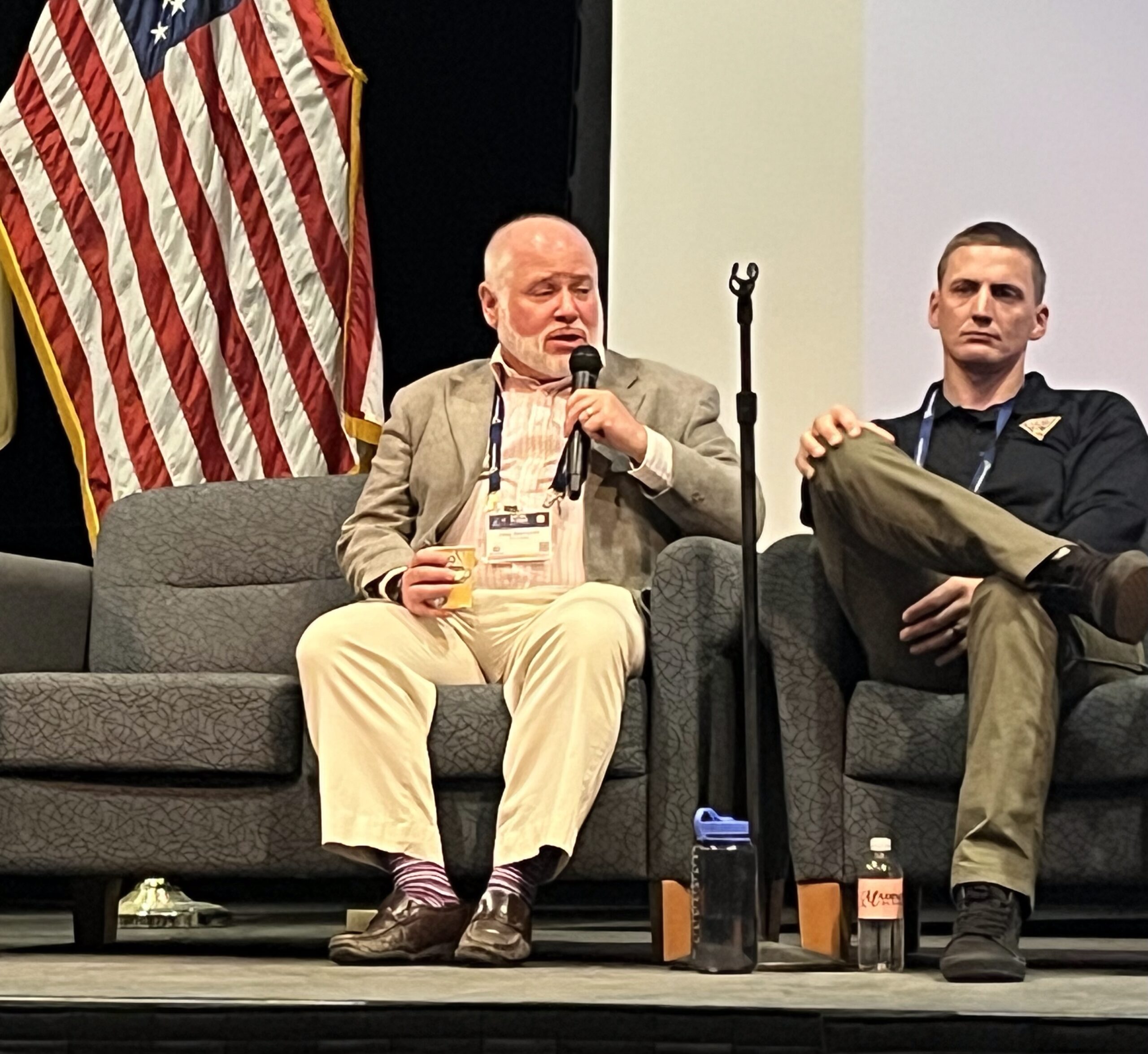
For state law enforcement, Drone Gate was a forcing function. It exposed how little inter-agency communication existed around UAS activity and how quickly the absence of coordination generates public confusion and political pressure. The episode accelerated conversations that had been moving slowly for years. Who has the authority to act against an unidentified drone? What tools does law enforcement legally hold? How can public safety agencies coordinate with federal partners when the airspace suddenly becomes a matter of national attention?
Coordinating with military aviation presents its own category of challenge in southern New Jersey, where McGuire-Dix-Lakehurst generates significant low-altitude traffic. Military aircraft train at low altitudes and can run dark with no transponders or ADS-B broadcasts in airspace outside of the Mode C & ADS-B Out veil around major airports, for operational security. A drone pilot checking sectional charts and airspace apps will not see them coming.
Nothing replaces relationships. During a recent operation, my team reached out to the local military and Coast Guard bases proactively before a two-week exercise was scheduled. The call produced a contact number and an active channel for coordination throughout the operation. That phone number was worth more than most technology solutions available at the time.
The same logic applies beyond military installations. I was able to secure commercial operator permission to fly under a presidential TFR near Rehoboth Beach because my team had FAA and Secret Service contacts who could evaluate the request quickly and say yes.
As one direct outcome of Drone Gate, the New Jersey State Police developed working relationships with Joint Base McGuire-Dix-Lakehurst that did not exist before. McCormick said his team can now call contacts at the base, notify the tower before an operation and get situational awareness in return. That relationship became the model for how public safety should approach military coordination broadly.
Takeaway: Relationships move faster than applications. Build them before you need them. If Drone Gate taught New Jersey anything, it taught them that the moment of crisis is the worst possible time to introduce yourself.
The Counter-Drone Reality Check
Drone Gate also forced a candid conversation about what public safety agencies can and cannot do when an unknown UAS appears over a critical event or sensitive location. The legal framework governing counter-UAS operations in the United States is narrow. Only a small number of federal agencies hold statutory authority to detect, track, identify, and mitigate drone threats. Even after the passage of the SAFER Skies Act, which will allow for trained state and local law enforcement to use highly specialized equipment and must follow up notifications within a mandatory specified timeline. No matter how sophisticated a UAS program may be, operating outside that authority without specific federal partnership or delegation will not be authorized or even legal. (See prior AG coverage of the implementation of SAFER Skies).
What agencies can do is build the detection and awareness infrastructure that feeds into the broader response picture. Eberhardt has been involved in sensor deployments at public events that immediately proved their value. During a major festival called the Apple Blossom event in the Shenandoah Valley, his team ran an integrated sensor and flight planning network with public safety operators. Mid-operation, a Bonanza aircraft came in on approach to Winchester Regional Airport at 375 feet off the deck, at 200 knots. The sensors caught it. The drone pilots, operating large State Police UAS from Fairfax County, were warned in time. Without the sensors, it would not have ended well.
This story illustrates the full range of the counter-drone challenge. The threat is not always a hostile actor. Sometimes it is an aircraft that doesn’t broadcast on ADS-B, isn’t required to, and has no idea anyone is flying below it.
Remote ID, the FAA’s broadcast identification standard for drones, does not solve this problem. Its transmission range is too short and its reliability too inconsistent to serve as an airspace awareness tool at scale. Cellular-based conspicuity solutions are being explored, but in my opinion, compliance will never be universal. Not everyone follows the rules.
Takeaway: Build sensor infrastructure that sees aircraft regardless of whether they cooperate.
The Eight-Minute Problem
There’s also a structural mismatch between how UAS Traffic Management (UTM) was designed and how public safety actually operates. Under the FAA’s proposed UTM framework (Part 146), operators will need to file operational intents, essentially digital flight plans, at least eight minutes in advance. Software then de-conflicts those plans and blocks overlapping airspace reservations.
Eight minutes doesn’t work. When a child is missing or there is an active shooter, no one can wait eight minutes to launch a drone.
Testing in Texas has reached the same conclusion, according to Eberhardt. UTM as designed doesn’t fit public safety response models. The ongoing work focuses on building a parallel capability, automated constraints that let public safety issue a digital Temporary Flight Restriction (TFR) through UTM that clear the airspace for first responders without requiring advance planning. Testing in Virginia demonstrated that this mechanism already exists in prototype form. The state successfully issued UTM constraints that effectively closed airspace.
Takeaway: Explore tying digital TFRs directly to 911 Computer Aided Dispatch systems so the airspace clears for public safety the moment a call comes in.
Get the Right Tools in Place
McCormick said his unit remains behind the curve on some platforms. His agency’s emergency management pilots use a flight tracking system that logs routes, battery cycles, and locations. That data proved essential when his unit received its first FOIA request. Having a records infrastructure ready before the request arrives is not optional.
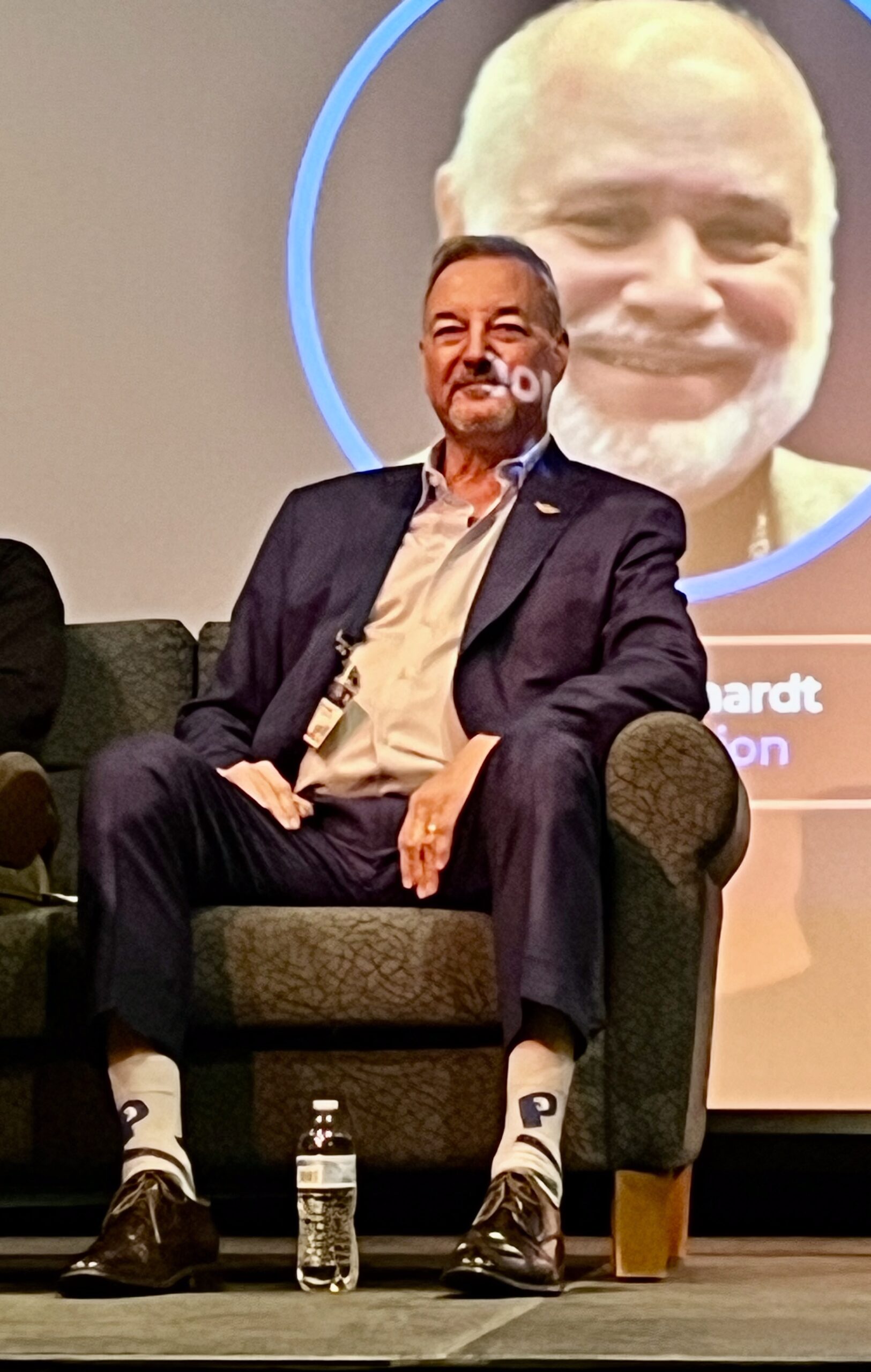
His tactical team flies using TAK, the Team Awareness Kit, an open-source, federally funded Blue Force tracking tool originally developed by the Air Force. TAK puts drone icons on a shared map in real time. Canine officers searching a field can see the drone’s position. The pilot can drop pins, share coordinates, and push a live video feed. They can do all of this within a single application that costs nothing to use, although agencies need IT capacity to host the server or contract someone who can. (See prior AG coverage of TAK).
TAK is now being integrated with UTM providers and, separately, with the DoW/DoD and DHS’s own UAS coordination system called ATAK CLUE, supported by AX Enterprize. Eberhardt’s team has already integrated with CLUE in Virginia.
Takeaway: Connect TAK to CLUE or other integration platforms so that when a trooper drops a pin to initiate an operation, that data flows automatically to the Department of Defense. This can complement the personal relationships your team builds with local bases .
What to Do Right Now
Any agency standing up or maturing a public safety UAS program should:
* Designate an air boss at every operation, even informally. Someone must own altitude assignments and sequencing before anyone launches.
* Adopt TAK. It is free, federally funded, and built for multi-agency situational awareness. Budget for IT support and get pilots trained now.
* Stand up flight records infrastructure before the first records request arrives, whether through a commercial platform or a manual report-and-submit process.
* File NOTAMs for planned operations. They are not a guarantee, but they do establish legal and operational notice.
* Build relationships with local military installations, FAA contacts, and neighboring agency drone coordinators before an incident forces the introduction.
* Pursue a law enforcement COA. It enables BVLOS operations up to 200 feet, and with additional detection equipment deployed, agencies can push that ceiling further.
Final Thoughts: A Culture of Coordination
“In public safety drone operations, a lot of this world is “self-policed,” as McCormick said. Operators who do the right thing file their reports, check the apps, notify the FAA, and call the base. The culture of coordination, the institutional habit of communicating before launching, is more important than any single regulation or technology platform.
The infrastructure to make shared airspace safe is being built. TAK integration with UTM, automated constraint issuance tied to CAD systems, and sensor networks that see aircraft that don’t broadcast are all in prototype or early deployment. Drone Gate accelerated that work in New Jersey in ways no policy memo ever could. At the end of the day, though, coordination is the practice that bridges the gap between the airspace we have right now and the one we are all building.