
By Arie Egozi, Autonomy Global – Ambassador for Israel
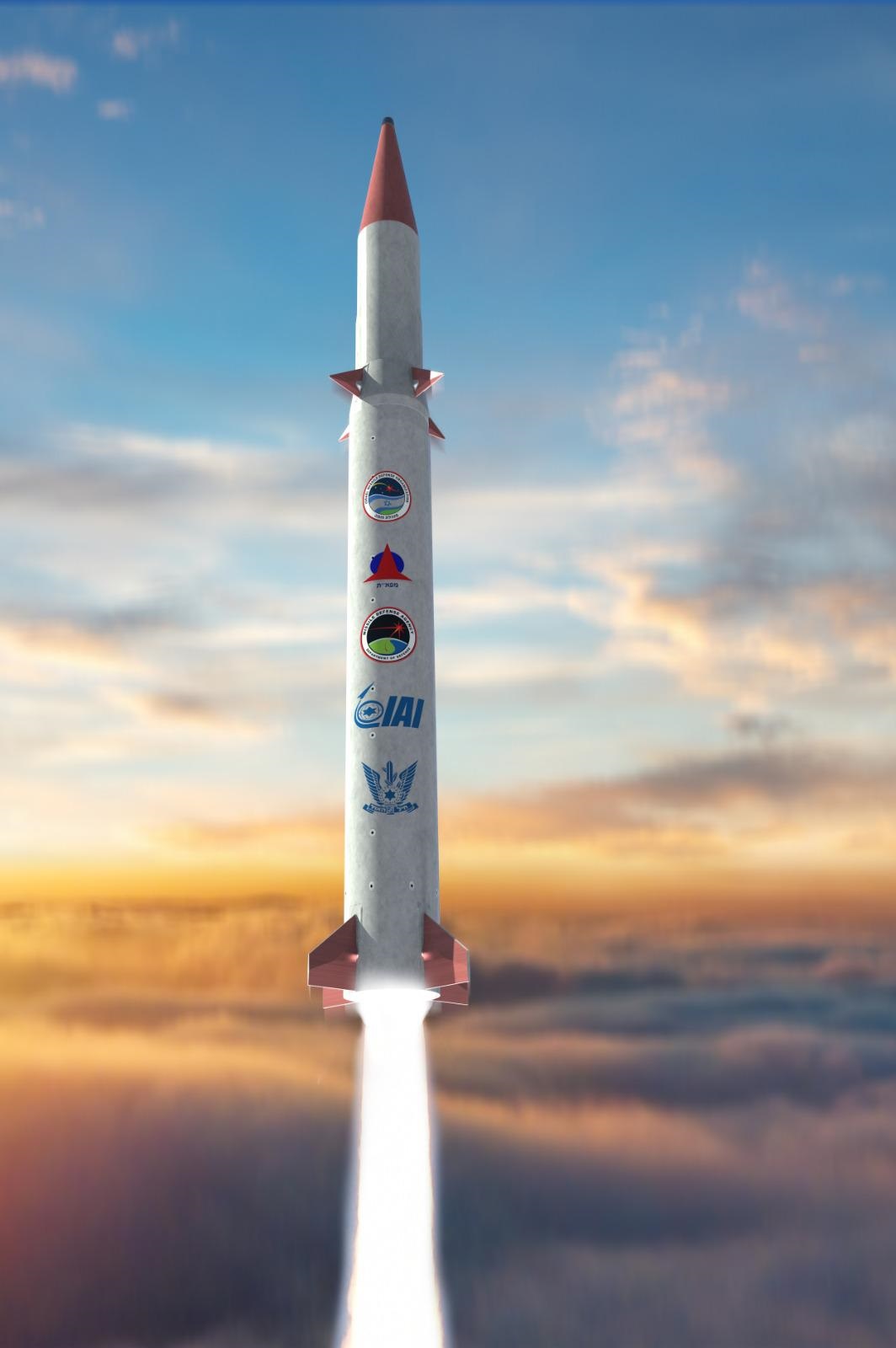
Arrow 4, the newest generation of Israel’s long-range interceptor, nears operational deployment with a design that combines advanced agility, a sophisticated seeker, AI-powered radar tracking and a precision warhead optimized for hypersonic glide vehicles and agile reentry vehicles. Operating at more than Mach 10 in both endo- and exo-atmospheric conditions, the system is intended to counter emerging threats from adversaries such as Iran, Russia, China and North Korea. Its architecture enables a “shoot-look-shoot” policy and allows mid-course corrections and layered intercepts against complex, maneuvering targets.
Arrow 4’s AI-Driven Capabilities
Developed by Israel Aerospace Industries (IAI) in cooperation with the U.S. Missile Defense Agency (MDA), Arrow 4 is positioned as the next major layer in Israel’s multi-tier missile defense architecture. The interceptor integrates AI-enhanced radar tracking and advanced guidance to rapidly recognize, classify and engage hypersonic and ballistic threats in highly dynamic flight profiles.
The new interceptor builds on the operational experience of Arrow 2 and Arrow 3 by extending engagement envelopes while improving maneuverability and endgame accuracy. Its precision warhead is tailored to defeat hypersonic glide vehicles and agile reentry vehicles. This addresses one of the most challenging categories of modern missile threats.
Strategic Role in Israel’s Air Defense
Arrow 4 is being developed as a successor to Arrow 2 and a complementary capability to Arrow 3, which already forms a critical part of Israel’s upper-tier missile defense alongside Iron Dome and David’s Sling. The program reflects a strategic priority to stay ahead of rapidly evolving missile technologies in the Middle East and beyond, particularly long-range and hypersonic systems.
According to IAI CEO Boaz Levy, Arrow 4 is approaching operational readiness, with testing timelines accelerating and serial production expected to follow quickly, potentially from early 2026. Israeli defense sources indicate that once Arrow 4 is in service, interest from partner nations will likely increase, mirroring the export trajectory already seen with Arrow 3.
Germany’s Record Arrow 3 Procurement
Germany has become the first foreign customer for Arrow 3, as it anchors its future air and missile defense network in Israeli technology. In December 2025, the German Bundestag approved a $3.1 billion expansion of its Arrow 3 defense system contract with Israel, on top of an initial purchase of roughly $3.5 billion signed about two years earlier.
This brings the total Arrow 3 package to approximately $6.5 billion, for the largest defense export deal in Israel’s history while significantly boosting Germany’s long-range air and missile defense capabilities. As part of the expanded agreement, Israel’s Ministry of Defense and Germany’s Federal Ministry of Defense have agreed to substantially increase the production rate of Arrow 3 interceptors and launchers for delivery to Germany.
Growing Global Demand for Advanced Missile Defense
The combination of Arrow 3’s export success and Arrow 4’s advanced capabilities underscores a broader shift in allied missile defense priorities toward countering hypersonic and maneuvering ballistic threats. For Israel, the expanding Arrow portfolio strengthens national defense while supporting a high-value defense export strategy that feeds back into industrial capacity and technological innovation.
With Arrow 4 moving toward deployment and Arrow 3 already fielded in Europe, Israel’s missile defense ecosystem stands poised to play an increasingly central role in allied integrated air and missile defense architectures. Additional nations are expected to closely watch Arrow 4’s performance and Germany’s Arrow 3 experience as they evaluate their own next-generation missile defense requirements.