

By: Dawn Zoldi
Regularized operations with automated drones and advanced air mobility (AAM) aircraft move closer to reality everyday than most communities realize. But the real work happens far from glossy vertiport renderings and more so in budget hearings, at rural substations and on small-town runways. At the Tennessee Drone and AAM Summit, an expert panel of infrastructure builders, test site leaders and technology innovators distilled what actually works in the field. From quietly repurposing underused community airports to negotiating grid upgrades that won’t bankrupt local utilities, the conversation provided a pragmatic playbook for regions that want to move beyond pilot projects…and build systems that will last.
Building Statewide UAS Networks That Actually Scale
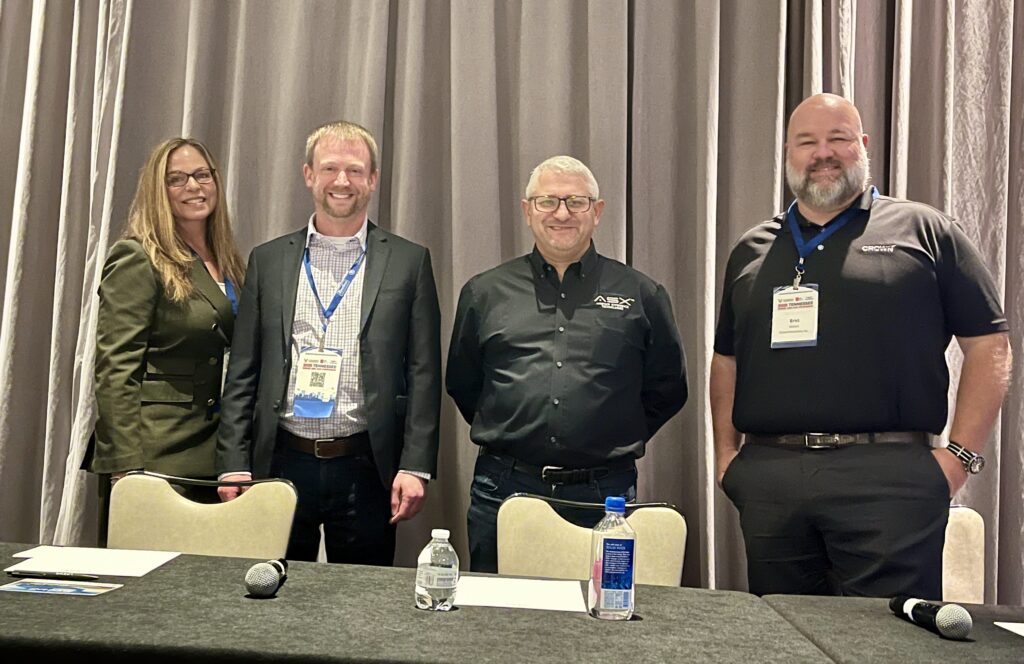
Infrastructure is a business model and governance problem, not a “technology problem,” according tonTrevor Woods, Executive Director of the Northern Plains UAS Test Site. He described how North Dakota’s statewide drone network only became possible because legislators were willing to “take some risk” and appropriate funds to support it.
Of course, they wanted to see a credible return on investment (ROI) for taxpayers. So, to move from pilots to permanence, Woods’ team mirrored the FAA’s own acquisition and safety processes. They defined performance requirements and ran full safety risk management analyses, even when no standards yet existed. The real challenge, he noted, is not just building the network but keeping it sustainable for the long-term in a rapidly evolving regulatory and standards environment.
Lesson Learned: If you want automated UAS and AAM operations to scale, treat your infrastructure like a national asset from day one, with measurable performance, safety cases and a path to FAA acceptance rather than a patchwork of local experiments. Prove the ROI to your legislators. If you build it, they will come.
Harmonizing Air and Ground: Multi‑Modal Communications Matter
For Jon Rimanelli, CEO of Airspace Experience Technologies, the core infrastructure challenge is not vertiports or battery packs, but “awareness” of all autonomous platforms, across all users of any given system.
Drawing on connected vehicle work in the automotive sector, Rimanelli argued that multi‑modal, vehicle‑to‑vehicle and vehicle‑to‑infrastructure communications are essential to prevent collisions, dynamically route traffic and coordinate emergency responses when something goes wrong. In his view, airspace integration only works if ground operators (think: roadway managers, public safety, utilities) know when aerial robots are overhead and what they’re doing in real time.
Rimanelli warned that aviation does not have the luxury of signalized intersections and painted lanes. Rules for preferred corridors, temporary flight restrictions around sensitive locations like schools and stadiums have to be “broadcast” digitally to uncrewed aircraft and authenticated to participate in a cooperative network. His company is building that system.
Lesson Learned: Communities and operators need to design UAS traffic management (UTM) and data‑sharing architectures that deliberately harmonize with ground systems, rather than treating drones and eVTOLs as a separate universe.
Powering AAM: Start With Feasibility, Not Hype
Bret Bachert of Crown Innovations brought the conversation firmly back to the ground by pointing out how often infrastructure plans often ignore basic feasibility. He cited the example of electric trucking mandates, where the charging load for a single depot can exceed the power available to an entire rural town. This left dealers facing tens of millions of dollars in unplanned grid upgrades. The parallel for AAM is obvious. Ambitious vertiport concepts and high‑tempo UAS operations will fail if communities discover too late that the local grid cannot support them.
Bachert urged airports, developers, and public agencies to “stop the magic bullet” thinking and do real engineering early. This includes conducting 10,000‑foot studies to identify which locations are actually viable and in what sequence they should be developed. “Don’t say we have 400 facilities and we’re doing them all,” he said. “Pick ten that really work and prove the benefit first.”
Lesson Learned: Work closely with utilities, often multiple municipal providers in the same region, on long‑lead planning, realistic timelines, and phased build‑outs:
Use Existing Airports Before Building Futuristic Vertiports
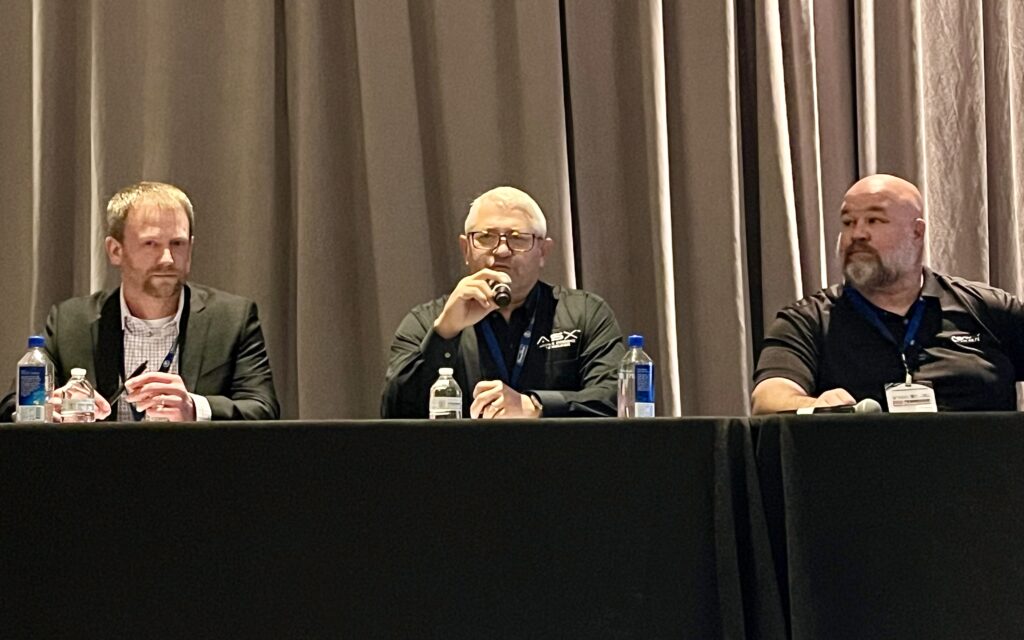
Both Woods and Rimanelli pushed back on the industry’s obsession with radical new infrastructure at the expense of assets that already exist.
Woods sees the fastest path to operational approvals coming from designs that “make inroads” through incremental changes to certified aircraft and airports, rather than revolutionary platforms that regulators cannot benchmark against anything. He described a familiar pattern where companies arrive with novel propulsion concepts, then ultimately migrate them into more conventional airframes simply to have a chance at certification and real‑world operations.
Rimanelli highlighted the untapped potential of the roughly 5,000 small community airports across the United States. He noted that most traffic is concentrated at a few dozen major hubs, while smaller fields have capacity and often the power needed to support charging. By using these airports as launchpads for small aircraft transport systems and early AAM routes, regions can reduce congestion at large hubs and start moving passengers and cargo in new ways without waiting for dense urban vertiports to materialize.
Lesson Learned: Treat existing airports as your first AAM network. Design future vertiports to connect to, not replace, that fabric.
Siting Vertiports: Noise, Downdraft and Risk Buffers
When communities do actually consider new vertiport sites, Rimanelli stressed that the first lens should be safety and environmental impact, not architectural renderings. Electric vehicles may be emissions‑free at the tailpipe, but downdraft and noise at low altitude are real, and can be intensely disruptive in dense urban cores. He expressed skepticism about aggressive rooftop “pinnacle” concepts in early phases and argued for locations along natural rights‑of‑way such as river corridors and existing transportation routes where buffers and clear approach paths are easier to engineer.
Noise measurement and management must be baked into siting decisions from the outset, especially as communities already bristle at traditional helicopter operations. Even if eVTOLs promise lower acoustic signatures in cruise, the last 100 feet to touchdown near people and buildings will determine public acceptance.
Lesson Learned: Align early vertiports with corridors that are already transport-intensive or industrial in character, insist on verifiable noise data at realistic operating altitudes, and design approach paths that minimize overflight of “soft environments” such as schools, parks, and stadiums.
Collaborating Across States and With the FAA
Sustainable infrastructure for automated UAS and AAM will not stop at state lines. Woods emphasized that interstate collaboration on standards and architectures now remains essential. He argued that users should not have to interact with a different system simply because they crossed a border. Even so, he acknowledged that, in practice, the lack of clear national guidance has left states to “solve this on their own.” Emerging regulatory models, such as those tied to Part 135‑like frameworks for uncrewed operations, point to how industry‑driven infrastructure can be aligned with federal oversight, even while gaps remain.
North Dakota’s approach has been to stay deeply engaged in policy discussions, explore transportation‑style funding models and use public investment to de‑risk early infrastructure so that private capital can eventually step in. Woods was blunt that taxpayers should not be funding access forever, but he also notes that private investors will not come until they see predictable rules and durable business models.
Lesson Learned: Convene multi‑state working groups, invite FAA participation without ceding all design authority and make sure funding streams are designed to bridge that early risk gap.
Power Planning as a Core AAM Strategy
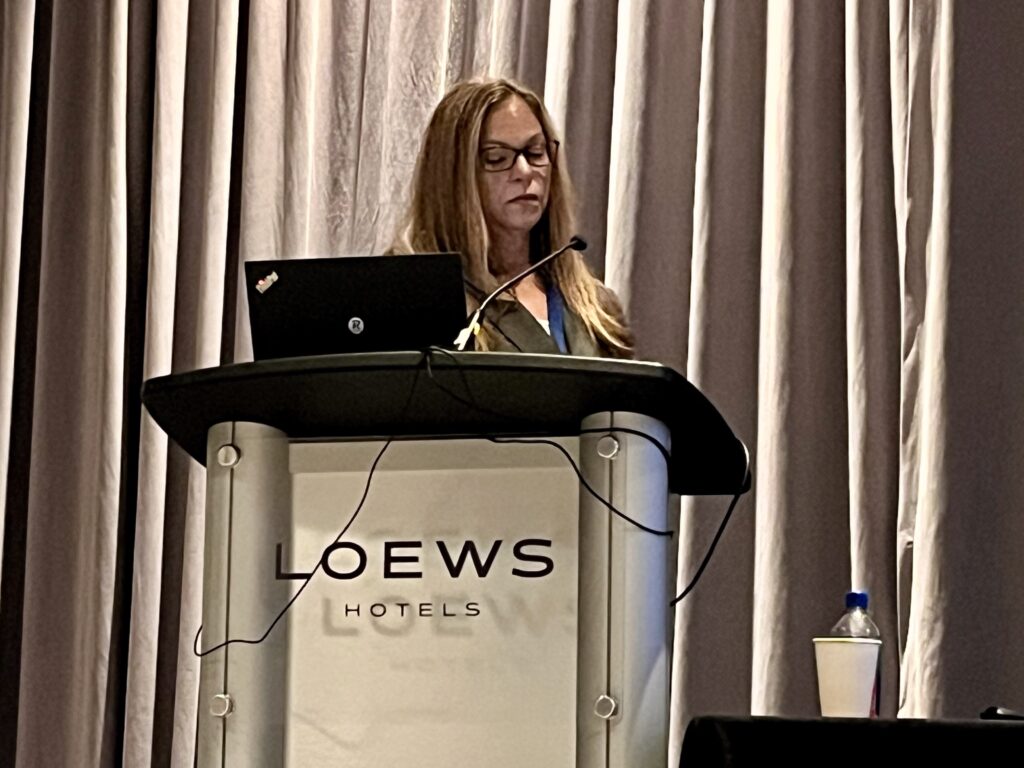
Bachert foot stomped that utilities are not just vendors in the AAM ecosystem. They are critical strategic partners whose timelines and constraints can make or break projects. He noted that airports and operators will often be negotiating with multiple municipal and cooperative utilities, each with its own approval processes, tariffs and planning horizons. Bringing them in early allows regions to stage upgrades, align substation and feeder expansions with projected demand and avoid the political backlash that follows when costs balloon unexpectedly.
He also cautioned that communities must resist political pressure to over‑promise on deployment speed. Frame infrastructure as a sequence of disciplined steps and pilot locations, rather than a sweeping transformation.
Lesson Learned: AAM master plans need an explicit “power chapter” that includes load forecasting for UAS chargers and vertiports, grid impact studies and clear phasing to match utility buildout, not just aviation demand.
Community Acceptance: Show the Value, Not the Hype
In the panel’s closing moments, a question from the audience cut to the heart of deployment: how do you convince taxpayers that these investments are necessary and beneficial?
Woods noted that public perception has evolved from “predator drones” and surveillance fears to a more nuanced understanding as communities see real use cases. This holds especially true when students and schools are brought into the conversation and drones are framed as part of the broader aviation ecosystem. He emphasized continuous engagement with the general aviation community, which often feels most threatened by uncrewed operations sharing the same airspace.
Bachert suggested leaning heavily into use cases that clearly benefit the local community: power line inspection, flood monitoring, water system management and “dirty, dull, dangerous” tasks that remove people from harm’s way.
For his part, Rimanelli added that changing the narrative around the word “drone” itself, away from spying and toward life‑saving, risk‑reducing applications such as crop spraying and infrastructure inspection, could prove to be one of the most powerful levers for long‑term acceptance.
Lesson Learned: Lead with visible, high‑value public service missions and to keep communities involved long after the ribbon‑cutting.
Designing the Infrastructure Ecosystem We Need
Automated UAS and AAM will not succeed on vision alone. They will succeed where leaders are willing to do the unglamorous work of liaising with government leaders, developing standards, generating power studies, performing community outreach and incrementally integrating these aircraft into systems that already exist. Regions that treat drones and eVTOLs as tools for real public value, saving lives, protecting workers, strengthening rural economies, while rigorously managing risk and cost will be the ones that move from glossy renderings to enduring, operational networks.
Key Lessons for Building UAS and AAM Infrastructure
| Lesson | What It Really Means | Practical Action for Stakeholders |
|---|---|---|
| Start with sustainable funding, not pilots | One-time appropriations can launch a network, but without a long-term model, infrastructure stalls when the grant money ends. | Pair early public investment with a clear path to recurring revenue and private capital, including defined service markets and cost-recovery plans. |
| Mirror aviation-grade processes | Treating UAS infrastructure like a safety-critical aviation system builds regulatory trust and speeds approvals. | Use FAA-style architectures, performance requirements, and safety risk management from day one instead of ad hoc technical specs. |
| Harmonize air and ground systems | Drones and eVTOLs must coexist with roads, utilities, and public safety—not fly as disconnected assets. | Deploy multi-modal data sharing (V2X-style) so roadway operators, responders, and aviation users see the same traffic picture and rules. |
| Use existing airports first | Thousands of underused community airports can host early AAM operations without waiting for futuristic vertiports. | Map regional airports, assess power and access, and prioritize them as initial nodes for cargo, inspection, and short-hop passenger services. |
| Design vertiports with buffers, not bravado | Downdraft, noise, and risk near the ground will make or break community acceptance in dense areas. | Site vertiports along river corridors, highways, or industrial zones with clear approach paths and enforceable noise and safety envelopes. |
| Lead with feasibility on power | Ambitious concepts collapse if the grid cannot support clustered high-rate charging. | Conduct load and grid-impact studies early, phase deployments, and co-plan upgrades with utilities instead of retrofitting under political pressure. |
| Collaborate across state lines | Fragmented standards and architectures undermine scalable commercial operations. | Form multi-state working groups, align on data, communications, and performance expectations, and invite federal participation without waiting for it. |
| Reframe drones as public-good tools | Communities accept what they understand and benefit from, not what they are told to tolerate. | Showcase missions like utility inspection, disaster response, and agriculture support; bring schools, GA pilots, and local media into live demos. |
| Embrace incremental innovation | Overly revolutionary designs struggle to find regulatory footing and delay market entry. | Build on certified platforms and known procedures where possible, then iterate toward new concepts rather than trying to leap directly to them. |
| Treat utilities as strategic partners | Power providers can accelerate or stall AAM timelines depending on when they are engaged. | Involve utilities in master planning, co-develop timelines, and prioritize a small set of demonstrably viable sites before promising network-wide coverage. |