

By: Dawn Zoldi
Most discussions about uncrewed aircraft protection still dwell on individual tools, such as a sensor here, a jammer there with artificial intelligence (AI) somewhere in the mix and perhaps a cyber layer on top. The real value, however, lies in how these capabilities work together. Orchestrating airspace protection today means treating sensors, AI and cyber not as competing solutions, but as complementary technologies that, when fused into a single defense, keep everyday life running smoothly…even as threats evolve in the background.
Intelligence Fusion, Not Just Defense
Traditional counter-drone thinking starts with the question, “How do we stop the drone?” AI-driven cyber turns that into, “What exactly is this drone, and what is the smartest way to handle it while everyone else keeps moving?” A coordinated flow that can blend wide-area perception, precise identification and measured response provides a coherent experience for operators. Done well, the operator does less mental juggling, sees more of what matters and moves from chasing alarms to managing outcomes.
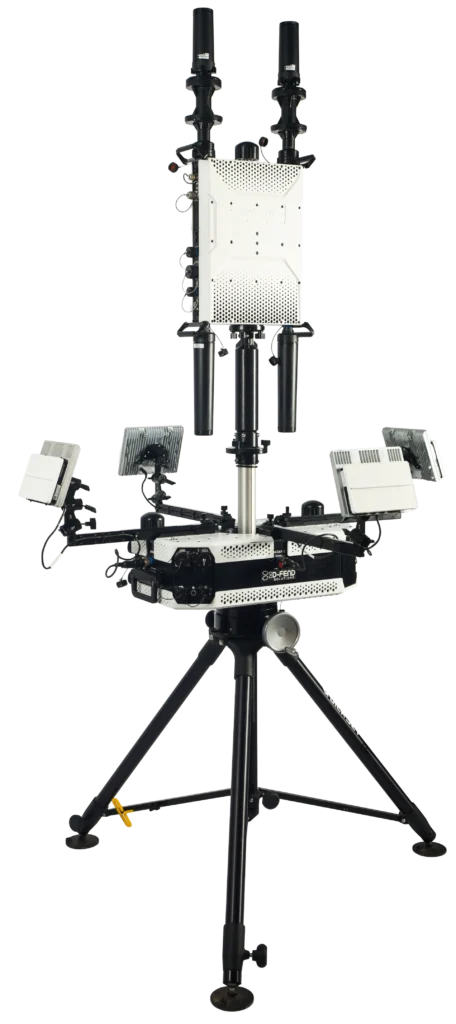
Think of this type of sensor, AI and cyber relationship as orchestration, not just integration. Multiple sensors (think: radio-frequency, radar and others) feed into a fusion layer that sifts clutter from signal, filters out benign activity and highlights suspicious behavior in context. On top of that, RF-cyber capabilities understand the drone’s unique attributes. This transforms a system from a simple motion detector into a nuanced intelligence source that knows who is flying what, from where and with which options are possible for safe resolution.
AI Analyzer, Cyber Enforcer, Uninterrupted Life
In this model, AI serves as the analyzer that does the heavy lifting across a noisy, contested spectrum. Engines like D-Fend Solutions’ EnforceAir SmartAir Fusion ingest RF and radar data, align tracks, minimize false alarms and present a single, coherent air picture through an interface the operator can absorb at a glance.
Cyber then steps in as the enforcer and converts an object on a screen into a known entity with specific levers of control. This is where platforms like EnforceAir PLUS illustrate the orchestration concept in practice. The system can recognize the drone, its attributes and viable options for takeover or containment, where regulations allow and when performed by authorized personnel.
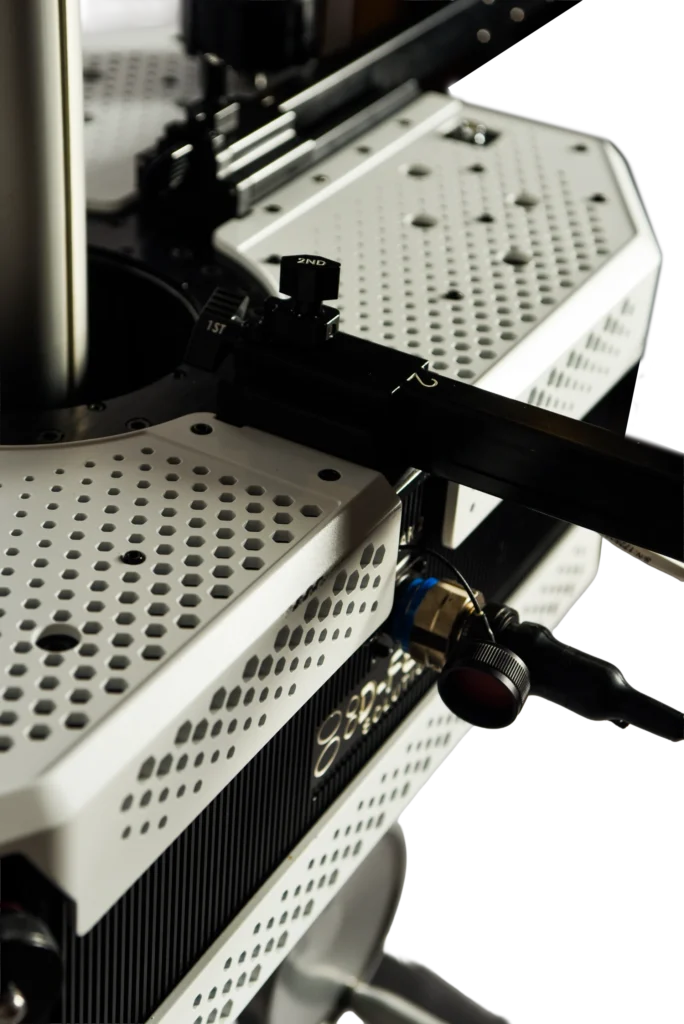
Built around a cyber-first approach, EnforceAir PLUS combines RF-cyber takeover, radar detection, and optional jamming in a compact, rapidly deployable system, with SmartAir acting as the fusion engine that unifies data streams and suggests tailored mitigation options for each drone. In effect, it behaves as a conductor for the multi-layer defense “symphony” to ensure that radar, RF and mitigation techniques play in time, in tune and at the right intensity, This allows operators to stay ahead of incidents without flooding the airspace, or the user interface, with noise.
It also moves defenses from merely detecting “something in the sky” to understanding the nature of the drone and applying surgical, non-disruptive mitigation rather than blunt-force measures. Most counter-drone narratives still revolve around the “take-down,” as if the decisive metric is how quickly a system can force a drone out of the air. For crowded airports, stadiums, critical infrastructure sites and dense urban centers, the real metric should focus on continuity. Keeping gates open, games underway, power flowing and city life undisturbed while defenders quietly neutralize risk is the true measure of success. Cyber-led takeover, coordinated through a fused AI–cyber framework, allows security teams to redirect a rogue drone to a safe zone or landing area without debris, electromagnetic spillover or cascading operational delays. It preserves both safety and schedule.
Orchestration Future-Proofs Key Sectors
The drone ecosystem changes faster than fixed infrastructures ever will. New models, firmware updates and flight behaviors arrive on timelines that are much faster than slow multi-year hardware refresh cycles. A software-defined AI–cyber framework gives operators a way to keep up by extending the life of existing sensors and software-defined radios rather than forcing constant replacement. Through software and library updates, organizations can quickly adapt to new drone profiles and emerging tactics. This turns counter-drone from a hardware arms race into a software-driven capability curve.
Across sectors, the orchestration principle stays the same, even as the mission changes on the ground. At airports and major hubs, the priority remains keeping runways, taxiways and terminal approaches safe and predictable while passengers and crews move on time. An AI–cyber fusion layer helps airfield teams distinguish hobby flights from targeted threats and intervene early, before schedules or safety margins feel the impact. In dense city centers and stadiums, where people gather in tight spaces and the spectrum stays crowded, orchestrated defenses enable selective, precise interventions that protect the venue without disrupting broadcasts, public networks or the surrounding neighborhood’s rhythm. For national security leaders, intelligence fusion across sensors, sites and services turns isolated drone incidents into recognizable patterns that inform policy, resourcing and rules of engagement with a clearer picture of who is probing the airspace, how often and with what intent.
Across all of these environments, the stakes go beyond stopping the wrong drones. They include enabling the right ones. Commercial operators, emergency services and advanced air mobility providers all depend on predictable, trusted access to shared airspace. When orchestration lowers false alarms, clarifies intent and supports surgical, reversible interventions, regulators and infrastructure owners can greenlight more complex drone operations with confidence instead of caution.
As AI–cyber fusion matures, the conversation will move from “counter-drone” to “airspace assurance.” That future involves a shared sky where innovation scales, communities move freely and security teams quietly safeguard an uninterrupted life in the background.