
By Rex J. Alexander, Autonomy Global Ambassador – Infrastructure
The United States aviation infrastructure framework currently recognizes only two categories of use under Title 14 of the Code of Federal Regulations (CFR): “Public-Use” and “Private-Use.” While this binary system has historically supported conventional fixed-wing airport development, it increasingly misaligns with the operational, safety, and economic realities of vertical flight. This misalignment is particularly acute as industry prepares for the introduction of Advanced Air Mobility (AAM) operations utilizing electric vertical takeoff and landing (eVTOL) aircraft.
This article makes the case for the establishment of a third federally recognized classification, “Private-Use Commercial-Operations,” to bridge the regulatory, funding, and oversight gap that exists between the current two categories. Such a classification would enable appropriate federal and state oversight, improve infrastructure data integrity, and provide a viable pathway for limited federal funding. At the same time, it would preserve the access control and operational flexibility required for safe, high-throughput vertical flight operations. In doing so, it would also simultaneously improve traditional helicopter infrastructure and operations, enabling a scalable, credible AAM transportation system.
New Entrants, New Framework
For decades, U.S. aviation infrastructure policy has relied on the simple distinction that facilities are either:
- Public-use facilities that are open to the general public without prior permission required and are subject to a relatively high degree of federal oversight; or
- Private-use facilities, by contrast, are only available to the owner and those authorized by the owner, and are subject to minimal federal involvement, oversight, or protection once activated.
While this framework has been sufficient for most legacy airport development, it has proven significantly inadequate for vertical flight infrastructure, particularly heliports and the vertiports envisioned to support AAM operations.
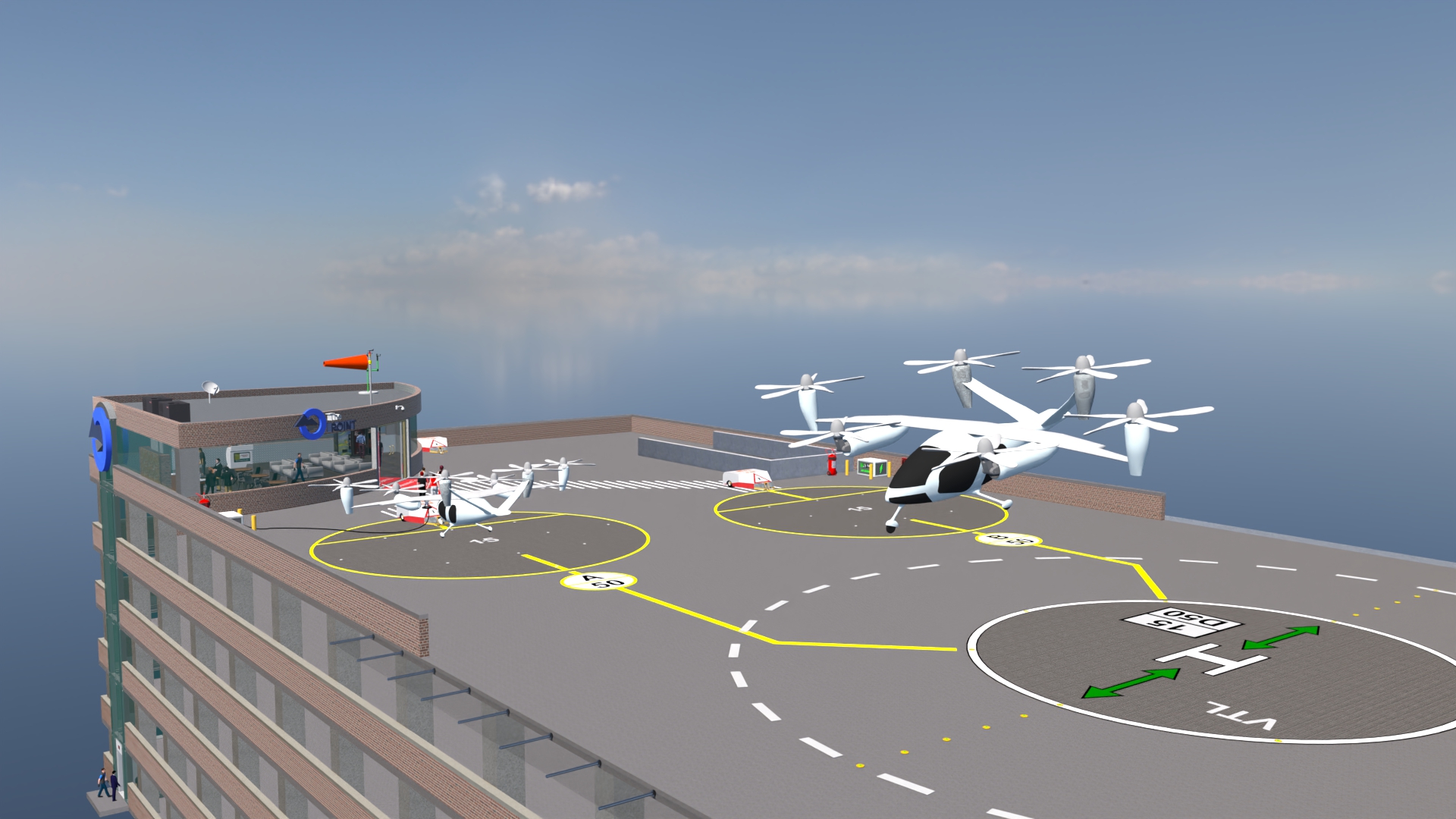
Advocates position AAM as a new form of public transportation that promises reduced congestion, improved regional connectivity, and expanded access to mobility. Yet the infrastructure required to support this system does not fit neatly into the existing regulatory and policy framework. Vertiports must accommodate commercial passenger operations, meet high safety expectations, and integrate into dense urban environments, all while maintaining controlled access and predictable operational conditions. Neither public-use nor private-use infrastructure classifications adequately capture these requirements.
Federal Funding Constraints and Vertical Flight Infrastructure
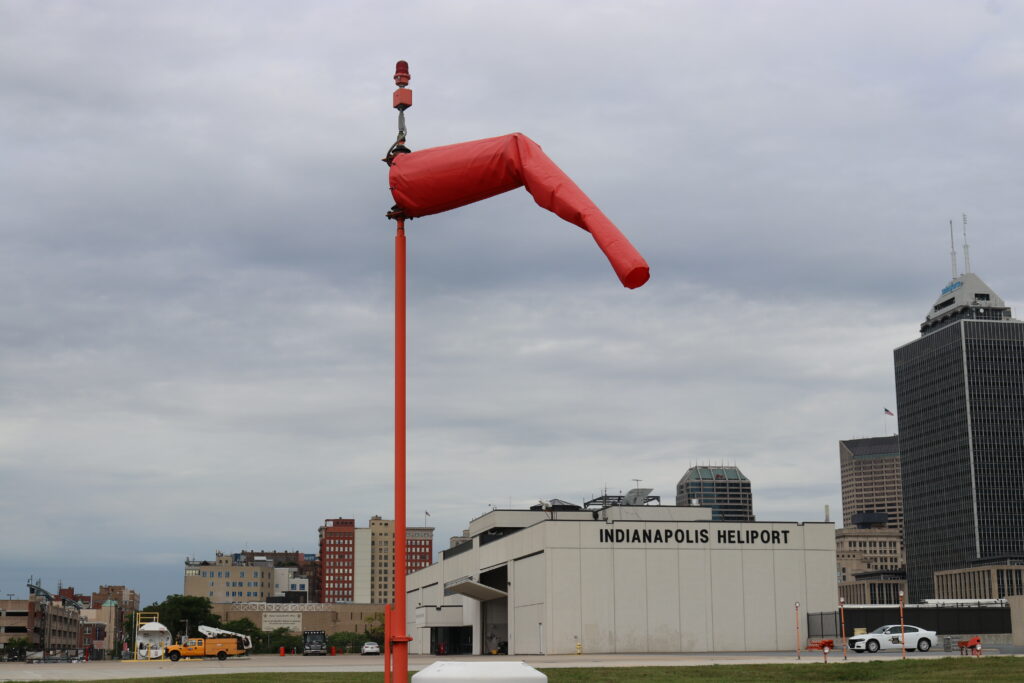
One of the most significant consequences of the current classification system is the near-total exclusion of heliports from federal airport development funding. Access to Airport Improvement Program (AIP) funding requires that a facility be designated as public-use and be included in the National Plan of Integrated Airport Systems (NPIAS). Of the several thousand heliports listed in the Federal Aviation Administration’s Airport Data Information Portal (ADIP), only a small fraction are designated as public-use, and an even smaller number yet are included in the NPIAS. As a result, heliports, which account for roughly one-third of all aviation facilities in the United States, receive a negligible share of federal infrastructure investment. Thus, in practice, this requirement has effectively barred the vast majority of heliports from eligibility and, if continued, would likely do the same to vertiports.
Current U.S. Heliport Numbers
| CRITERIA | NUMBERS |
| Heliports in the U.S. | 5,748 |
| Private-use heliports in the U.S. | 5,690 / (99%) |
| Public-use heliports in the U.S. | 58 / (1.0%) |
| Heliports in the NIPIAS | 8 / (0.02 %) |
When viewed in terms of cost efficiency, this imbalance proves particularly problematic. Vertical flight facilities typically require significantly less land, construction materials, and supporting infrastructure than traditional airports. The funding allocated to a single runway or taxiway project at a large airport could, in many cases, support the development of dozens of heliports or vertiports. Such facilities, if strategically located, could form the backbone of a regional or urban air mobility (UAM) network within a state. Under the current framework, however, federal investment remains concentrated on a limited number of airport-centric projects. This leaves vertical flight infrastructure chronically underfunded.
The Public-Use Paradox
At first glance, public-use designation appears to offer a solution by enabling access to federal funding and increased oversight. In reality, public-use status introduces operational constraints that conflict directly with the needs of commercial vertical flight.
Public-use facilities are generally required to remain open to all users without restriction. This principle is well suited to traditional airports with room to segregate operations but incompatible with the operational requirements of high-frequency vertical flight conducted at smaller facility locations. Commercial heliport and vertiport operations depend on strict access control to manage aircraft performance compatibility, pilot qualification requirements, scheduling, passenger flows, and safety margins within constrained environments.
For AAM operations intended to function as a reliable public transportation service, unrestricted access introduces unacceptable levels of operational uncertainty and safety risk. The result is a paradox in which the classification that enables oversight and funding simultaneously undermines the ability of the facility to operate safely and efficiently.
Oversight Deficiencies in Private-Use Facilities
Private-use facilities occupy the opposite end of the regulatory spectrum. While they allow owners and operators to control access and tailor operations to specific aircraft and missions, they are subject to minimal ongoing federal oversight or protection. Once activated, private-use heliports are not routinely inspected, audited or required to update their data unless they report a major change.
This lack of oversight has resulted in widespread deficiencies in the accuracy and completeness of vertical flight infrastructure data. Numerous studies have identified heliports that have not existed for several years but nevertheless remain in federal databases, facilities tagged with incorrect location coordinates as well as outdated dimensional information and missing or inaccurate operational data. In some cases, critical facilities such as hospital heliports are absent entirely from the FAA’s master record. According to a 2019 NASA study there are an estimated 2,000 hospital heliports in operation today that do not appear in the FAA airport master record database.
These data shortcomings have direct safety implications. Infrastructure data maintained by the FAA serves as the authoritative source for literally all aeronautical charts, flight planning systems, navigation databases and risk assessments used by pilots, operators and airspace planners. These errors and omissions propagate throughout the aviation ecosystem and increase the likelihood of operational hazards. They undermine informed decision-making.
The Case for a Third Classification
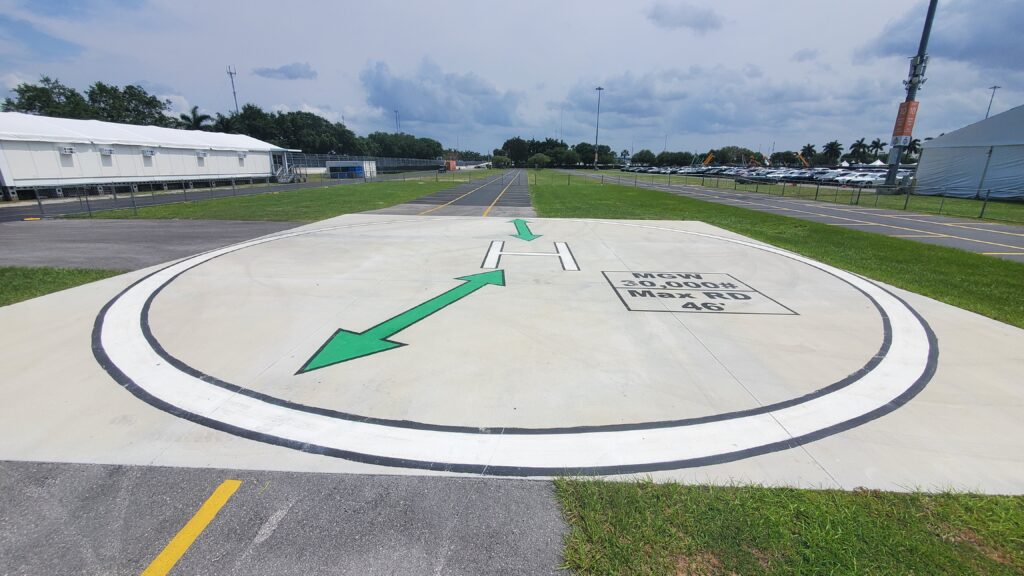
The limitations of the existing public-use and private-use framework cry out for a third option. A private-use commercial-operations classification would formally recognize facilities that are privately owned and operated, support commercial passenger or cargo operations and serve a broader public transportation function while retaining the ability to control access.
Under such a classification, eligibility for federal or state funding could be conditioned on compliance with defined design, safety and data reporting standards. This approach would mirror, in concept, the certification philosophy used for airports certified under 14 CFR Part 139, without imposing requirements that are inappropriate for vertical flight infrastructure. By tying funding eligibility to compliance, regulators could incentivize improved safety practices, regular data validation and greater accountability among facility owners.
Importantly, this framework would not require that all private-use commercial facilities become public-use. Instead, it would acknowledge the operational realities of commercial vertical flight while establishing a baseline level of oversight commensurate with the public interest served.
State-Level Precedent and Emerging Models
The concept of a third infrastructure classification has already gained some traction at the state level. Florida has enacted legislation creating a category for private airports of public interest, defined as privately owned facilities engaged in air ambulance, air tour, commuter, on-demand, public charter, scheduled or supplemental operations. This designation expands state oversight authority and, over time, will be applied retroactively to qualifying facilities.
Florida’s approach demonstrates that private ownership and public service are not mutually exclusive and that targeted oversight can be applied without forcing facilities into an ill-fitting public-use category. This model provides a practical precedent for federal policymakers considering similar reforms under Title 14 CFR.
Airspace Determinations, Safety and Public Confidence
Infrastructure classification also affects how airspace determinations are evaluated and enforced. Under existing regulations, the FAA may issue a determination of No Objection, Conditional or Objectionable for aviation infrastructure. In practice, however, many private-use facilities operate under conditional or unanalyzed determinations with limited follow-up or enforcement. Out of the 5,478 heliports currently identified by the FAA in their ADIP system, there are 45 heliports listed as objectionable, i.e., unsafe to people in the air and on the ground, 37 of which are identified as being associated with a healthcare facility. While there are 3,696 heliports listed as Conditional, 135 are listed as Not Analyzed, and 101 have this field left blank.
As vertical flight operations expand and become more visible to the public, inconsistent oversight and unclear accountability risk will more than likely erode public confidence in the AAM transportation model. A private-use commercial-operations classification would provide a clearer framework for harmonizing federal, state and local responsibilities in airspace protection, facility evaluation, land-use considerations and ongoing compliance.
Alignment with Operational Regulations
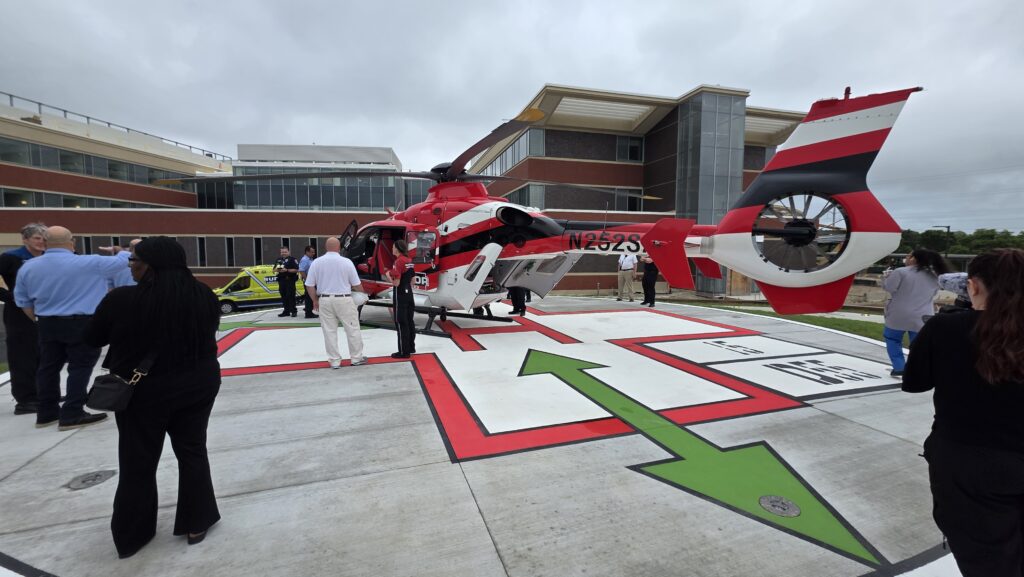
The need for a third infrastructure classification parallels existing distinctions in operational regulation. Large air carriers operating under Part 121 generally rely on Part 139 certificated airports, while AAM operations are expected to fall under Part 135 criteria. However, heliports are currently exempt from Part 139 certification requirements. Part 135 requires only that an airport or landing area be deemed “ADEQUATE” by the certificate holder, a standard that is inherently subjective, poorly defined, and has been shown to lead to high risk situations in the vertical flight industry.
Without a clear infrastructure classification tied to minimum standards, determinations of adequacy are left to individual operators and pilots interpretation, many of whom receive limited to no training in heliport or vertiport design criteria. A private-use commercial-operations category would help close this gap by establishing objective expectations for facilities supporting commercial vertical flight operations.
Policy Must Evolve With Technology…and Reality
The evolution of aviation toward distributed, vertical and electrically powered operations demands a corresponding evolution in infrastructure policy. The existing binary classification of public-use and private-use facilities under Title 14 CFR no longer reflects the operational, safety and economic realities of modern vertical flight.
Establishing “Private-Use Commercial-Operations” as a third federally recognized infrastructure classification would provide a pragmatic solution. It would:
- Enable appropriate oversight
- Improve data integrity and accountability
- Create a pathway for targeted federal investment
- Help prevent a potential patchwork quilt of conflicting and contradictory state regimes
- Preserve the access control necessary for safe and efficient commercial operations
- Support the successful deployment of AAM
- Address longstanding safety and accountability issues in the traditional helicopter industry
The question facing policymakers is not whether change is necessary, but whether the regulatory framework will adapt in time to support the next generation of air transportation technology, safely, credibly and sustainably.