
By Philip Hicks, Autonomy Global Ambassador – U.K. and Middle East
A European Turning Point in Naval Design

Europe is reconceiving maritime power. Instead of relying on traditional large, crew-intensive carriers, a new generation of vessels has emerged to project influence through uncrewed systems deployed from smaller, flexible and more affordable hulls. No European ship illustrates this more clearly than Portugal’s NRP D. João II, the drone-first naval platform with a novel ‘dual use’ badge.
The vessel stands as Europe’s first purpose-built drone carrier, designed around unmanned aerial, surface, and subsea systems rather than crewed aircraft or heavy strike capability. Euronews reports that the ship measures 107.6 meters, is being built by Damen in Galați, Romania, and is scheduled for delivery in the second half of 2026, at a projected cost of 132 million euros (US$ 156.2 million), largely funded through EU recovery programs (Recovery and Resilience Facility, the central financial instrument of NextGenerationEU or RRF).
Some academics and policy specialists argue that Portugal’s heavy reliance on RRF support may test the spirit, if not the letter, of the original rules, which did not envisage military platforms being funded through recovery instruments. But the EU’s 2025 shift to allow RRF funds in support of certain defence-related initiatives, combined with the vessel’s broad civilian remit, makes this less a violation and more a reflection of the evolving policy landscape.
This is not a retrofit, nor an opportunistic conversion. It is a deliberate strategic choice by Portugal to redefine how a mid-sized navy with vast maritime responsibilities can exert presence and safeguard its interests in the Atlantic.
A Purpose Built Drone Carrier
Unlike retrofitted platforms that bolt on uncrewed capability, Damen engineered the NRP D. João II from inception for drone operations. It features a 94 meter flight deck, aviation hangars and a stern ramp for launching unmanned surface and underwater vehicles. This enables it to host a multi domain uncrewed force on a single platform. Euronews’ reporting on the ship’s modular mission architecture and payload systems confirmed these characteristics.
The ship’s core crew of 48 is significantly smaller than legacy combatants of comparable size, a result of high automation and deliberate design. It can also embark up to 42 specialists, such as researchers, drone operators and technicians, and temporarily accommodate an additional 100 to 200 personnel for humanitarian or civil protection tasks, according to a report in Brazilian journal Click Petróleo e Gas. These operational figures align with technical summaries describing the ship’s crew capacity and modular role support infrastructure.
Uniquely, the vessel is built to re-role within roughly one week by swapping modular mission packages. This gives Portugal the ability to pivot between maritime surveillance, scientific research, environmental monitoring, security operations or emergency response without the inflexibility typical of traditional warship classes.
Portugal’s Strategic Positioning in the Atlantic
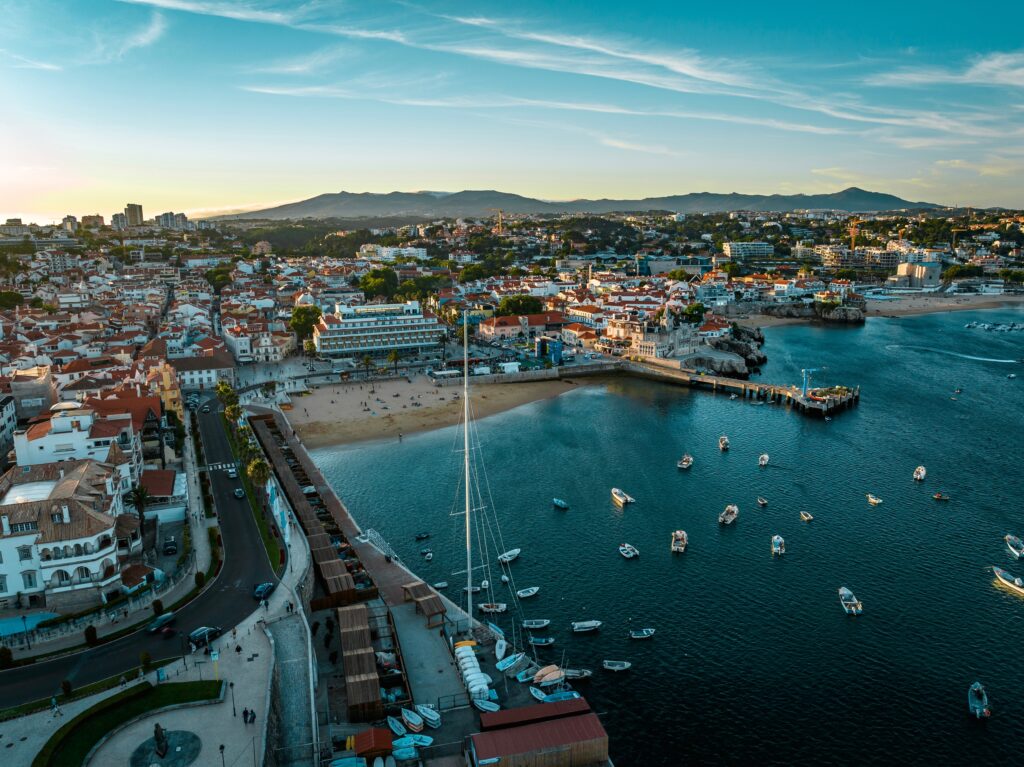
Portugal’s maritime domain is one of the largest in Europe. The country must ensure sovereignty, monitor environmental conditions and protect strategic underwater infrastructure across such a vast region, which demands persistent presence. Traditionally, only high-endurance frigates or major aviation assets could deliver this coverage, and even then with constraints.
The NRP D. João II changes this paradigm. A crewed command hub supported by long-range uncrewed systems allows Lisbon to maintain a constant Atlantic footprint without proportional increases in manpower, fuel consumption or deployment burden. It gives Portugal the equivalent of a distributed, multi-domain sensor and response grid that can be rapidly extended or contracted across its waters.
EU investment through the RRP underscores that this is not only a national project but a European one. By backing innovative multi-mission drone carriers, the EU has effectively supported a new model of maritime presence suited to the continent’s environmental, security and economic priorities. Importantly, Lisbon is also the home base for the EU’s European Maritime Safety Agency (EMSA),responsible for border control through to fishery protection and pollution monitoring primarily by providing surveillance technology, data and air support.
A Reference Model for European Naval Modernisation
While Portugal’s vessel is the most ambitious drone-first platform in Europe, it sits within a broader regional pattern. Belgium and the Netherlands are already fielding remote Mine Counter-Measures (rMCM) drone-motherships that deploy USVs, AUVs, ROVs, and rotary UAVs for mine countermeasures. These new ships keep crews outside danger zones while unmanned systems conduct detection and disposal at unprecedented speed and safety.
NRP D. João II seems to represent the next step in this progression. Where the Belgian–Dutch ships specialise in mine warfare, Portugal’s platform embodies a general-purpose, multi-domain and multi-mission concept. If successful, it may become the template for European navies seeking high utility at a sustainable cost, without committing to the enormous expense of aircraft carriers or large amphibious assault ships.
Global Context and Strategic Convergence
The Portuguese ship fits into a global movement toward drone-enabled naval power.
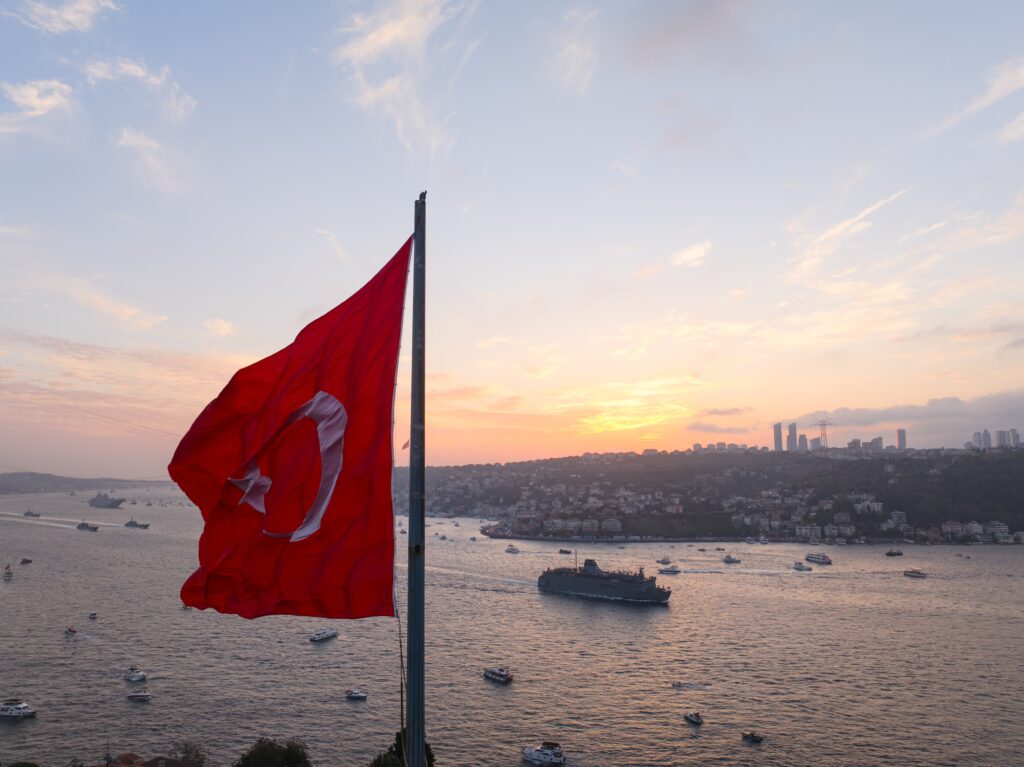
Turkey has demonstrated embarked Unmanned Combat Aerial Vehicle (UCAV) strike capability from its TCG Anadolu, including autonomous sorties and precision engagements. China has been experimenting with small straight-deck drone carriers and airborne UAV mothership concepts. Iran has commissioned a converted container-ship drone carrier. The United States is considering a shift toward scalable drone motherships through the Expeditionary Sea Base (ESB) class.
But Portugal’s NRP D. João II stands apart for its emphasis on persistence, maritime governance, science and civil protection over high-intensity combat alone. It represents a broader and arguably more future-proof vision of naval power for medium states.
Lessons from Traditional Carrier Power Projection
For more than half a century, maritime dominance has been tied to the super-carrier. Yet these ships require extraordinary investment. The design and construction of a single nuclear super-carrier can take a decade or more. Total program and lifecycle costs can reach tens of billions of dollars. They demand thousands of sailors, extensive escort groups and vast sustainment resources.
Portugal’s approach offers another way. Drone-first platforms redefine power projection by moving the center of gravity from a massive hull to distributed, low-risk autonomous systems. They offer the ability to scale capability rapidly, sustain presence economically and adapt to mission changes at a speed that traditional carrier battle groups cannot match.
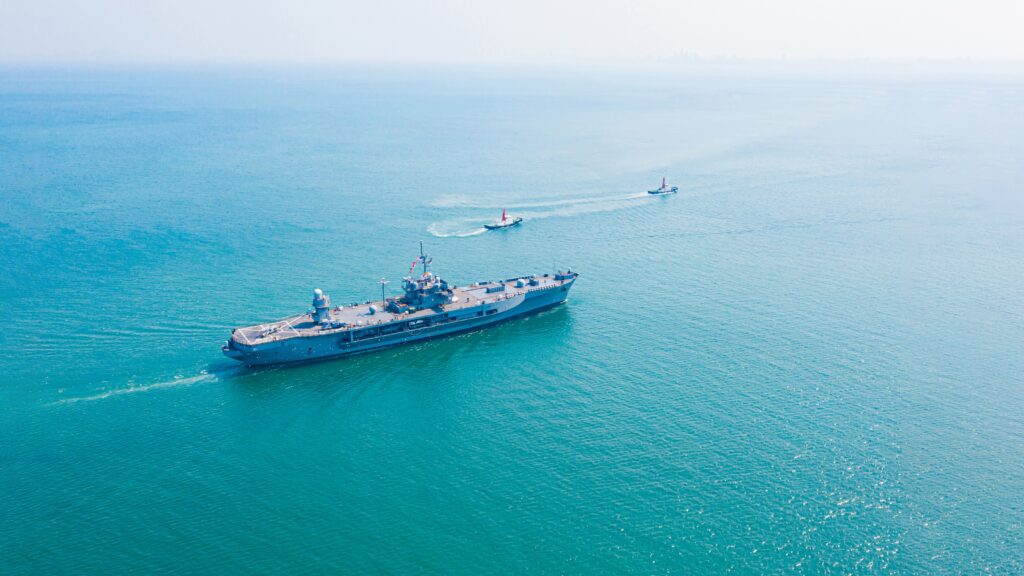
Time will tell whether the United States adjusts its long-standing carrier and battle group formation strategy to incorporate this new model of distributed autonomy, or whether it maintains traditional structures while experimenting at the margins. The US Navy’s ESB is a large, crewed support ship. Proposals now envision adapting it into a drone mothership by adding a UAV deck and launch systems for large UUVs. With multiple ESBs already in service and more under construction, the Navy has the structure in place to field such upgrades quickly if it chooses.
Portugal as a Pioneer in a New Maritime Future
The NRP D. João II is more than a new ship for Portugal. It stands at the leading edge of a structural change in how nations define maritime power. By combining a small crew with a multi domain uncrewed ecosystem, Portugal strengthens its Atlantic presence, enhances European maritime resilience and demonstrates how autonomy can multiply the effectiveness of medium navies. In doing so, Portugal shapes a future where naval influence will not depend on size, but rather on intelligence, adaptability and the ability to project persistent, distributed capability across the world’s oceans.