

By: Dawn Zoldi
At the 2026 Space Symposium, NASA’s Moon Base Program Executive Carlos Garcia-Galan and Redwire Space President Mike Gold laid out an unambiguous vision for a permanent human outpost on the lunar surface, swarming with drones, pressurized rovers, and international partners…and the clock is already running.
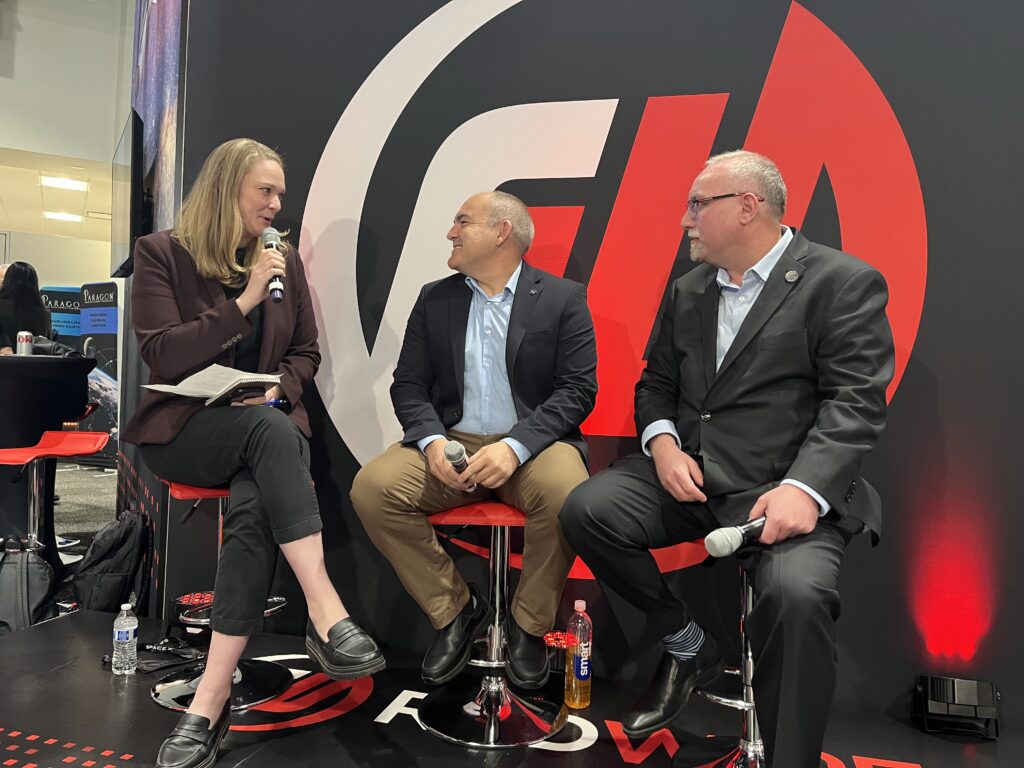
CNN Space & Science writer Jackie Wattles moderated the panel From Lunar Flyby to Moon Base, What’s Next? It was a conversation about execution.
NASA’s Garcia-Galan opened with a straightforward statement of purpose. “We have to aim high. NASA is here to do the big things, the near impossible, the things that look like science fiction and turn them into reality,” he said. He then described a near-term campaign calling for roughly eight lunar landings next year alone, ramping toward 21 total missions between now and 2029, with habitats, lunar terrain vehicles, and a $10 billion-scale investment horizon by 2028.
Gold, whose company Redwire Space has hardware already flying on the International Space Station (ISS) and a partnership with Japan’s iSpace on NASA’s lunar delivery program, cut to the chase on the biggest obstacle: “I’ll sum it up in one word: politics,” he said. “This isn’t an engineering challenge. This isn’t a scientific challenge. This is a political will challenge.”
What NASA’s Ignition Event Means for Industry
The conversation repeatedly circled back to “Ignition,” the March 24, 2026 NASA event that sent shockwaves through the commercial space community. Hosted by NASA Administrator Jared Isaacman and attended by all 61 Artemis Accords signatory nations, Ignition was NASA’s formal declaration of a new strategic direction. The big idea is to pivot away from Gateway in its current form and focus all available resources on building a permanent surface base at the lunar south pole.
Perhaps a mere policy speech to some, Ignition actually launched a live procurement. NASA simultaneously released rapid-turnaround RFIs and RFPs across multiple program areas as a signal to industry that the agency was done planning and ready to buy. Rather than lengthy multi-year solicitations, the agency compressed the response window to as little as four weeks.
“It puts a lot of stress on the team, but it ultimately costs less. You’re going to have more companies be able to participate when you have fewer days, less lengthy proposals, less red tape,” Gold opined.
In just the first two days of the Symposium, Gold had already held meetings with other companies and international partners asking the single urgent question, “What can we put on the moon, and how fast can we move?”
Garcia-Galan reinforced that the four-week window is only the entry point. “We’re asking for technologies to support permanent human presence. We’re asking for the number of landing missions through 2032 and beyond. This is the signal to say: we’re here to stay with this demand, and we’re building a Moon Base.” For any company weighing whether to invest in expanded production capacity or new supply chain vendors, now is the moment.
CLPS: The Lunar Delivery Engine Scaling Up Fast
NASA’s Commercial Lunar Payload Services program, universally referred to as CLPS, has become central to making those landings happen. Launched as a $2.6 billion initiative, CLPS competitively contracts commercial companies to build and operate robotic landers that carry NASA science instruments, technology demonstrations and other payloads to the lunar surface under fixed-price contracts. The program scored a historic milestone in 2024 when the IM-1 mission became the first commercially operated spacecraft to land on the moon.
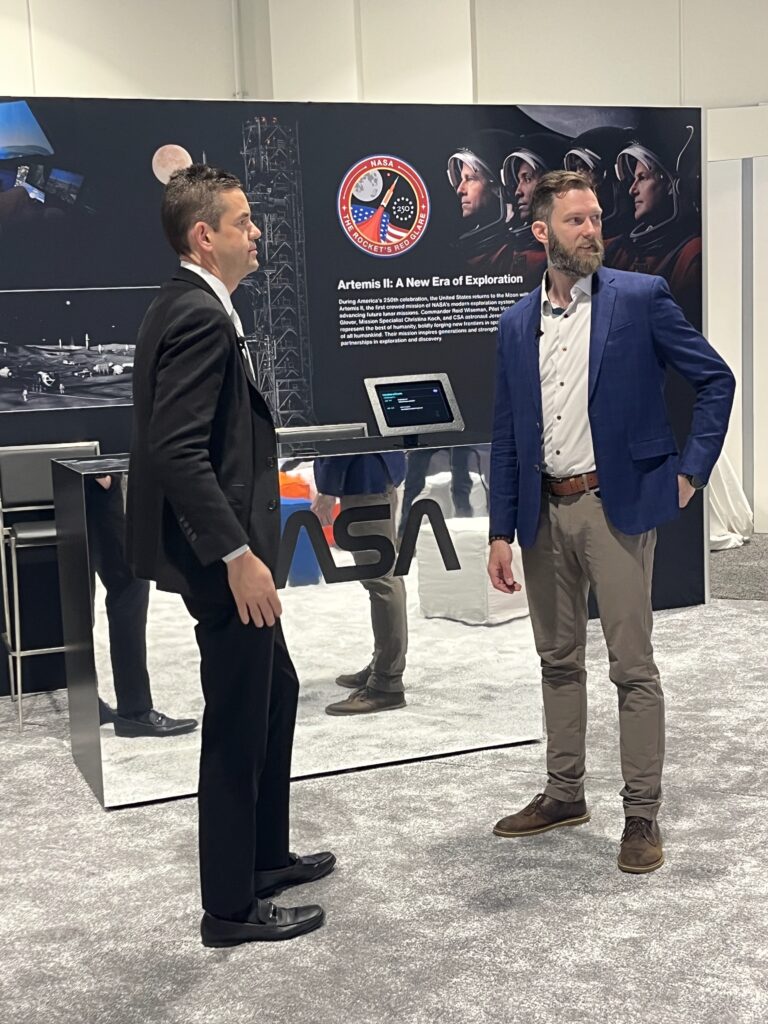
Under Ignition, NASA plans to dramatically scale that model. The agency announced a CS-8 task order under the existing CLPS indefinite-delivery/indefinite-quantity (ID/IQ) framework, accelerating payload deliveries with a target of up to 30 robotic landings beginning in 2027,using only landers with proven flight heritage.
Gold and his team at Redwire, through their partnership with Japanese commercial lander company iSpace, are already responding. “Our partnership with iSpace leverages the Japanese investment, so you’re getting two for the price of one,” Gold explained. Japan has its own CLPS-equivalent missions, and Redwire is positioned to capture that shared data stream. The four-week response window, Gold noted, is an explicit filter for readiness. To even apply, a company must have a system that has already reached the moon or one that is fully qualified to do so.
Garcia-Galan outlined the strategic intent. The surge in CLPS missions is about more than getting payloads to the surface. It is a deliberate stress test on the supply chain. “Going from four moon landings to eight next year is going to be a huge challenge. We recognize that. But it is going to allow us to identify the bottlenecks, the supply chain issues, the production capacity issues that we’re going to tackle from day one.”
Surface First: How NASA Is Reprioritizing Its Architecture
One of the session’s most substantive exchanges addressed what now happens to Gateway, the planned lunar-orbiting space station that Ignition formally paused as a near-term requirement. Garcia-Galan acknowledged the decision directly. Feedback from HLS (Human Landing System) providers SpaceX and Blue Origin indicated that Gateway’s specific orbital requirements added timeline complexity without being on the critical path to the surface.
“Every dollar, every kilogram, every resource, every person is going to be focused on those (Ignition) objectives,” Garcia-Galan said. The objectives are to land humans on the lunar surface by 2028 and deliver the initial elements of a permanent outpost by 2030. An orbital facility may still follow, but it will serve the base, not precede it.
Gold noted that hardware developed for Gateway will not go to waste. Redwire’s roll-out solar arrays, for example, originally tested on the ISS and further developed for Gateway’s Power and Propulsion Element, will be positioned for the Space Force’s SR-1 Freedom mission and potentially a future Mars campaign. “Focus on the moon base first, and then logistics will follow,” Gold said.
Drones, Rovers and a View from the South Pole
When Wattles asked both panelists to describe the moment that would make the Moon Base “feel real,” meaning when would the capability signal humanity had become a two-world species, their answers provided a detailed operational picture.
Garcia-Galan described standing on the lunar surface and looking out across hundreds of square miles of activity. In his mind, that would include drones flying into permanently shadowed craters at the south pole, automated lunar terrain vehicles pre-positioning infrastructure, pressurized rovers extending crew range far beyond the habitat clusters. “I can almost picture it now, looking around and seeing all these assets in play, just basically enabling something that today we think of as science fiction,” he said.
The drones will be integral. Garcia-Galan confirmed that NASA will lead the lunar drone effort as a flagship Phase One mission. It will use autonomous aerial vehicles specifically to access the crater environments near the south pole, regions with permanent shadows that may hold water ice and other ancient materials billions of years old. The VIPER rover complements that surface-level survey.
Gold’s vision for a defining moment went further out on the timeline. He pointed to helium-3, an isotope embedded in the lunar regolith that carries potential as a fusion energy fuel, as the inflection point that would shift the moon from a destination for science to a source of real economic value for Earth. “That moment when we can find economic value on the moon is going to make my capitalist heart sing,” he said. Whether helium-3 extraction becomes viable depends entirely on first achieving the sustained surface presence the Moon Base program is designed to deliver.
International Partners and the Legal Framework to Come
With Gateway paused, the question of how international partners plug into the new architecture takes on added urgency. Garcia-Galan confirmed that NASA is actively working with partner nations across habitation, surface mobility and infrastructure domains, with a three-month window to define contribution roles. Japan is building a pressurized lunar terrain vehicle. The UAE has expressed strong interest in a meaningful role. Canada could repurpose its robotic arm expertise for surface operations.
Gold argued that the Artemis Accords need a functional operational successor, an intergovernmental agreement modeled on the ISS framework that gives all partners a legal vehicle to interoperate systems on the lunar surface without negotiating new bilateral deals such as every time an Italian habitat needs to interface with a Japanese rover. “Whether you’re large or small, there’s a role for you in the Artemis program,” he said. “It’s about launching our values to the moon.”
Garcia-Galan acknowledged the legal framework is on NASA’s radar but offered no specific timeline. He noted that physical and diplomatic infrastructure both need to be built in parallel.
Funding, Science Cuts and the Long Game
Wattles pressed both panelists on the budget reality. The president’s FY2026 request included several hundred million dollars for the Moon Base effort, a meaningful down payment, but a fraction of what the full build-out will require. Proposed cuts to NASA’s science directorate drew pointed concern.
Garcia-Galan stayed the course. “The budget is a long process. The priorities and the mandate are clear. We’re going to be heads down implementing them,” he said.
Gold called for efficiency to accompany funding. In his opinion, we need more public-private partnerships on the science side, more commercial competition and better value per dollar across the agency. He also drew a firm line around the ISS. Maintaining current crew and cargo launch cadence is non-negotiable if the technologies NASA plans to use on the moon are to be developed and tested in low-Earth orbit first.
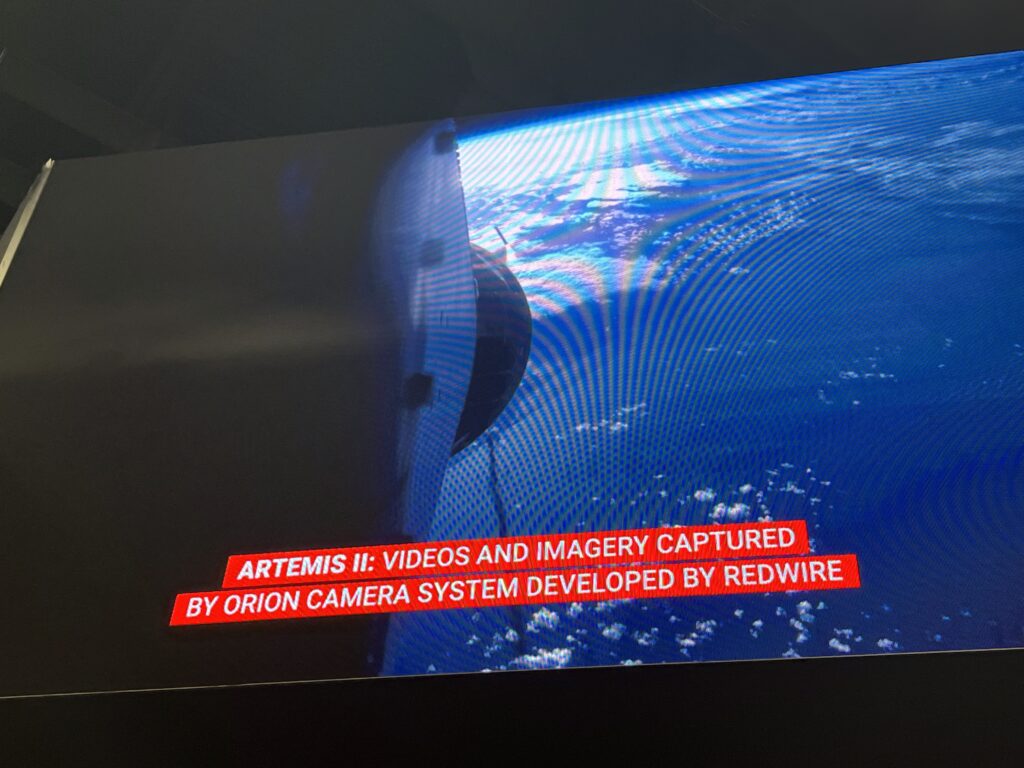
The Artemis 2 mission, which carried Redwire cameras that documented the crew’s lunar flyby, served as both proof point and motivational anchor for the discussion. Garcia-Galan recalled listening to the crew describe micrometeorite flashes and the colors of the lunar surface from orbit. “I went to bed that night and I could almost transport myself to the moon,” he said. “It’s a completely different place than what I remembered two weeks before.”
Gold coined a phrase that may follow Garcia-Galan for the rest of his tenure at NASA. The Orion spacecraft’s solar array cameras are, he declared, “the world’s most powerful selfie stick.” Garcia-Galan laughed and confirmed it. The point underneath the humor is serious, though. Public engagement through cameras and storytelling provides mission-critical infrastructure for the political will that Gold insists the program cannot survive without.
The Moon Base is not a destination NASA expects to reach quickly. But at the 2026 Space Symposium, the agency made clear it intends to get there. And that industry has four weeks to decide whether it wants to come along.