
By: Daniel Castillo, Chief Commercial Officer
Innovation truly takes off only when it solves real problems for real people. Few applications have as much potential societal impact as medical deliveries. Beyond environmental and logistical advantages, medical drone delivery directly addresses urgent patient needs in ways that can surpass current service standards. When innovation leads to measurable improvements in healthcare delivery – when time, access and reliability save lives – it earns acceptance within society. Centers of excellence like BCN Drone Center are proving what that future can look like in practice.
A Complex Healthcare Supply Chain
Vaccines, controlled medicines, blood, organs and tissue for transplantation or research stand out among the many materials that can save lives. Preserving their quality throughout the supply chain presents a major challenge that only specialized couriers and highly trained personnel can address. Integrating drones into such a complex ecosystem requires significant effort to ensure alignment with existing protocols. Physical custody, cold‑chain requirements, traceability and data integrity must be preserved at all times. Drone operators entering this space must understand they do not act in isolation in a parallel system, but rather become an integrated part of an already tightly regulated supply chain.
Vein‑to‑Vein Deliveries, Not Door‑to‑Door
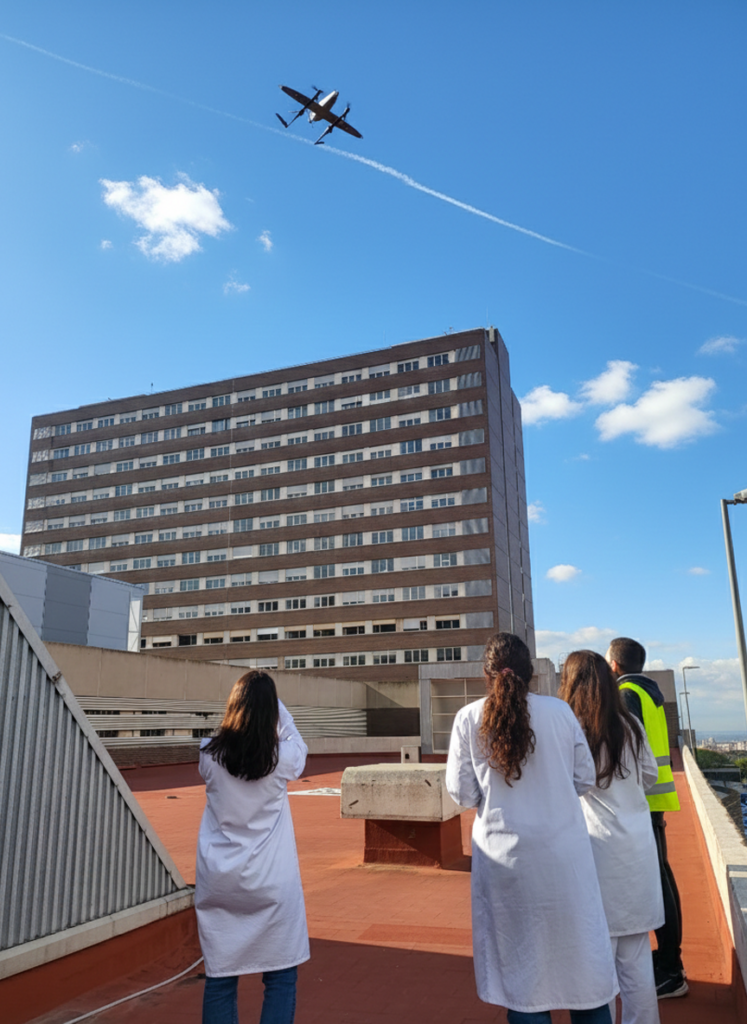
Medical drone delivery demands a fundamentally different approach than conventional door‑to‑door logistics. As air robotics aims to improve healthcare outcomes through innovation, it must avoid replicating the e‑commerce model where goods are simply left at a doorstep. In healthcare, success lies in enabling secure, efficient supply corridors between compliant facilities. Drones can meaningfully improve patient access to care by connecting hospitals, laboratories and points of care, even if patients walk a short distance to a compliant drop‑off location.
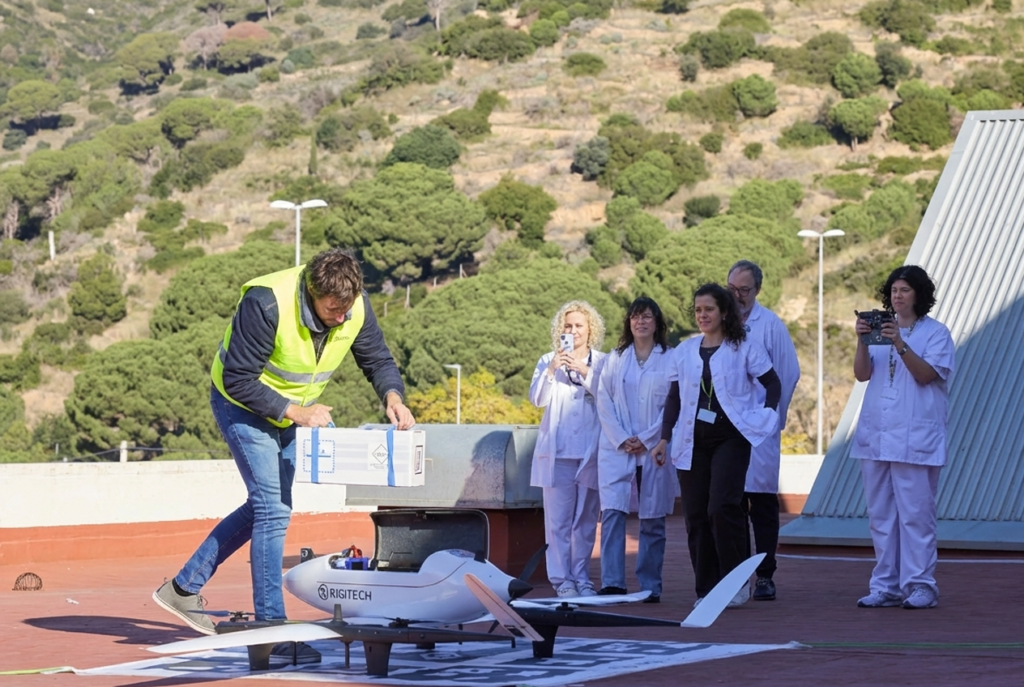
Just as hospital pharmacies, community pharmacies, wholesalers and specialized couriers operate in strict compliance with pharmaceutical regulations, “vertical pharmacies” must be added to this ecosystem as secure hubs for medical drone operations. Modern drones already integrate advanced sensors and safety systems that allow them to take off and land in very confined spaces. This enables a minimal physical footprint and limits capital expenditure for vertical infrastructure. Technologies such as real‑time kinematic (RTK) positioning, LiDAR to detect obstacles and unauthorized personnel, and visual recognition of QR codes on landing surfaces collectively can ensure safe operations both in the air and on the ground.
Scalability And The Virtuous Circle
Despite significant technological progress over the past decade, routine medical drone deliveries remain rare in societies governed by stringent air‑safety regulations, including Europe. The European Union Aviation Safety Agency (EASA) introduced amendments in September 2025 to the Acceptable Means of Compliance (AMC) and Guidance Material (GM) under Implementing Regulation (EU) 2019/947, which incorporate the latest version of the Specific Operations Risk Assessment (SORA) 2.5 framework developed by JARUS.
This regulatory evolution has opened the door in some countries to more complex operational scenarios. Many view this as a precursor to fully urban drone deliveries under SAIL III. Under certain assumptions, such as the use of proven technology and duly authorized operators, this framework allows beyond visual line of sight (BVLOS) operations over population densities of up to 5,000 inhabitants per square kilometer.
While restrictions on aircraft size still limit payload and range, routine operations delivering parcels of up to 5 kg within a 50 km radius are becoming feasible. This creates a compelling opportunity for regular drone corridors that connect regional hospitals with remote points of care, provided population density thresholds are met.
In many remote regions, traditional logistics operate at or near break‑even levels to meet minimum public service obligations. Only higher‑volume regions sustain profitability. Introducing air robotics into these contexts changes the equation in two key ways: drones offer a significantly lower cost‑per‑kilometer, and improved service levels can strengthen healthcare access, which in turn stimulates demand for other essential services. This dynamic can initiate a virtuous circle in which enhanced healthcare availability reduces regional inequalities and makes remote areas more attractive for families and professionals.
From The Lab To The Skies: BCN Drone Center’s Role
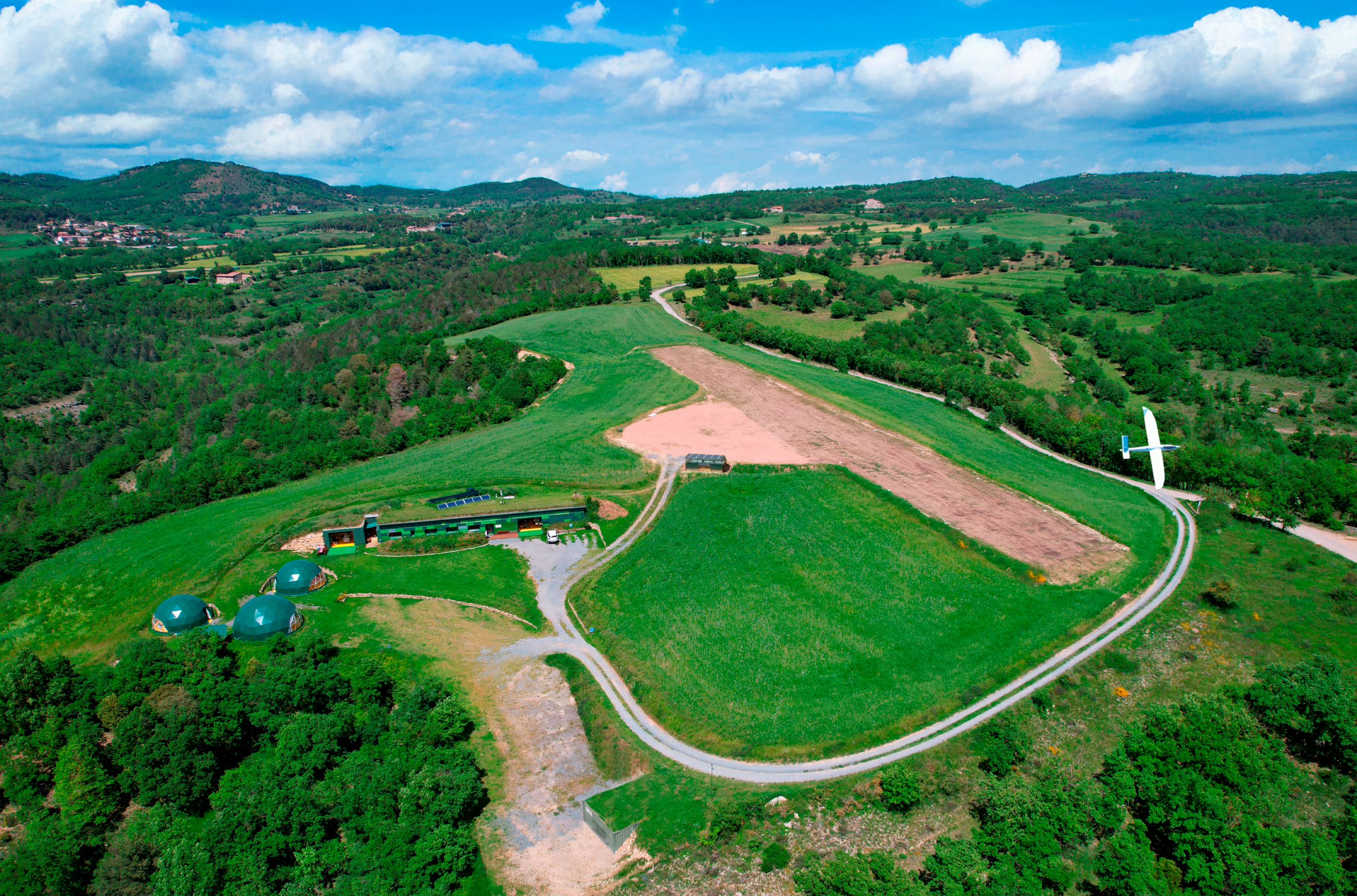
BCN Drone Center is an aerospace engineering company and one of Europe’s longest‑standing UAV test sites, It offers segregated airspace, dedicated runways, lab facilities and expert support just an hour from Barcelona. Since 2000, it has provided testing services, certification support, training and infrastructure to help drone manufacturers and operators move from concept to safe, repeatable operations. Beyond being a test range, BCN Drone Center has evolved into an applied research and advanced air mobility (AAM) hub, where regulators, healthcare providers and technology companies can experiment together under real‑world conditions.

Some of its most pioneering work has taken place in the field of medical drone delivery in Catalonia, where the regional government invests in public‑private collaborations to accelerate innovation. In partnership with the TIC Salut Social Foundation and healthcare providers, BCN Drone Center has supported trials in La Garrotxa and the Barcelona metropolitan area to move biological samples by drone between primary care centers and hospital laboratories.
In one route between the ABS Vall d’en Bas and Hospital d’Olot, RigiTech’s Eiger drone cut transport time by around 60–74% and reduced CO₂ emissions by more than 90%, compared to ground transport, while maintaining sample integrity. Additional pilots in the Northern Metropolitan Health Region transported more than 300 blood and urine samples in flights averaging six minutes, instead of nearly thirty by road. Both of these trials demonstrated feasibility and clinical value.
These efforts feed into a broader strategy for integrating drones into healthcare logistics across Catalonia, including planned services for a Blood and Tissue Bank in the Lleida region. They also provide critical evidence for regulators and hospital managers that medical drone delivery can be safe, traceable and compatible with existing quality systems, rather than an experimental add‑on.
Drone Delivery Days and BCN Drone Days 2026
To share these lessons and build new alliances, BCN Drone Center has created a series of events focused on real‑world delivery operations. In March 2024, its Drone Delivery Days brought together more than 100 participants from 12 countries to see live flights. This included ten successful medical deliveries using RigiTech systems and advanced temperature‑controlled payloads that showed zero temperature deviation. The event highlighted that the technology is ready, but that collaboration across regulators, healthcare providers and industry remains essential to scale.
Building on this momentum, BCN Drone Center will host a dedicated five‑day UAS Application Workshop in June 2026, known as BCN Drone Days, at its test site in Moià, with one full day devoted to medical and logistics applications. The June edition will combine expert panels on regulatory frameworks and healthcare integration with hands‑on demonstrations of BVLOS routes, vertical pharmacies and end‑to‑end sample workflows. Technology providers, clinicians, hospital managers and policymakers will have the opportunity to co‑design operational models that move medical drone delivery from pilots to routine services. For anyone working at the intersection of drones and healthcare, this ideal forum will allow you to see what is already possible and to shape what comes next.
Delivering Medicines…And Value
As drone technology and procedures increasingly comply with stringent risk‑assessment standards, such as SORA 2.5, the key question becomes what tangible value drones bring when they operate above our heads. Medical logistics provides one of the clearest answers. It supports reduced CO₂ emissions, less congested streets, faster and more reliable transport of critical supplies and, ultimately, better outcomes for patients who might otherwise wait too long for care. Medical drone delivery is becoming a practical tool that helps health systems deliver timely, high‑quality care to people wherever they live… and organizations like BCN Drone Center are helping to turn that promise into everyday reality.