
By Dawn Zoldi
The Department of War’s Drone Dominance initiative isn’t just another Pentagon program. It’s a live‑fire experiment in how the United States will build, buy and field millions of small uncrewed aircraft systems (sUAS) at speed. It is also a stress test for the entire domestic drone industrial base, from motor makers and battery suppliers to software shops and final assemblers. In a recent AUVSI Webinar, Michael Robbins, President and CEO of AUVSI, walked Travis R. Metz, Deputy Director and Chief Operating Officer, Defense Innovation Unit (DIU) and Drone Dominance Lead, through the latest program updates. Here’s what they had to say.
From Concept to Contracts in Months
Backed by 1.1 billion dollars in reconciliation funding, Drone Dominance was designed from day one as a joint effort inside the Office of the Secretary of War rather than a traditional service‑specific program of record. The mandate included generating a real demand signal by actually buying drones at scale, and using that buying power to catalyze a resilient, largely U.S. supply chain. (See prior AG coverage of administration’s current drone blueprint).

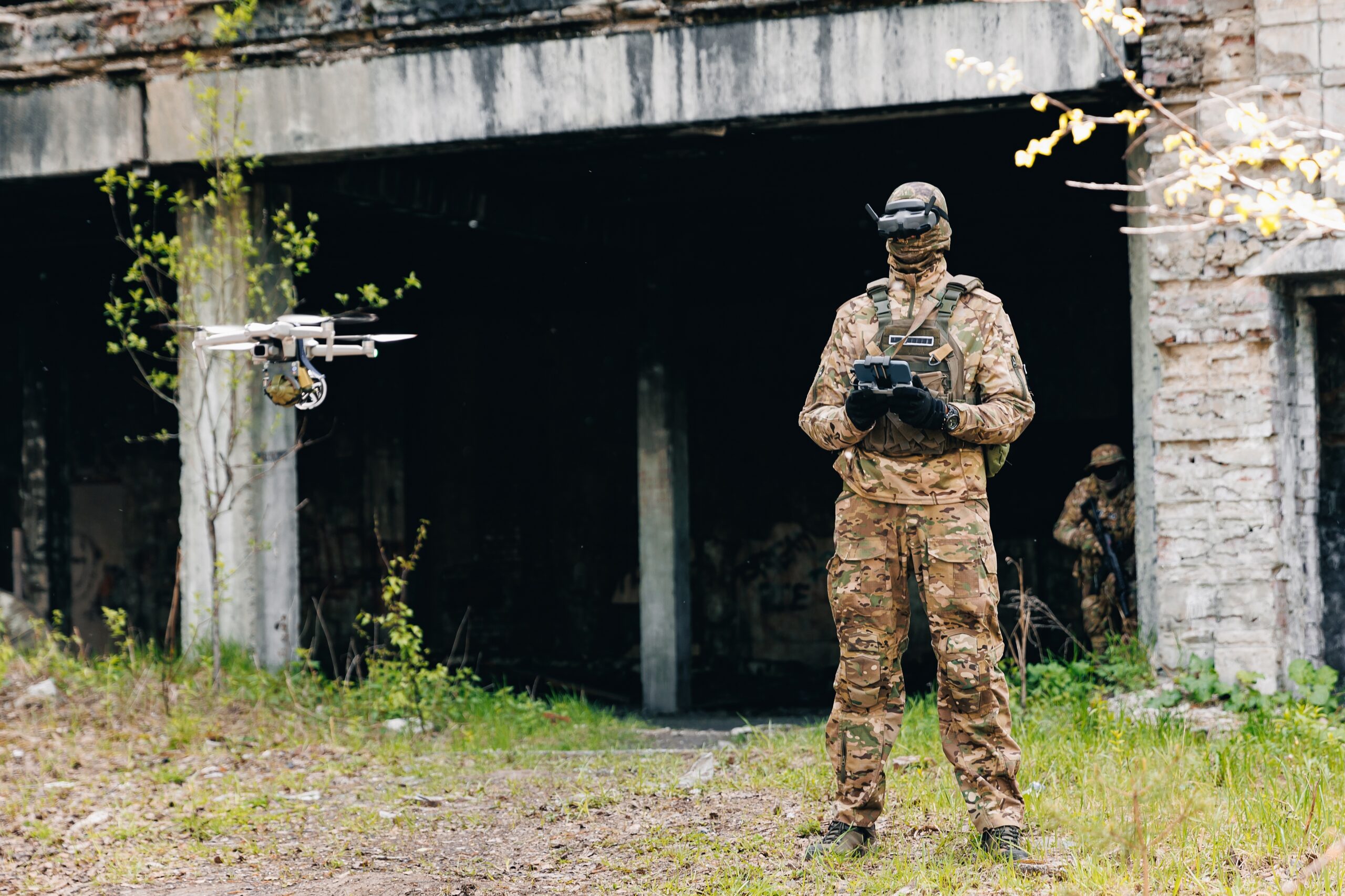
Phase One moved at a pace that felt “insanely slow” to commercial entrepreneurs but “recklessly fast” by Pentagon standards, according to Metz. An RFI in November led to an official announcement in December, hundreds of submissions, a paper down‑select to 25 vendors in January and then the first “Gauntlet” fly‑off at Fort Benning in late February. Over two weeks, those teams flew roughly 800 sorties across four mission profiles that included long‑range attack runs, complex urban scenarios by day and night, and live‑fire events.
As a result, the Department is now placing initial orders with 11 of the 25 companies that made it to the Gauntlet. (See prior AG News coverage of the first Gauntlet tranche). It will start with about 30,000 drones in a 150 million dollar “starting gun” buy that will scale up to a 300 million dollar Phase Two. For an industry long accustomed to multi‑year requirement cycles and program starts that never quite materialize, the new way of doing business appears to be to fly, prove it, get picked and get paid on delivery.
Why FPV, Why Now
Drone Dominance’s first act was narrowly focused solely on Group 1, one‑way attack FPV‑style drones with a tested range of 10 kilometers, distances which DIU will extend in later calls. Metz readily acknowledged criticism that the program doesn’t yet cover the full spectrum of Group 1 missions, from ISR to logistics. However, he argued that starting narrow avoids diffusing the demand signal, while accelerating learning.
DIU has thus far focused on two intertwined goals:
- Give the Army, Marines, and special operations forces (SOF) meaningful quantities of expendable small UAS (sUAS) as a forcing function to modernize doctrine, training and force structure.
- Use those buys to start building a scalable component ecosystem (think: motors, batteries, frames, cameras, payloads) whose benefits will spill into many other drone modalities and mission sets.
DIU based this benchmark on current battlefield realities. Ukraine will produce on the order of five to six million similar drones this year, as the U.S. just begins to climb the curve. Metz was blunt about the fact that he doesn’t know the exact number of sUAS the U.S. will need in a peer conflict, but “zero is short” and “it’s a lot more than we have.”
Gauntlet I: “Would You Take This Drone to Battle?”
Drone Dominance’s signature motif seems to be performance in the dirt over promises on slides. DIU built Fort Benning’s “Gauntlet I” around four mission sets:
- A 10‑kilometer run to a net with intermediate waypoints at 2.5, 5, and 7.5 kilometers, under Georgia pine canopies that became an unintended but valuable radio frequency (RF) stressor.
- Day and night urban operations, from rooftop and alley insertions to moving a drone one room deep into a building to hit an interior target.
- A live‑fire profile for a subset of systems that brought fuses and warheads into the mix.
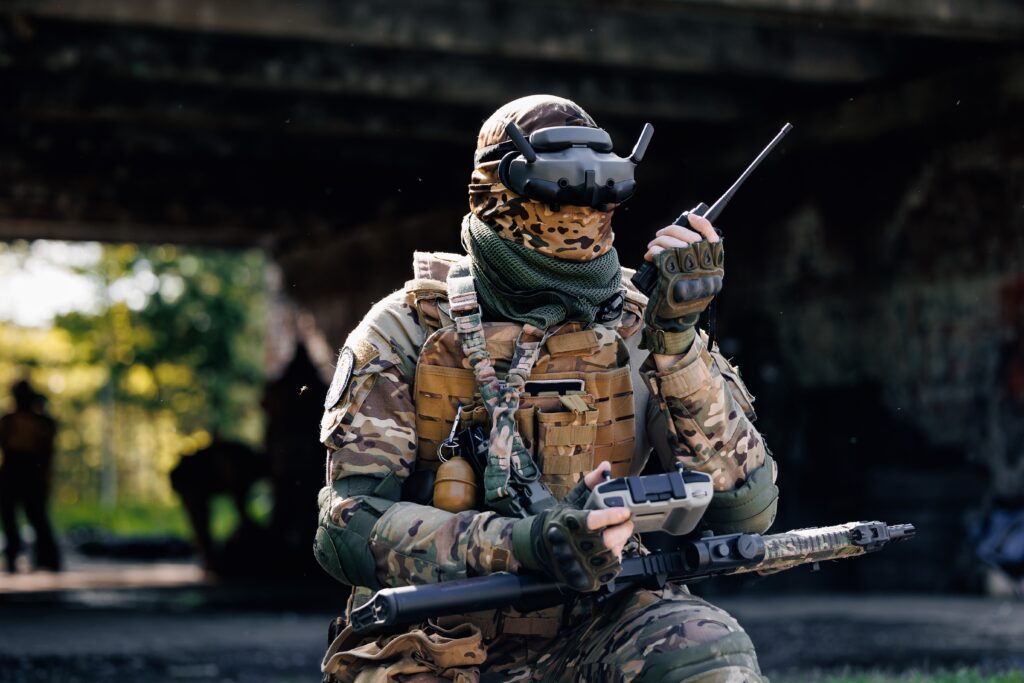
Roughly 60 operators from across the Army, Marine Corps and SOF units rotated through sorties, flying unfamiliar hardware after limited training. After each mission, they answered a battery of questions about usability and effectiveness. One question, Metz says, correlated with every other data point: “Would you take this drone to battle?”
That simple litmus test, combined with objective scoring, revealed meaningful performance dispersion across systems and helped the team identify which platforms should move immediately into production-buys. The process was far from clean. Weather, operator variability, and the sheer complexity of an outdoor range all injected noise. But it was real…and real was the point.
For industry, Gauntlet I surfaced the crucial lesson that the “system” is not just the airframe. Companies whose hardware could theoretically meet the mission sometimes faltered because they failed to provide intuitive interfaces, robust documentation or training packages that could bring an average soldier to competence in about two hours
Fly, Rinse, Repeat: What’s Changing in Gauntlet II
Gauntlet II, slated for late summer in a “brutally hot” location (Metz’s words), will turn up the difficulty knob in several ways.
First, the counter‑UAS (C-UAS) environment will be far more aggressive. The Joint Inter‑Agency Task Force 401, which leads integrated counter-sUAS efforts across the Pentagon and interagency, will run a layered C-UAS “red team” throughout missions. Companies should expect:
- Heavy RF congestion and jamming
- GNSS degradation and denial
- Non‑kinetic effects
- Mission designs that force multiple drones in the air simultaneously, stressing not just RF robustness but fleet‑level control and deconfliction
Second, autonomy and advanced communications will shift from “nice to have” to “table stakes.” In Phase One, some of the best‑performing systems at Benning were fiber‑optic tethered drones that remained controllable under heavy RF attenuation, and many successful attack runs relied on some flavor of automated terminal guidance. In Phase Two, the expectation will be that systems should either bring sophisticated comms (think: frequency agility, hopping, alternative links) or enough onboard intelligence to ride through comms loss and still hit a target.
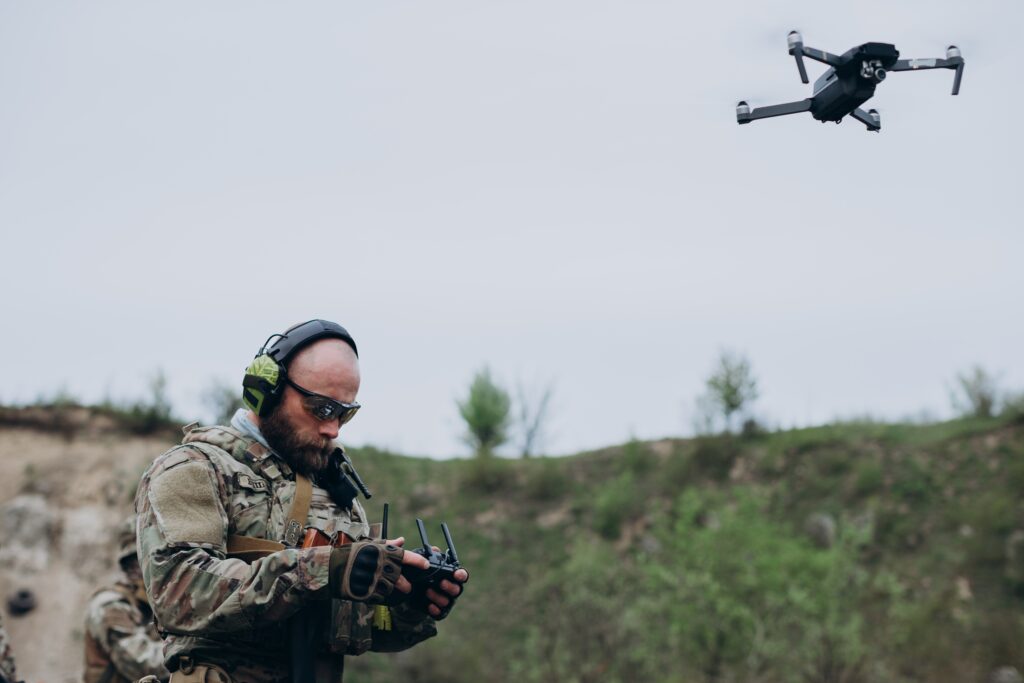
Third, cognitive load will become a formal evaluation axis. Metz wants to see systems that make it easier for a single operator to manage multiple drones and that can be effectively used by “less exquisite” pilots, not just elite SOF FPV gurus. The Phase Two cadre will deliberately include less experienced flyers. The missions will be structured to test whether the drone, and its human‑machine interface, helps the warfighter succeed.
Finally, the missions themselves may bifurcate. Based on vendor feedback, the team is considering separate tracks and allocation “slots” for shorter‑range, highly agile, building‑clearing drones at the squad level and longer‑range platoon or company‑level attack systems that can push out to 20 kilometers or more. Asking a large, heavily loaded platform to thread an interior room deep inside a dense urban structure, with all the attendant collateral damage risk, doesn’t make much sense, Metz admitted.
Reading the Demand Signal: Tips for Industry
For suppliers, manufacturers and technology providers across the ecosystem, Drone Dominance offers opportunity as well as hard truths. Metz explicitly stated that the end state for a commodity FPV‑type attack drone is not 50 vendors, but more like three to four highly capable, scalable producers.
Several themes emerged from Phase One that should guide industry preparations for Gauntlet II and beyond:
- Train for the operator you’ll actually have. Design training curricula and UI/UX around soldiers who will not get years of reps and sets on your system. Expect evaluation operators to have only a few hours of exposure before missions and build in checklists, guardrails and automation accordingly.
- Treat manufacturability as a primary requirement. DIU and Drone Dominance teams evaluated companies not just on flight performance, but on the maturity of their manufacturing processes, financing, quality systems and their ability to ramp from thousands to hundreds of thousands of units.
- Think end‑to‑end logistics. Charging, ruggedized packaging, field repairability and ease of carriage “through the jungle” will all count more in Phase Two, as evaluators look at the total system burden on the force.
- Expect clear, stricter supply‑chain rules. And plan backward from them.
Decoupling at Scale: The Supply Chain Squeeze
Perhaps the most consequential element of Drone Dominance is its role as a catalyst for supply‑chain decoupling from China. Phase One allowed Chinese components in certain categories, but for Phase Two, Metz said the Department does not intend to buy systems with Chinese motors or batteries. Future calls will layer in increasingly restrictive component prohibitions that go well beyond existing NDAA authorities.
Metz emphasized that the goal is not to punish any single company. It is to ensure that, in a future conflict with a peer adversary, the United States can source critical components at scale without relying on an opponent’s export policies. As a case in point, China has already used export controls on rare‑earth magnets, critical for brushless motors, as a geopolitical lever during peacetime.
Drone Dominance will soon publish much more granular guidance on what “no Chinese motors or batteries” means in practice for Phase Two. Expect more information to follow on minimum thresholds, preferred architectures and how those expectations will tighten over successive calls. DIU intends to give industry a roadmap that supports rational investment in new domestic factories, contract manufacturing relationships and alternative material sources.
In parallel, the program will leverage and extend existing “blue” component frameworks, while relying on industry associations and events to knit together OEMs and sub‑component providers. A Drone Dominance industry day this month is already oversubscribed. DIU has planned another engagement at AUVSI’s XPONENTIAL in Detroit in May to keep that dialogue going.
Beyond Drones: A Template for Acquisition
Drone Dominance also marks an inflection point for DIU itself. Metz now serves as Deputy Director and COO of the 350‑person organization, working alongside Director Owen West. Drone Dominance comes under DIU’s umbrella without changing its core leadership. DIU brings institutional muscle in rapid contracting, especially Commercial Solutions Offerings (CSOs) and other transaction authorities (OTAs), and deep experience with sUAS and C‑UAS technologies.
DIU has bigger ambitions to prove an “advanced market competition” model that can be copied and pasted to other domains, from ground robotics to maritime systems and beyond. Rather than trying to “reform” the entirety of the defense acquisition system, Drone Dominance and DIU continue to build parallel pathways based on problem statements, iterative competitions and payment upon delivery of competitively selected systems.
This is not painless, Metz explained. Some capable companies will not get orders. Others will struggle to scale or to meet tightening supply chain criteria. But Metz views the churn of creative destruction powered by a clear demand signal as “a feature, not a bug.” DIU aims to foster a smaller number of truly industrial‑grade producers and a broad domestic ecosystem of sub‑tier suppliers ready to surge when the nation needs millions, not thousands, of attritable drones.
For now, the straightforward instructions to industry are to watch the demand signal, show up to compete, design for reality at the tactical edge and be ready to “fly, rinse, repeat.”