

By: Dawn Zoldi
The Federal Aviation Administration (FAA) has been busy updating the rules for how police, fire and emergency management agencies fly drones. At the DRONERESPONDERS NACON, FAA leaders provided the latest updates on a cluster of new policies and digital tools aimed at making advanced operations both safer and easier to approve.
Setting The Stage: Drones “No Longer Experimental”
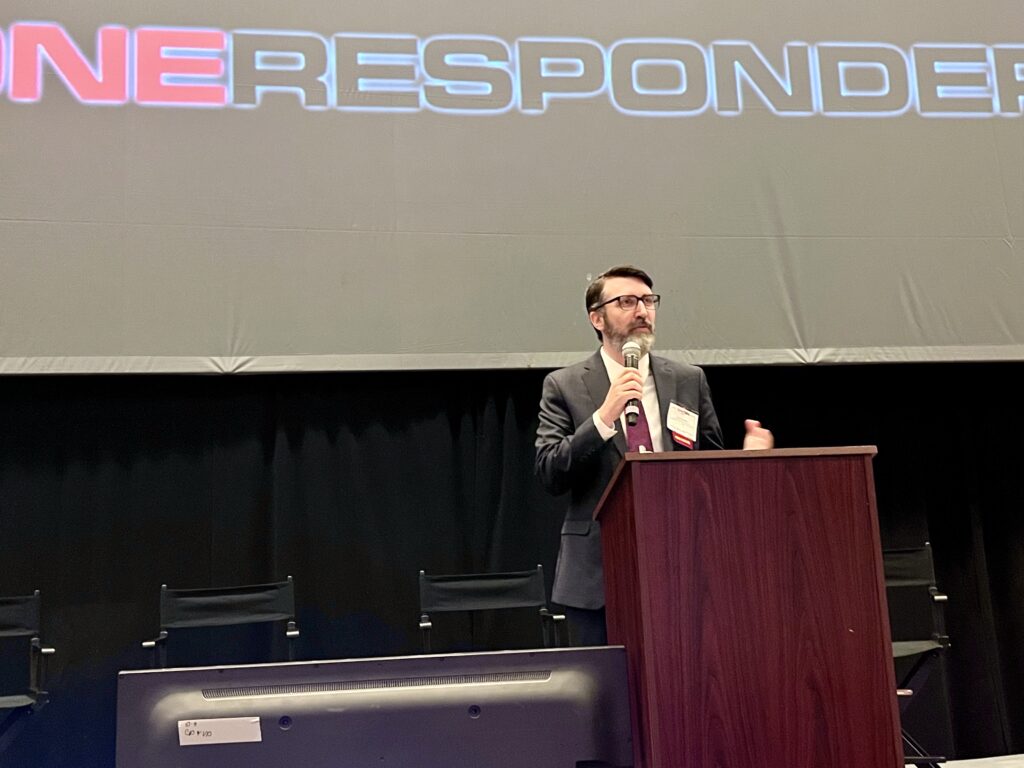
Paul Strande, FAA Deputy Executive Director for the Office of Advanced Aviation Technologies, stressed that public safety UAS are now “practical tools,” not “science projects.” Across the country, drones have become standard kit for search and rescue, disaster assessment, fireground oversight and law enforcement response. They give commanders early eyes on scenes, shorten response times and keep officers out of unnecessary danger. Strande framed the FAA’s job as turning that reality into durable policy. The agency has moved to shift from ad hoc regulatory relief to “clear, scalable regulatory pathways” for the missions public safety agencies perform every day.
That shift happens against the backdrop of the agency’s proposed rule to normalize beyond visual line of sight (BVLOS) operations. It drew more than 3,000 comments in its first round and another 800 after the comment period was reopened. Strande cast those comments, many from public safety, as essential feedback that is reshaping how the FAA thinks about risk, accountability and performance‑based regulations for drones that may soon share busy airspace with crewed aircraft and emerging automated systems.
Public Safety BVLOS: New Resources For Waivers
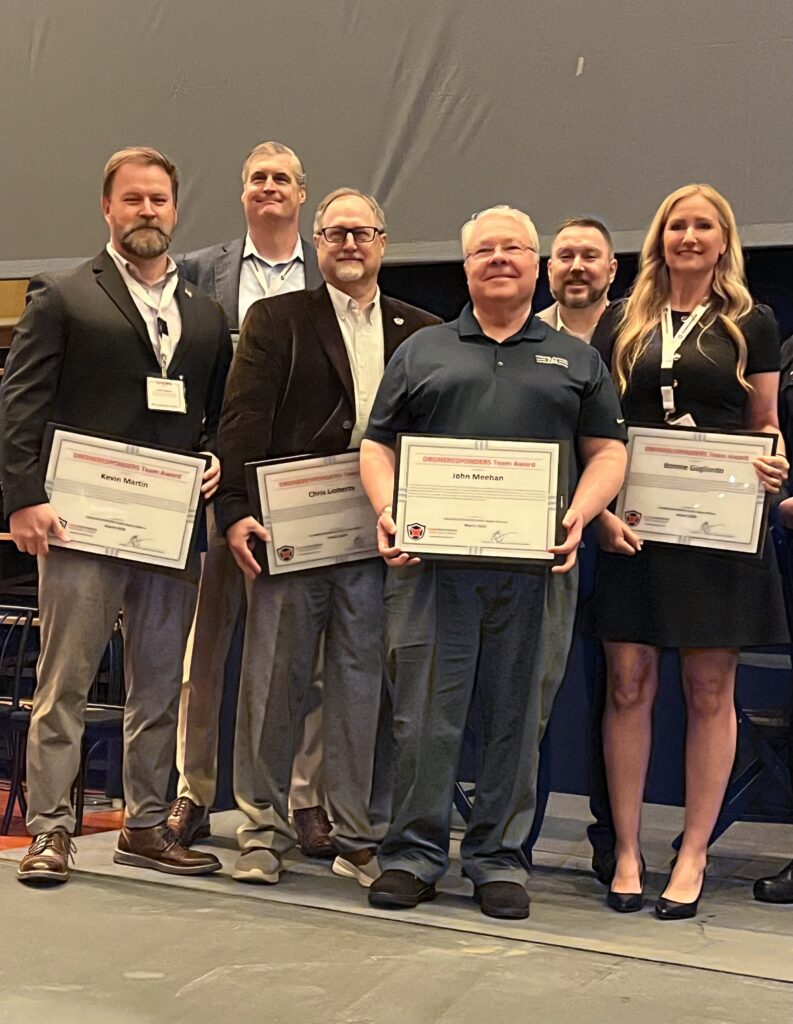
The FAA’s John Meehan noted that the agency has seen “really good progress in the last couple years,” driven in part by hundreds of Part 91 and Part 107 waivers and real‑world technology deployments that give regulators concrete data to work with. Even so, for many established drone programs, the FAA realizes the current bottleneck is not intent or experience, but navigating an application interface that was never designed with a busy patrol sergeant or fire captain in mind. Many departments discover how complex Title 14 really is, while using the waiver process.
Meehan reminded the audience that public safety operators must understand not only Part 107 but a suite of other parts, such as Parts 48, 47, 89 and others, that apply to their drones and missions. Two big issues repeatedly slow approvals, he said. Agencies either fail to fill out abbreviated checklists correctly or neglect to upload required documentation. Both force the FAA to stop the clock while applicants fix basic admin gaps.
To counter that, the FAA has published a public safety waiver guide and built out a dedicated public safety team that will routinely jump on a Teams call within an hour to walk an agency through what it actually needs to submit. Even so, the panel warned agencies that before they sink six figures into a fleet, call the FAA, validate that the chosen platform is on the agency’s list of approved aircraft for operations over people and make sure the mission profile envisioned is even eligible for a waiver.
In addition to the guide, and perhaps the most practical development for front‑line agencies, the FAA created a more usable Part 107 waiver application. Public safety feedback heavily informed it. Meehan said his office also published a flowchart to help agencies determine whether they actually need a waiver and, if so, which regulatory parts they are implicating. Combined with updated checklists and explicit safety explanation guidelines, the goal is to move away from bespoke, narrative‑heavy packages and toward more structured submissions that align with how FAA analysts actually evaluate risk. The agency is also leaning on DRONERESPONDERS and similar organizations to aggregate best‑practice templates, so departments are not starting from a blank page every time.
Crucially, the FAA’s public safety team is inviting operators to contact them early and often, even before procurement, to sanity‑check aircraft choices, mission concepts and waiver strategies. Asking whether a particular drone is on the FAA’s operations‑over‑people list before a city signs a purchase order can save months of frustration and avoid stranded assets that cannot legally fly the missions city councils expect.
Smarter Waiver Strategies: Equipment, Risk And One‑to‑Many Ops
Many departments treat waivers as a shortcut rather than a safety case. Meehan said his team regularly sees public safety agencies “transfer the risk” by moving exposure off officers and onto bystanders, while claiming the waiver is necessary “for safety.” The FAA’s stance remains uncompromising. The agency’s first priority remains aviation safety and protection of people on the ground. Any waiver that increases risk, even in the name of officer safety, is a hard sell.
That philosophy shapes the FAA’s emerging approach to one‑to‑many operations, where a single pilot controls multiple drones. Such concepts are already approved for some drone delivery and agricultural operations, but public safety use is still under case‑by‑case review. Under Part 107, there is an explicit restriction on flying multiple aircraft, so the agency is using waiver safety explanation guidelines to analyze each system and limit ratios, typically to something like one‑to‑four, based on automation, human factors and the complexity of the mission.
Meehan emphasized there will be no one‑size‑fits‑all template because vendors’ autonomy stacks and control interfaces differ dramatically. Applicants need to demonstrate that stepping from one to three aircraft does not increase the probability of a midair collision or ground injury, and that communication, situational awareness and crew coordination remain robust even as the operator’s workload rises. In practical terms, that means treating the drone program like an aviation unit that looks more like what helicopter pilots already live with. That includes robust training, maintenance, records and risk assessments
New SGI Tool: Preparing For Emergencies Before They Happen
If BVLOS waivers are about planned complexity, the FAA’s Special Government Interest (SGI) process is about crisis. When a major incident hits, such as a wildfire, a mass casualty event or a large‑scale search, SGI authorizations allow agencies to operate inside temporary flight restrictions or in ways standard rules would not normally permit.
FAA representatives stressed that too many public safety teams still wait until disaster strikes to figure out SGI, even though “when you need it, you need it” immediately. The new SGI portal and process are designed for 24/7 access and rapid response. The team monitors requests “24, 7, 365,” with a track record of turning emergency approvals very quickly. But there is a catch: agencies must create their accounts and understand the workflow before the emergency, not during it.
Panelists urged departments to treat SGI preparation like any other pre‑incident planning: register, test access and read the FAA’s guidance now, so you are not trying to upload documentation and interpret flight restrictions from the back of a command vehicle. For agencies that still have questions, FAA public safety staff and air traffic specialists are making themselves available at conferences and via direct outreach to walk teams through exactly what to expect when they push the SGI button.
TSA Stadium Tool And Airspace Around Special Events
Stadiums and other high‑profile venues are becoming another regulatory flashpoint as drones proliferate around sports and concert events. Public safety agencies will increasingly rely on coordinated FAA–TSA processes, such as those used during the Super Bowl, to manage airspace in and around these crowded environments.
The panel used the Washington, D.C. Special Flight Rules Area and its inner “fringe” as a cautionary example of how complex urban airspace can be. Local departments must navigate overlapping restrictions, waivers and special authorization channels that can differ for federal, local and private operators. To bridge that gap, FAA colleagues from safety and hazard branches are now fielding stadium and critical‑infrastructure questions alongside traditional air traffic queries, often referring agencies directly to the FAA’s new DiSCVR tool and other digital resources that define what is possible on game day. (See previous AG coverage of DiSCVR).
Culture, Collaboration And What Comes Next
Throughout both the keynote and the panel, culture surfaced as the real hinge point for public safety UAS policy. Strande argued that integration “does not happen because a rule is published,” but when daily operational practices and regulatory frameworks evolve together, underpinned by mutual trust and a shared safety culture. On the panel, FAA representatives praised the dramatic increase in professionalism and aviation literacy they have seen among public safety pilots over the past few years, crediting that shift with enabling more ambitious approvals.
Looking ahead, the panelists predicted a year of continued cooperation, incremental waiver streamlining and, eventually, new rules that will unify today’s patchwork of approvals into more predictable pathways for law enforcement and fire agencies. Technology will not slow down. Expect to see more robotic drones and increasingly automated fleets. For those public safety agencies deploying them, the FAA’s message to public safety is to treat every drone like an aircraft, every operation like aviation, and every waiver as a safety case. If you do, the regulatory system will meet you halfway.