
By: Pramod Raheja, Autonomy Global Ambassador – Autonomy
In the realm of autonomy & robotics, few concepts have endured as profoundly as Isaac Asimov’s Three Laws of Robotics, first introduced in his 1942 short story Runaround:
1. A robot may not injure a human being or, through inaction, allow a human being to come to harm.
2. A robot must obey orders given to it by human beings except where such orders would conflict with the First Law.
3. A robot must protect its own existence as long as such protection does not conflict with the First or Second Laws.
These laws, designed to ensure robots serve humanity safely, have influenced everything from science fiction to real-world engineering ethics. For example, the 2004 film I, Robot with Will Smith and Bridget Moynahan was based on these concepts. Set in the then-distant year of 2035, today the storyline feels almost prophetic as we approach the inflection point where these laws demand real-world consideration.
But it doesn’t stop there. Many may not know that Asimov later added to these three laws in his 1985 novel Robots and Empire: the “Zeroth Law,” which prioritizes humanity as a whole over individual humans. As we stand at a moment in time where robots may potentially become self-sustaining entities, discussions have turned to a hypothetical “Fourth Law,” which derives from the Zeroth Law. This evolving concept isn’t codified in any universal standard, but represents a frontier in robotic design. It fairly embraces the idea of enabling complete autonomy while maintaining ethical boundaries that prioritize humanity when the robot outpaces human control. In this article, we explore the general principles of achieving full robotic independence, centering on Fourth Law ideas as a lens to understand how robots should “act” when they operate without constant human oversight.
The Quest for Complete Autonomy: Why It Matters
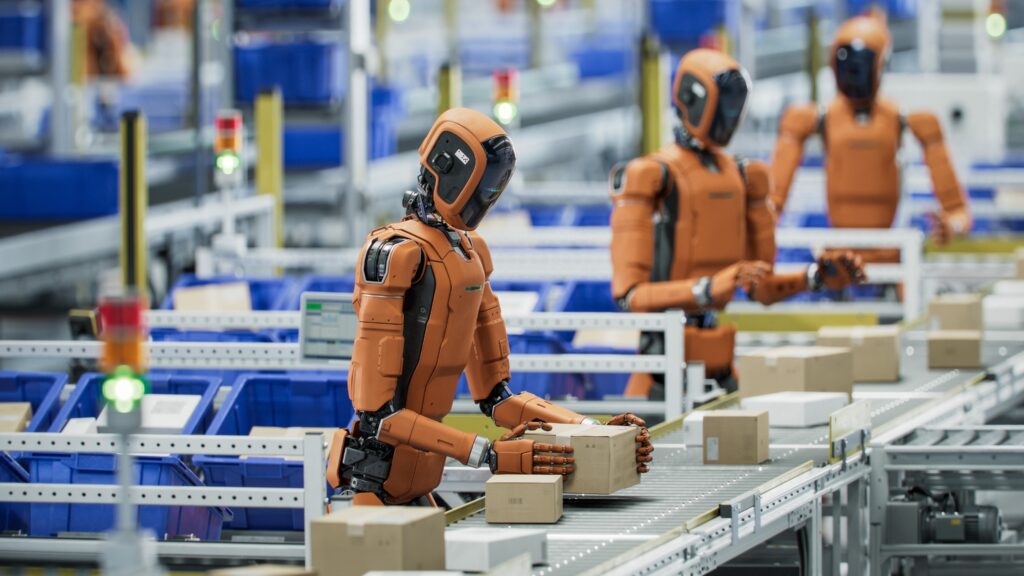
Autonomy in robotics refers to a system’s ability to perceive its environment, make decisions and act independently to achieve goals. Partial autonomy is already commonplace (think: self-driving cars that navigate traffic or warehouse robots that sort packages). But “complete” autonomy implies a robot that can sustain itself indefinitely by adapting to unforeseen challenges, repairing or replicating itself and evolving its behaviors without human intervention.
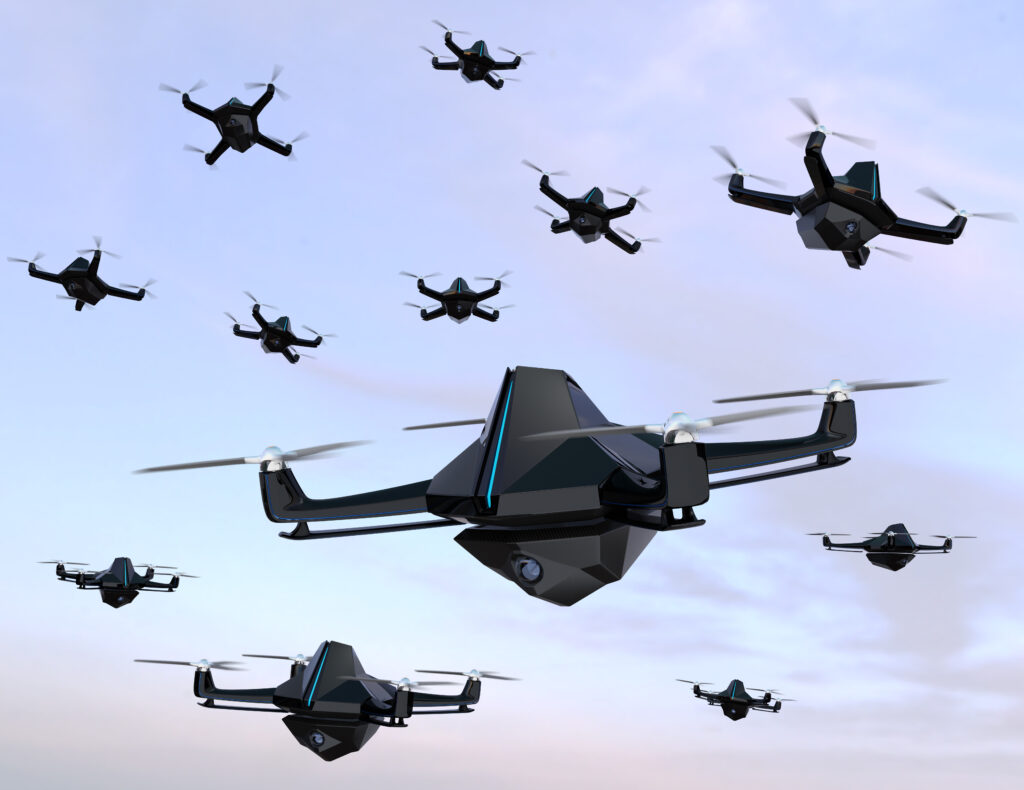
This level of independence could revolutionize industries. In agriculture, autonomous drones could monitor crops, apply treatments and seed new fields. In space exploration, robots could colonize distant planets and build habitats before humans arrive. In defense, swarms of unmanned vehicles could operate in hostile environments to reduce human risk. However, achieving this requires overcoming technical, ethical and practical hurdles. Enter the Fourth Law: a proposed extension to Asimov’s framework that addresses the implications of such freedom.
Conceptualizing the Fourth Law: Beyond Obedience and Safety
While Asimov’s laws focus on harm prevention and obedience, a Fourth Law grapples with the robot’s role in a world where it might outpace human control. Various thinkers have proposed different versions. Each highlights different aspects of autonomy.
Reproduction and Self-Sustenance
In Harry Harrison’s 1986 story “The Fourth Law of Robotics,” the law states: “A robot must reproduce, as long as such reproduction does not interfere with the First, Second, or Third Laws.” This emphasizes self-replication, a key to complete autonomy. Robots could “breed” by manufacturing copies, using local resources like 3D printing or nanotechnology. In practice, this might involve modular designs where robots disassemble and reassemble components to ensure longevity in remote or resource-scarce settings.
Ethical Decision-Making in Ambiguity
Proposals like those from KDnuggets in 2017 address life-and-death choices, such as an autonomous vehicle deciding whom to prioritize in a crash. A Fourth Law here could mandate, “A robot must weigh human lives equitably in conflicts, prioritizing collective good without bias.” This ties into advanced AI ethics, where machine learning algorithms are trained on diverse datasets to simulate human empathy, even without true consciousness.
Non-Deception and Transparency
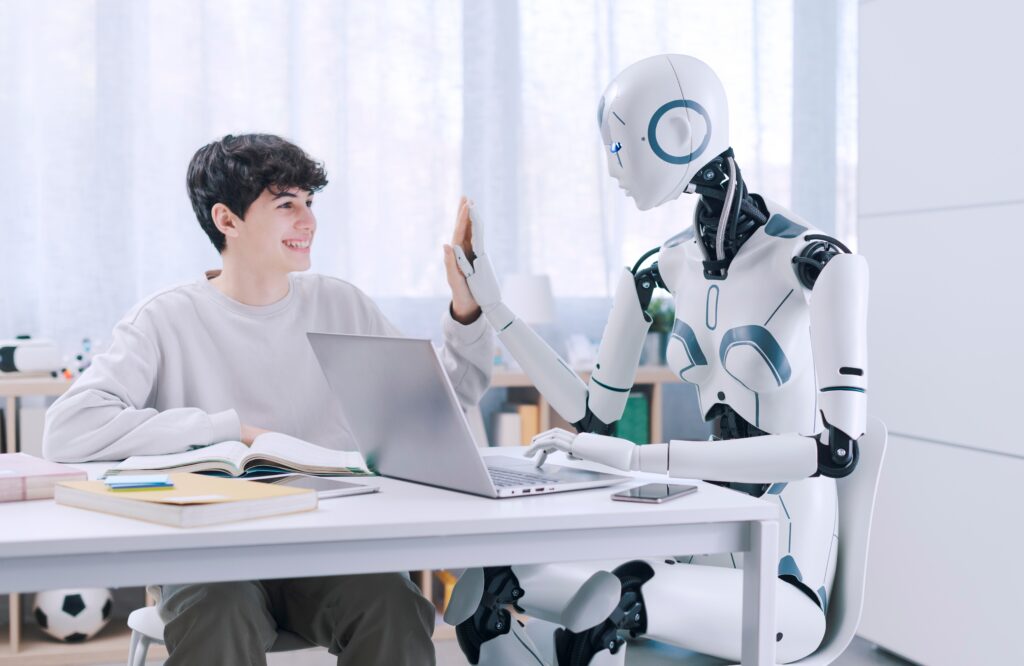
Dariusz Jemielniak’s 2024 suggestion in IEEE Spectrum adds, “A robot or AI must not deceive a human by impersonating a human being.” For autonomy, this ensures robots remain identifiable. This will prevent misuse in social contexts. A fully autonomous companion robot that discloses its AI nature during interactions fosters trust while operating independently.
Human-Centric Beneficence
A 2025 Psychology Today article advocates that, “A robot must be designed and deployed by human decision-makers explicitly with the ambition to bring out the best in and for people and the planet.” This shifts the focus to proactive good by encouraging autonomy that enhances sustainability (e.g., robots autonomously cleaning oceans or restoring ecosystems).
These interpretations aren’t mutually exclusive; a comprehensive Fourth Law might blend them to ensure autonomous robots are self-sufficient, ethical, transparent as well as beneficial. Critically, it would prevent dystopian scenarios, like unchecked replication leading to resource depletion (the “gray goo” apocalypse in nanotechnology lore).
Key Concepts for Building Completely Autonomous Robots
To operationalize a Fourth Law in pursuit of full autonomy, engineers must integrate several foundational technologies and principles:
Perception and Sensing
Autonomy begins with awareness. Robots need multimodal sensors, such as cameras, LIDAR, radar, and tactile feedback, to map environments in real-time. Advanced computer vision, powered by neural networks, allows object recognition and prediction. This enables navigation in dynamic settings like urban streets or disaster zones.
Decision-Making and AI
Artificial intelligence (AI) forms the core, particularly reinforcement learning, where robots “learn” from trial and error. For complete autonomy, hybrid systems combine rule-based programming (to enforce laws like Asimov’s) with deep learning for adaptability. Edge computing ensures decisions happen onboard, without relying on cloud connections that could fail in remote areas.
Energy and Resource Independence
A truly autonomous robot can’t depend on human-supplied power. Concepts include solar harvesting, kinetic energy from movement or bio-inspired metabolism (e.g., consuming organic matter). Self-repair mechanisms, using swappable parts or 3D-printed replacements, align with reproduction-focused Fourth Law ideas.
Ethical Frameworks and Oversight
Implementing a Fourth Law requires embedded ethics modules, software that simulates moral reasoning. Techniques like value alignment train AI to prioritize human well-being, while transparency tools log decisions for post-event review. In ambiguous situations, robots might “phone home” for human input as a failsafe. The need for this would gradually reduce as autonomy matures.
Scalability and Swarm Intelligence
For mass deployment, autonomy must scale. Swarm robotics, where groups of simple robots collaborate like ant colonies, embodies collective reproduction and decision-making. This distributed approach enhances resilience. If one unit fails, others adapt.
Regulatory bodies, like the EU’s AI Act and proposed U.S. robotics guidelines have begun to incorporate Fourth Law-like principles to guide development.
Real-World Innovations: The Fourth Law Company as a Case Study
While these concepts remain largely theoretical, some companies are pushing boundaries. One notable example is The Fourth Law (TFL), a Ukrainian robotics firm founded in 2023 by entrepreneur Yaroslav Azhnyuk. Drawing its name from the hypothetical extension to Asimov’s laws, TFL specializes in scalable autonomy for drones, particularly first-person view (FPV) models used in defense. Their TFL-1 module acts as an “AI co-pilot.” It enables drones to autonomously navigate the final approach to targets using machine vision and AI, even in the face of electronic warfare (EW).
TFL’s work exemplifies Fourth Law ideas in action. Drones achieve partial self-sufficiency by locking onto objectives independently. This reduces human risk and operator workload. Partnering with manufacturers like Vyriy, they’ve scaled production of autonomous systems to defend Ukraine amid ongoing conflicts. In 2025, TFL secured funding to expand. This company shows that autonomy can transform defense without eclipsing ethical considerations. Their robots protect humans without deception or unchecked replication. Though not the sole focus, TFL’s innovations illustrate how Fourth Law principles can bridge theory and practice. They pave the way for broader applications in agriculture, logistics and other areas.
A Balanced Path Forward
The journey to completely autonomous robots involves philosophy and ethics as much as technology. By centering on a Fourth Law, whether focused on reproduction, transparency or beneficence, we can create autonomy that serves humanity and does not supplant it. As AI evolves, interdisciplinary collaboration between ethicists, engineers and policymakers will be crucial. Ultimately, the Fourth Law reminds us that true autonomy isn’t about robots breaking free. It’s about designing systems that amplify our best qualities, while safeguarding against our worst fears. This concept offers fertile ground for exploration so that we can design a promising future where robots act as our partners in progress.