
By T. Seth Ford, Autonomy Global Ambassador – Systems Integrations
Consumer measurement tools, such as tape measures, measuring wheels and laser distance meters, haven’t changed much in decades. While they all work to turn physical space into numbers, they’re constrained by straight lines, line-of-sight and the patience of the person holding them. Meanwhile, smartphones can map rooms in 3D, reconstruct objects from photos and run real-time AI models. So why is measurement still manual? The answer isn’t a lack of technology It’s a focus on tools, rather than workflows.
Recently, a new category of smartphone-first, sensor-driven platforms has emerged, including augmented reality (AR) measurement tools, LiDAR-scanning apps and photogrammetry software. Examples like Polycam, RoomScan LiDAR, Magicplan and similar apps show that consumer devices can run high-performance software to extract detailed spatial data from cameras, depth sensors and inertial sensors. These platforms do more than measure. They model, visualize and structure space.
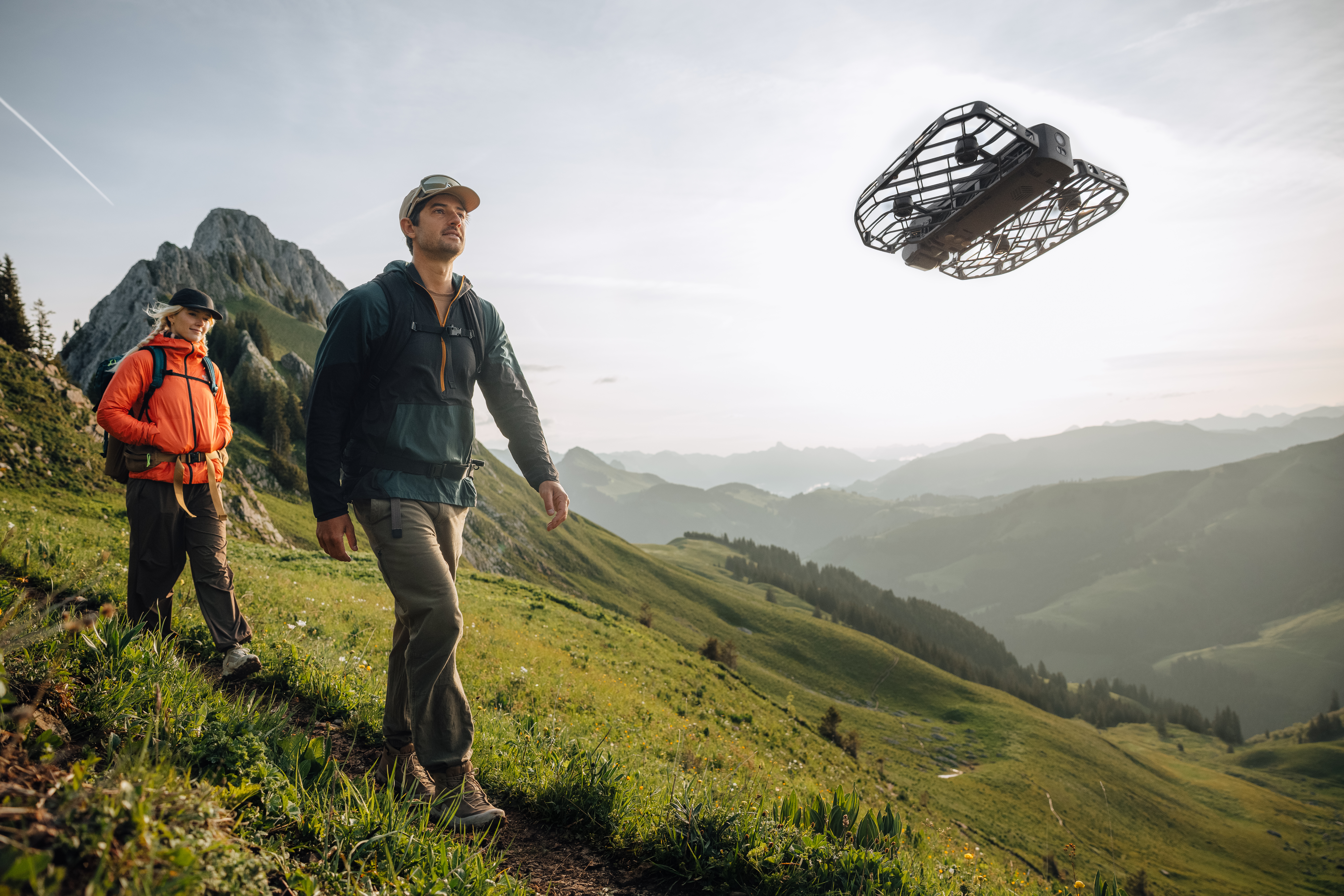
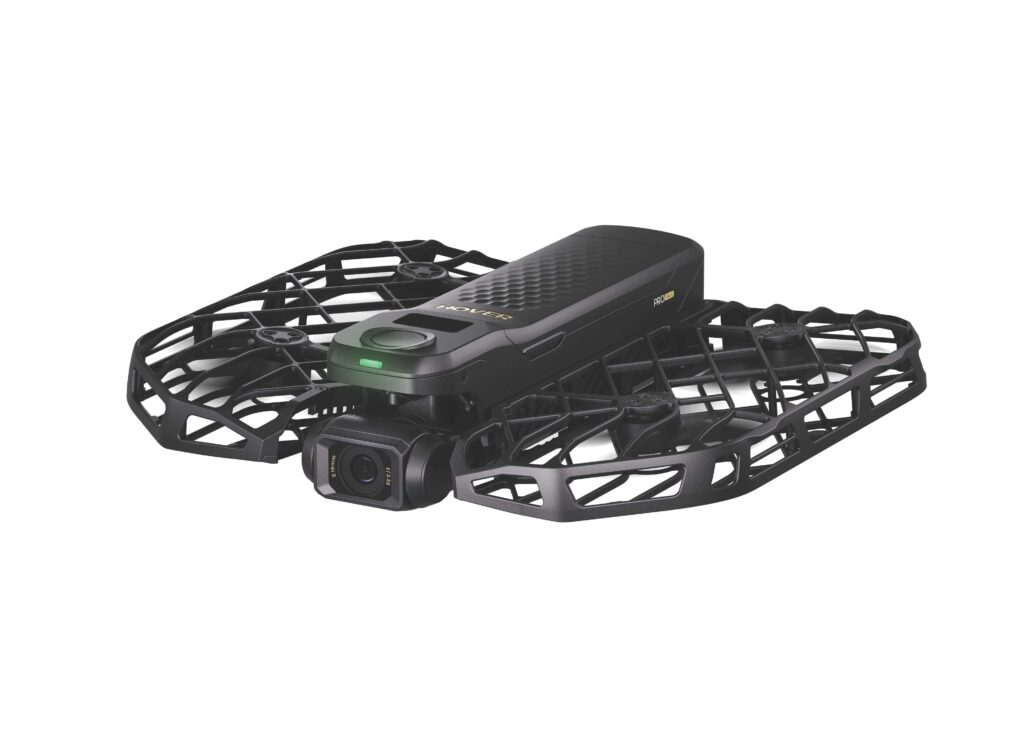
At the same time, micro sUAS platforms, small, lightweight, consumer-friendly drones for close-proximity, low-risk operations, are rising. HOVERAir exemplifies this with its vision-based, obstacle-aware, “detect-and-follow” optimization and single-user recording. While these drones aren’t for long-distance flights or complex airspace, they are designed to stay near people and objects, understand their environment and navigate safely. Combining the trends of software-first spatial computing on phones and autonomous micro-drones creates new possibilities. The true disruption isn’t a new measuring device, but rather a new measurement workflow.
From Tools to Workflows
Many view innovation in terms of hardware improvements, whether better sensors, drones or devices. However, in autonomy, the biggest shifts usually stem from workflow changes, not incremental hardware upgrades.
We’ve seen this before. Navigation improved not because GPS receivers got slightly better, but because smartphones turned navigation into a continuously updated, software-driven service. Photography changed because phones integrated cameras, computing and networks into a seamless workflow to make capture, editing and sharing effortless. Measurement follows a similar pattern.
Today’s smartphones blur the line between measuring and modeling. LiDAR phones can scan rooms, photogrammetry apps reconstruct surfaces and AR frameworks estimate distances in real time. These tools don’t require users to think in terms of rulers. They let users capture space as is and derive measurements from it.
Most apps assume a human will hold a phone and walk around. This creates unnecessary limits like physical constraints, patience and consistency. This is where micro-drones change the game by adding aerial mobility.
Micro-Drones as a Mobility Layer
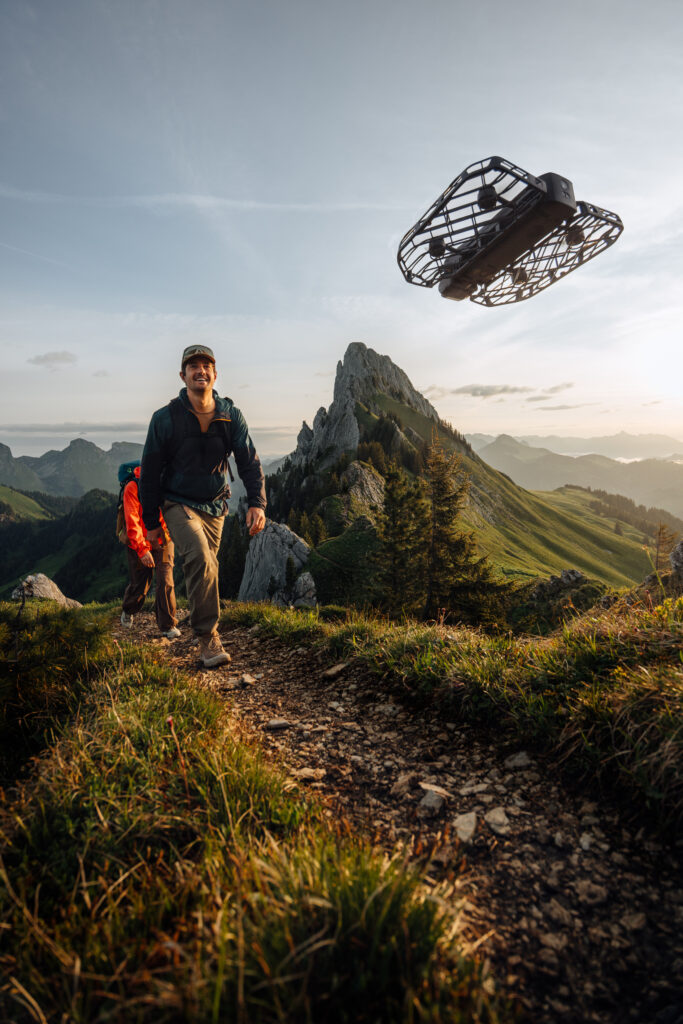
Micro sUAS platforms, like HOVERAir, embody a different design philosophy from traditional consumer or enterprise drones. They focus on close-proximity operation, vision-based navigation, obstacle awareness and “follow” behaviors around users or objects. They aren’t optimized for surveying vast areas or flying beyond visual line of sight (BVLOS). Instead, they’re designed to move sensors safely and autonomously through human-scale environments. This makes them ideal as a mobility layer for smartphone-based spatial workflows.
Imagine a user wants to capture a garden bed boundary, driveway or small outdoor structure. Instead of walking the perimeter with a phone, they select a “boundary capture” mode in an app. A micro-drone lifts off, flies low and follows the edge using vision detection or user-guided waypoints. The phone handles the heavy lifting by fusing imagery, depth and inertial data. Meanwhile, the drone moves smoothly and precisely.
This results in more than just a video. The outcome is structured spatial data including distances, areas, curves and shapes that can feed design tools, estimation software or documentation workflows. The drone doesn’t replace the software’s intelligence. It simply replaces the human’s legs.
Autonomy as Workflow Evolution
In autonomy discussions, it’s easy to focus on vehicles like self-driving cars, self-flying drones or self-navigating robots. However, the most lasting changes often result from automating parts of a workflow, before striving for full autonomy. A helpful way to view this progression is:
digitize the task –> automate the reasoning –> gradually automate the motion –> keep humans in supervisory roles
Smartphone apps for measurement and scanning have already achieved the first two steps by converting physical space into digital data and using algorithms to interpret it. They detect surfaces, fit planes, estimate volumes and reconstruct geometry.
Micro-drones provide a pathway to the third step by automating motion in a constrained, supervised manner. This doesn’t require science-fiction levels of autonomy. Users can remain actively involved by initiating and stopping processes, supervising capture and validating results. The system manages the repetitive, spatially tedious task of moving sensors along boundaries or around objects in a consistent way. This approach provides a more realistic and acceptable model of consumer autonomy than fully autonomous, unsupervised systems.
The Center of Gravity: Smartphones
One unavoidable strategic reality is that smartphones are already the dominant consumer sensor and compute platform. They feature high-resolution cameras, depth sensors (on many models), IMUs, GNSS, powerful GPUs, AI accelerators, mature app ecosystems and always-on connectivity. As such, from a product perspective, innovation in consumer measurement will more likely remain software-led than hardware-led.
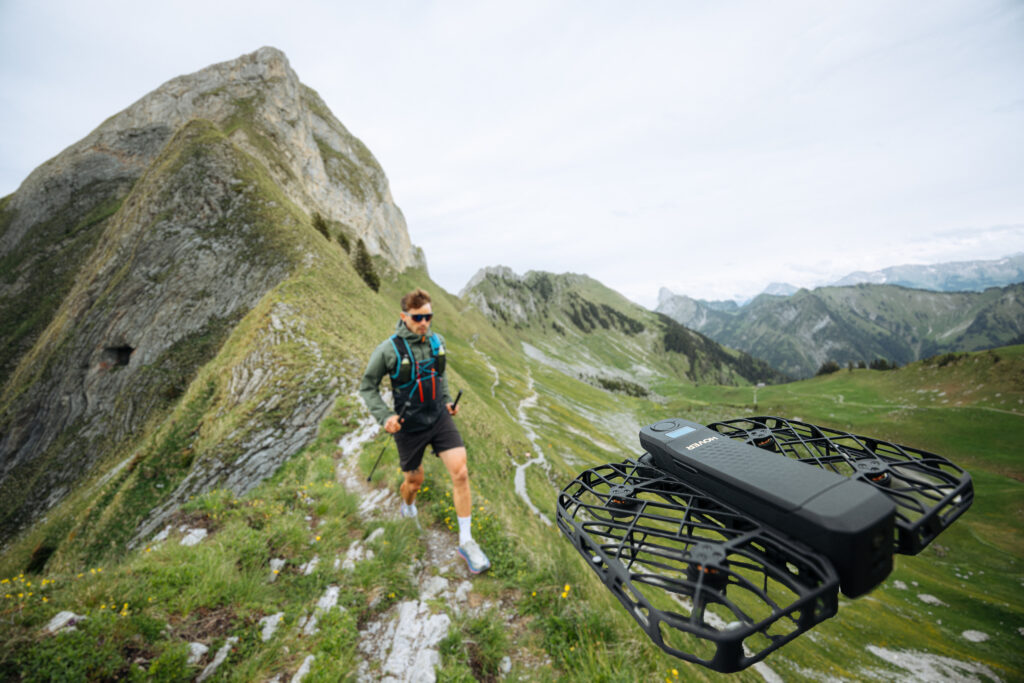
Specialized devices may have advantages in certain niches, but history shows platform ecosystems tend to succeed by being “good enough” and ubiquitous. In this context, micro-drones like HOVERAir don’t need to be measurement devices themselves. They can be extensions of smartphones, mobile sensor carriers that allow apps to see and sample the world from better angles and along better paths. This also lowers the barrier to experimentation. Developers can iterate on workflows in software, using existing phone sensors and adding aerial mobility as an enhancement, not a requirement.
The Real Disruption: Workflows
It’s tempting to view innovation as a contest between devices, but the bigger vision is measurement as a software-defined workflow. Once measurement resides in software, on phones, in the cloud and across connected devices, then hardware becomes modular. It can be the sensor is in your hand, on a tripod or on a micro-drone tracing a boundary.
The winning products won’t have the flashiest specs. They’ll reduce manual steps, provide error-prone handoffs, fit into existing digital workflows and let users focus on decisions rather than data capture. In that sense, micro-drones like HOVERAir and high compute smartphone apps aren’t really separate trends. They are both parts of a larger shift toward workflow-level autonomy.
The future of consumer measurement won’t be a single device but how seamlessly software, sensors and mobility come together to make capturing the real world easier, faster and more automated. Workflow…now that’s real disruption.