
By Philip Hicks, Autonomy Global – Ambassador for U.K. and Middle East
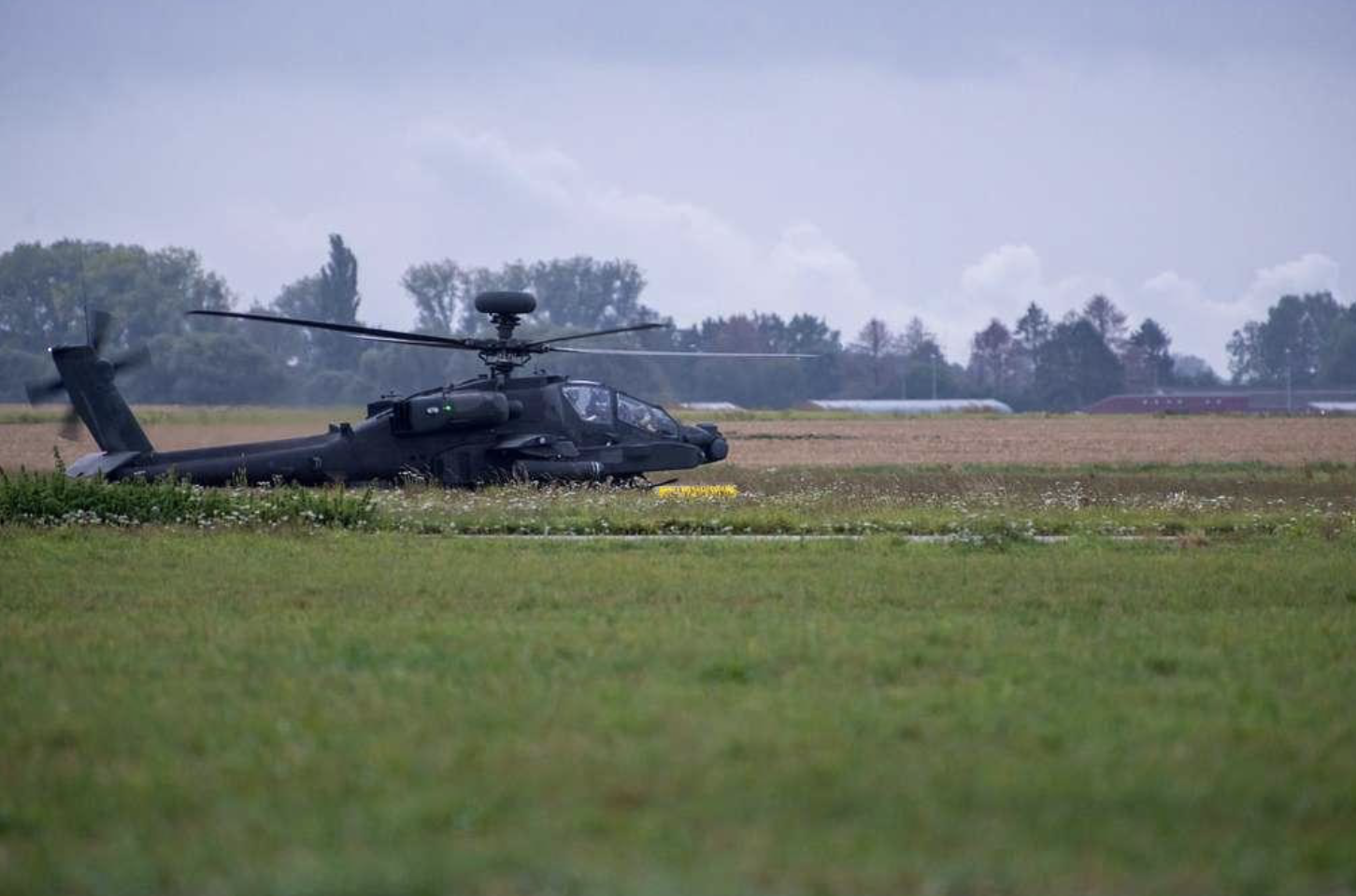
The UK Ministry of Defence (MoD) has pushed its autonomous aviation agenda forward with the selection of seven industry teams to develop Apache “loyal wingman” drones under Project NYX, a flagship Manned–Unmanned Teaming (MUM‑T) initiative for the British Army’s AH‑64E fleet. (See official Find a Tender notice 070692‑2025). The announcement underlines a fast‑moving shift toward pairing crewed attack helicopters with highly autonomous uncrewed systems to increase combat mass, extend reach and keep aircrews further from danger.
The news landed the day after a high‑level drone development meeting at the iAero Centre in Yeovil, the home of UK helicopter manufacturing and a key hub supported by Leonardo Helicopters. This underscores how regional industrial ecosystems are being pulled directly into the next wave of autonomous rotary‑wing capability.
High‑Autonomy Apache Wingmen
Under Project NYX, the new uncrewed systems are expected to carry payloads exceeding 200 kilograms, or roughly 441 pounds to enable meaningful weapons, sensors and electronic warfare (EW) packages on each aircraft. Operating in a highly autonomous “commanded not controlled” mode, the platforms will fly ahead of crewed Apaches to conduct high‑risk reconnaissance, surveillance, targeting, strike and EW missions in contested airspace.
Rather than being flown minute‑to‑minute like traditional remotely piloted systems, NYX drones will execute the commander’s intent within defined constraints. They will use onboard autonomy to manage routing, sensor employment and engagement profiles while Apache crews retain authority over effects and rules of engagement (RoE). This approach is designed to reduce cockpit workload, accelerate decision cycles and enable higher tolerance for platform attrition compared to legacy crewed-only constructs. While some argue a helicopter’s wingman must also be a helicopter, UK and US practice shows multiple viable airframe types (from rotary UAVs to tiltrotors and fixed‑wing Launched Effects) depending on mission and basing. Separate US work relevant to Apache teaming includes Boeing’s tiltrotor loyal‑wingman concept and the Army’s rapid Launched Effects prototyping.
Industry Teams, Timeline and Targets
Seven defence companies have been invited into the new development phase of Project NYX: Anduril Industries, BAE Systems, Leonardo, Lockheed Martin UK, SYOS Aerospace, TEKEVER and Thales. These teams will now compete to mature design concepts, prototype loyal wingman platforms and demonstrate integration with Apache tactics, techniques and procedures before a planned down‑select to four teams in March 2026.
Initial operational capability is targeted for around 2030, aligning NYX with broader Apache fleet modernisation and the UK’s move toward more distributed, autonomous-heavy combat aviation constructs. Defence Minister Luke Pollard has framed NYX as evidence of a decisive push to fuse autonomous systems with traditional firepower, aimed to boost lethality, resilience and survivability for Army aviation forces.
Project NYX at a Glance
| Element | Detail |
| Core platform | Loyal wingman drones for AH‑64E Apache attack helicopters. |
| Key missions | Reconnaissance, surveillance, strike, target acquisition, EW. |
| *Payload requirement | >200 kg / ~441 lb payload capacity *reported by media as expected |
| Autonomy concept | “Commanded not controlled” high-autonomy operations. |
| Industry participants | Anduril, BAE Systems, Leonardo, Lockheed Martin UK, SYOS, TEKEVER, Thales. |
| Down‑select | Four teams to be chosen March 2026. |
| Initial capability | Aimed around 2030. |
Procurement Headwinds and the NMH Experience
Project NYX moves forward against a challenging procurement backdrop that has raised concerns across the UK defence community. The New Medium Helicopter (NMH) competition effectively collapsed in 2024 when Airbus and Lockheed Martin withdrew. This left Leonardo as the sole bidder and provoked scrutiny over competitive tension, programme value and delivery risk.
Delays and uncertainty around NMH have already forced consideration of extending legacy Puma helicopter operations into 2027–28 to preserve lift capacity. That decision reflects wider issues repeatedly highlighted by the UK National Audit Office (NAO), including chronic schedule overruns and optimistic assumptions in major acquisition programmes. As one delegate in Yeovil remarked, UK defence procurement often feels like a hydra: “they cut off one head and more red tape blockers appear.” Frontline frustration abounds with processes that struggle to keep pace with operational demand.
Strategic Reset: DIS, SDR and a New Armaments Director
NYX sits squarely within a broader strategic reset that includes the Defence Industrial Strategy (DIS), the Strategic Defence Review (SDR), and a forthcoming Defence Investment Programme aimed at long‑term funding realism. DIS emphasises a more sovereign, flexible industrial posture and a shift away from “global competition by default. “ It seeks to grow domestic capacity while still leveraging international partners where it strengthens resilience and capability.
The Strategic Defence Review, launched by the government in June 2025 to shape force design and priorities, sets out ambitions to pivot toward a “new way of war” that leans heavily on uncrewed, networked and AI‑enabled systems, including collaborative platforms that pair crewed helicopters with autonomous teammates. Within this framework, Project NYX is positioned as a pathfinder for rotary‑wing MUM‑T, complementing other uncrewed initiatives and helping to drive doctrinal and organisational adaptation.
The MoD has launched the biggest procurement reform in over 50 years, including creation of a fully fledged National Armaments Director to drive acquisition reform and industrial strategy; recruitment for the post began in October 2024, with the appointment of Rupert Peace announced in October 2025. The NAD role consolidates multiple investment lines into a single, more agile portfolio and is intended to cut duplication, accelerate approvals, and deliver on DIS objectives while improving how defence partners with industry.
Why NYX Matters for Autonomy and Airpower
Project NYX is being promoted by MoD officials as proof that rapid, competitive development can still be achieved even as the system grapples with structural procurement problems. If successful, the programme will demonstrate that highly autonomous, “commanded not controlled” loyal wingmen can materially expand Apache strike reach, survivability, and persistence without adding unsustainable cockpit workload or logistics burden. This “commanded not controlled” construct is explicitly called out in the NYX Capability Concept Demonstrator scope.
For the UK’s wider autonomous ecosystem, from primes to emergent players clustered around hubs like iAero, the NYX competition represents both an innovation testbed and a gateway into future Land and Joint multi‑domain architectures. As the Defence Investment Programme and SDR implementation continue to shape priorities, the performance of NYX will be closely watched as a bellwether for whether the UK can turn ambitious autonomy concepts into fielded mass at the speed required by today’s threat environment.
For further official details, see the UK MoD announcement on the Apache wingman drone programme.