

By: Dawn Zoldi
The HIVE in Grand Forks has become one of the most important launchpads for drones, autonomy and dual‑use tech in the Upper Midwest, and increasingly, far beyond it. From nurturing makers and founders on the ground in North Dakota to connecting them with venture capital and new partners in Norway, The HIVE has helped turn a regional ecosystem into a global one.
From Drone Designer To Ecosystem Builder
Before he was the Director of Operations and Innovation at The HIVE, Johnny Ryan was a hands-on technologist building drones, tethered systems and automated “drone‑in‑a‑box” platforms for high‑risk security scenarios. His background spans software coding, hardware development, Internet of Things and custom tethered drones designed for active‑shooter response and perimeter safety, including work with companies acquired by Samsung. He now pours that combination of deep technical chops and entrepreneurial experience into connecting innovators, investors and government stakeholders through The HIVE.
The HIVE Origins: From Newspaper To Nexus
The HIVE sits inside the 36,000‑square‑foot historic structure that once housed the city’s primary print newspaper and massive presses, converted into a purpose‑built accelerator for UAS and autonomous systems.
Long before it became the polished UAS tech accelerator it is today, Ryan’s own search for high‑bandwidth connectivity in Grand Forks originally landed him in the historic Grand Forks Herald newspaper building. He first leased a rough, half‑abandoned space purely for its “crazy good” upload speeds to support development and testing of his automated drone system and shared the building with just one other drone company at the time.
When the City of Grand Forks acquired the underutilized building, Mayor Brandon Bochenski approached Ryan with a bold ask: turn this aging asset into a focused hub for unmanned and emerging aerospace technologies. Ryan handed operational control of his own company to partners and threw himself into designing what would become The HIVE.
Backed by the city, the Jobs Development Authority and a $1 million U.S. Economic Development Administration grant, Ryan oversaw the retrofit of the former newspaper plant into a technology accelerator. The original vision was to support UAS startups with curriculum and mentoring. Given the influx of established UAS players in Grand Forks, the focus quickly expanded to helping scale growth‑stage companies and provide a “landing pad” for national and international firms planting their North Dakota flag.
Inside The HIVE: Way More Than Just Coworking
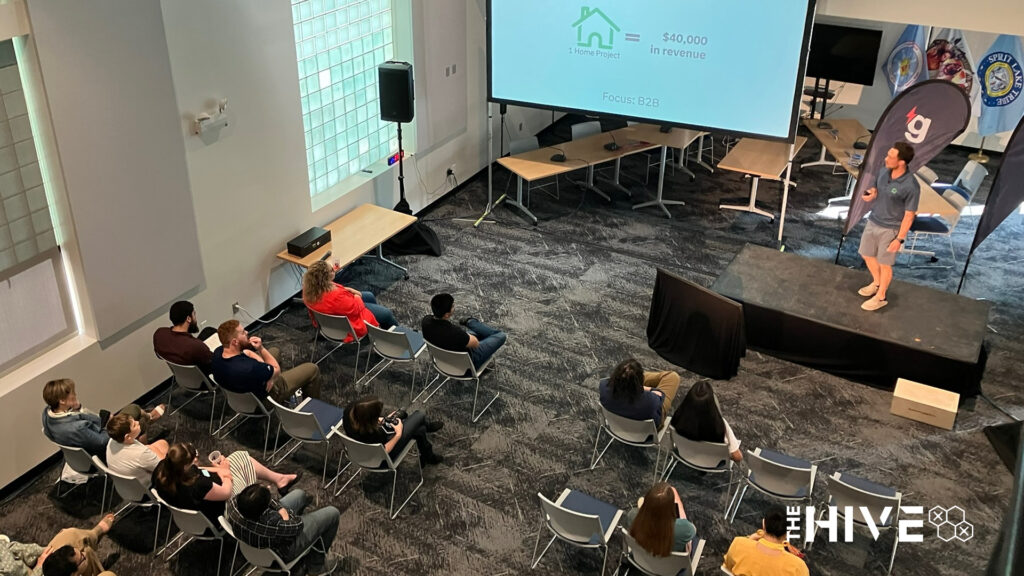
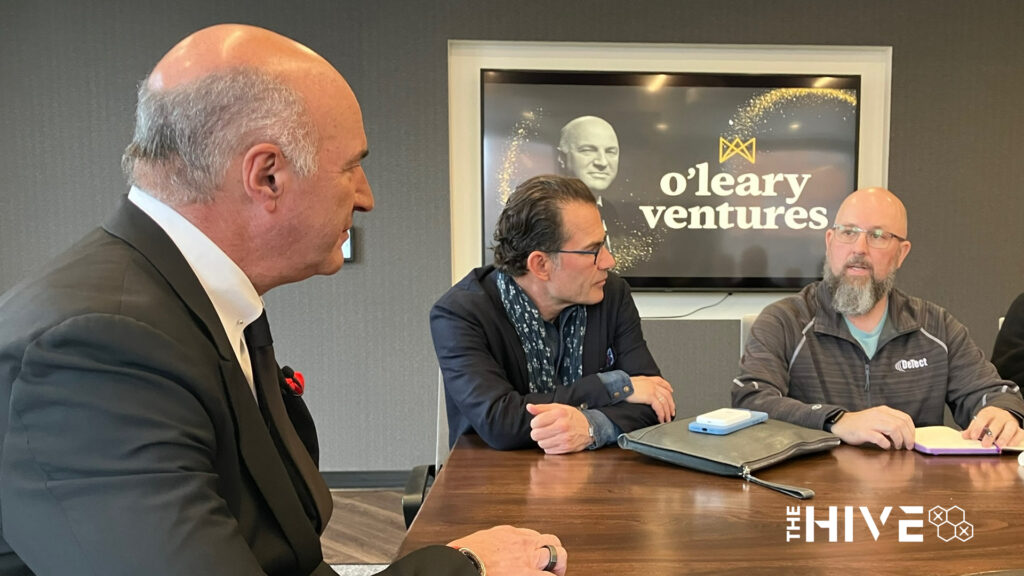
Physically, The HIVE offers far more than typical coworking. Symbolizing the close tie between The HIVE and the state‑backed Wonder Fund managed by Kevin O’Leary’s (Shark Tank) team, the O’Leary Ventures glass boardroom sits on the first floor, visible from the main entry.
The building also contains two training‑grade classrooms with smart AV that can support everything from radar setup workshops to hands‑on UAS platform training, along with a dramatic two‑story event space in the former press bay that now hosts industry tabletop exercises, receptions and multi‑stakeholder planning sessions. The secure building also includes:
- Wide-ranging access: Flexible memberships for solo founders, growing startups and large corporate teams that use The HIVE as their North Dakota headquarters or touchdown space while in state.
- Mixed use office/maker space: A mix of hot desks, shared areas and fully lockable, customizable offices for tenants who need additional security and dedicated build space.
- Professional conference areas: Multiple conference and huddle rooms plus a premium 25–35‑seat boardroom designed for high‑stakes sessions with FAA, DoD, investors and enterprise partners.
Maker Mindset: From 3D Printers To Field‑Ready Aircraft
What began as a modest maker corner with a few hobby‑grade 3D printers and a single CNC machine has evolved into a building‑wide culture of rapid prototyping and experimentation. Early tenants started pushing the equipment to its limits, including one small team that quietly used the basic printers to build, crash, rebuild and refine a 16‑foot aircraft in a matter of days. This turned heads across the building and proved what lean, fast iteration inside The HIVE could look like.
Today, 3D printers hum across multiple offices, with teams churning out airframe components, molds and test fixtures around the clock before reinforcing them with composite wraps like carbon fiber and fiberglass. The workflow often runs straight from the printer to a nearby RC test range just minutes away, where engineers flight‑test designs, log performance, then return to refine and rebuild, often without any handoff to a separate engineering group. The result is a maker ecosystem where individuals can design, fabricate, integrate communications,and field an entire aircraft themselves. This compresses timelines from years to weeks in support of both commercial and mission‑driven needs.
A Landing Pad For The North Dakota UAS Ecosystem
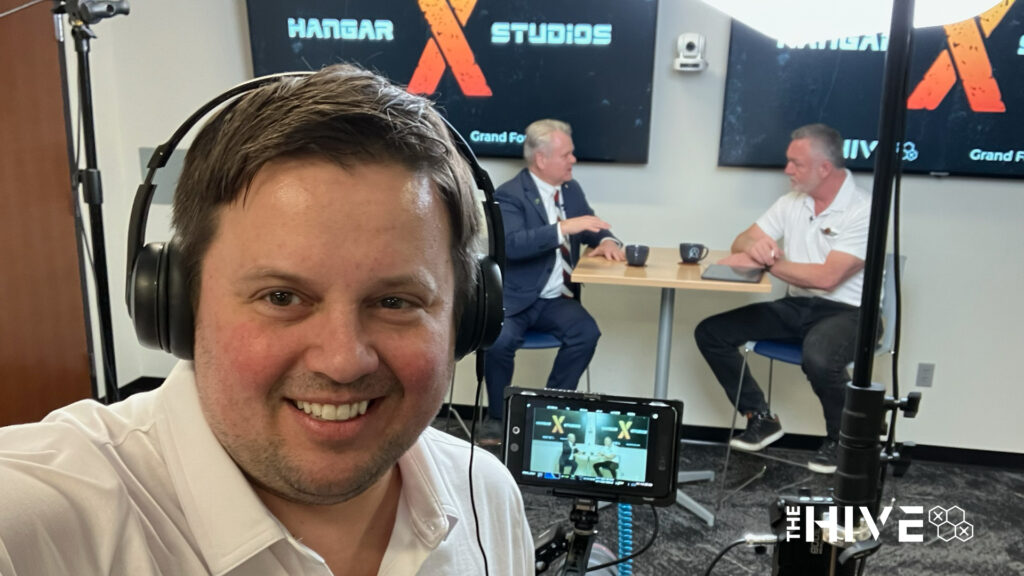
The HIVE is deliberately embedded in one of the most robust UAS regions in the United States, aligned with GrandSKY, Northern Plains UAS Test Site, the University of North Dakota and Grand Forks Air Force Base. These organizations and their related stakeholders use the facility as a home base when working with the test site, participating in BVLOS campaigns or engaging with federal partners on operations and counter‑UAS work. In October, a GrandSKY affiliate, GFHive Management LLC, secured the award to manage The HIVE.
Programming “from the center of The HIVE” has included live Part 108 NPRM update sessions with the NPUASTS, counter‑UAS tabletop exercises such as “Securing the Homeland” and workshops that bring local first responders together with industry to explore new operational concepts. Ryan’s informal mission statement sums it up: if the work is mission‑relevant and adds real value, The HIVE will find a way to accommodate, even if the organization isn’t a paying member.
The Wonder Fund: How Kevin O’Leary Enters The Picture
One of The HIVE’s most powerful value adds is its direct connection to Wonder Fund North Dakota, a $45 million direct investment program run by the North Dakota Development Fund in partnership with O’Leary Ventures.
Wonder Fund North Dakota co‑invests alongside private capital into early‑stage businesses that have a meaningful North Dakota footprint. It offers not just capital but also brand lift, marketing and strategic support associated with Kevin O’Leary’s “Mr. Wonderful” profile.
The fund targets companies with fewer than 500 employees that are post‑revenue, participating in rounds of $20 million or less, and willing to establish or grow a physical presence in the state, whether through headquarters, engineering teams, manufacturing or other key operations.
Ryan often serves as a front‑end scout and technical diligence partner, filtering drone and autonomy‑related opportunities, validating their technology and ensuring they align with Wonder Fund criteria before facilitating deeper conversations with the O’Leary Ventures team.
The relationship with Kevin O’Leary started as a naming‑rights and partnership concept for the O’Leary Ventures boardroom and quickly grew into a statewide economic development narrative. After securing one of the only open days on O’Leary’s calendar, The HIVE and its partners organized a whirlwind visit that included a ceremonial puck drop at a hockey game, tours of GrandSKY and the base, downtown engagements with startups and a chamber keynote.
That initial visit evolved into ongoing collaboration, including fireside chats with North Dakota legislators and tech startups in Bismarck and a growing pipeline of companies exploring Wonder Fund capital with an explicit commitment to building in North Dakota. One of the fund’s UAS‑related investments, FlyGuys, is now preparing to become a significant HIVE tenant. This new collaboration illustrates how The HIVE bridges capital, physical space and operational integration for portfolio companies.
Extending The HIVE: Norway’s New Space Innovation Center
Through its connections with GrandSKY, the HIVE’s influence now stretches across the Atlantic through a budding collaboration with Norway Space Hub and other partners such as Innovation Norway.
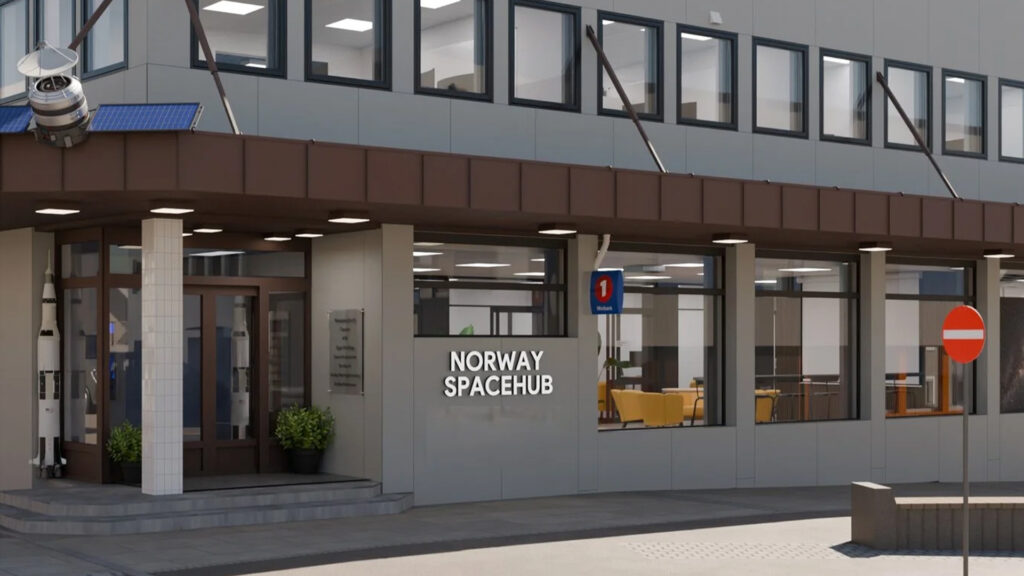
After a series of conversations, Norwegian leaders moved quickly to acquire and retrofit an overlooked building into a local innovation center modeled in spirit on The HIVE, to support space operations, UAS and advanced aerospace projects in Norway’s far north.
During a recent visit, Ryan saw firsthand how quickly the Norwegian team had moved from idea to operational hub, with companies already active in the space and an appetite for tighter ties to Grand Forks. The two communities share obvious connective tissue, from offshore energy and harsh‑weather operations to defense, digital twins and position‑navigation‑timing solutions. All of this makes the North Dakota–Norway corridor a natural test bed for next‑generation aerial and space systems.
2026 And Beyond: Counter‑UAS, Energy And Dual‑Use Growth
Combined with ongoing momentum in counter‑UAS, dual‑use space and BVLOS operations, the accelerator aims to keep steadily punching above its weight. So far, it has attracted 10x more activity every year from companies eager to plug into North Dakota’s scaling ecosystem.
Looking ahead to 2026, The HIVE will continue to position itself as a primary venue for proactive testing of counter‑UAS, cyber and AI‑enabled security solutions that protect critical infrastructure and defense installations. Ryan envisions scenario‑driven experimentation where teams can 3D‑print threat replicas overnight, stress‑test radar and sensing systems, and explore jamming and protection concepts in realistic but controlled environments.
At the same time, The HIVE plans to deepen its ties with energy‑sector innovators like OIL.AI and others building AI‑driven tools for oil, gas and power infrastructure to extend UAS applications well beyond traditional inspection into predictive analytics and resilience.
How You Can Tap Into This Sweet Honey
For companies, investors and partners across the drone and autonomy value chain, The HIVE offers several clear pathways to engage. Organizations can:
- Use The HIVE as a North Dakota “landing pad,” by taking advantage of flexible memberships, secure office space, maker resources and access to nearby ranges to explore or expand operations in the state.
- Leverage The HIVE’s network to connect with Wonder Fund North Dakota and O’Leary Ventures, aligning growth plans with the fund’s criteria and exploring co‑investment opportunities that come with significant brand and market visibility.
On that last, for founders in drones, autonomy, data and dual‑use tech, Wonder Fund North Dakota offers a structured yet highly strategic path to growth capital. Key elements include:
- Eligibility: Companies must be post‑revenue, in funding rounds of $20 million or less, and ready to create a real North Dakota presence that adds jobs and economic activity in the state.
- Co‑investment: Wonder Fund typically invests alongside other private investors, leveraging its network to bring in partners such as Acorn Investment Group and additional institutional capital.
Ryan often advises companies not just on the application process, but also on what it means culturally and operationally to commit to North Dakota, including the advantages of testing in harsh weather, tapping BVLOS ranges and joining a dense cluster of UAS and counter‑UAS activity. For firms willing to “show North Dakota love,” as he puts it, the ecosystem tends to reciprocate with intense support, introductions and collaboration.
Beyond capital and space, The HIVE is a place to plug into a community of makers, warfighters, regulators, academics and founders who are all building toward a more capable and connected aerospace future, from the prairies of North Dakota to the fjords of Norway. For drone and autonomy organizations that value speed, collaboration and real‑world testing, this is where the buzz is…and where you can tap into the next wave of tech, wonder and joy!
Watch John Ryan on the Dawn of Autonomy podcast, Episode #99.