
By: Dawn Zoldi
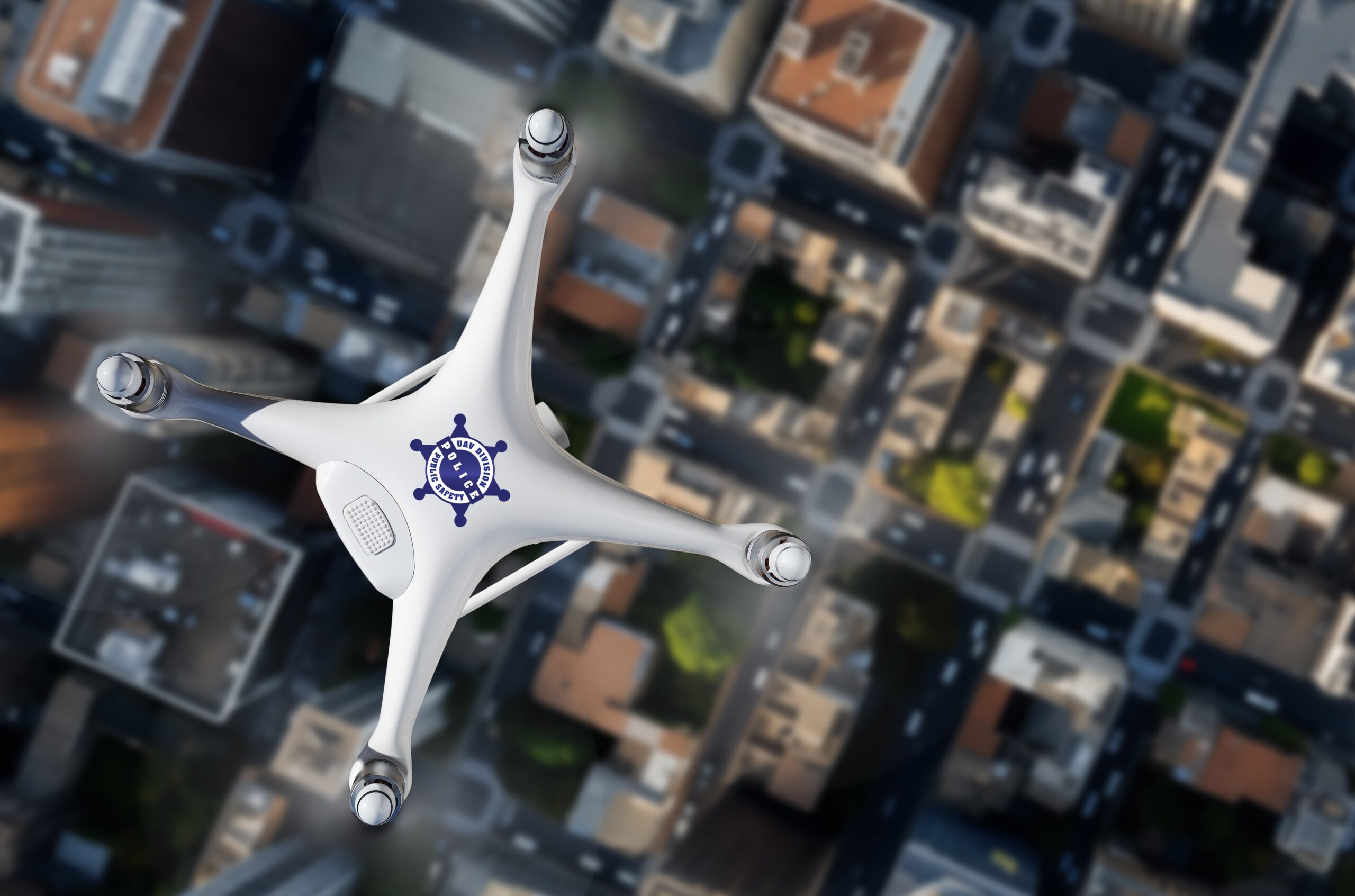
Public safety agencies increasingly depend on drones for a wide variety of missions. With the passage of the SAFER Skies Act, they’re now beginning to pair those aircraft with purpose‑built counter‑drone tools to secure the same low‑altitude airspace they increasingly rely on. In a recent Full Crew newscast, focused on “Public Safety,” Autonomy Global Ambassador for Ops Michelle Duquette cycled an expert panel (Echodyne’s Curtis Walters, Verizon Frontline’s Chris Sanders and DroneShield’s Tom Adams) through some of today’s hottest topics, from Drone as First Responder (DFR), beyond visual line of sight (BVLOS), command and control (C2), electronic conspicuity (e-conspicuity), counter-drone tech and critical mission connectivity.
The Radar Backbone for Safer DFR, BVLOS and Counter-UAS
Across the United States, police and fire departments continue to scale DFR programs that launch unmanned aircraft on 911 calls to “provide situational awareness when…non‑existent in the past,” as Echodyne’s Curtis Walters put it. These programs have evolved from simple line‑of‑sight deployments to beyond visual line of sight (BVLOS) operations that can cover larger areas, respond faster and generate better evidence. (See prior AG coverage of DFR from an early adopters perspective).
The article Walters brought to the show, “Extending the Reach: How BVLOS Operations Are Transforming Drone Response in Policing” (Police1), traces that progression from rooftop observers, to shielded operations under 200 feet using ADS‑B, to today’s waivers that rely on electronic observers like radar. The piece argues that once agencies pair DFR with true airspace awareness, they can safely fly higher and farther, expanding coverage, improving response times and collecting more actionable video while remaining within FAA expectations for detect‑and‑avoid (DAA).

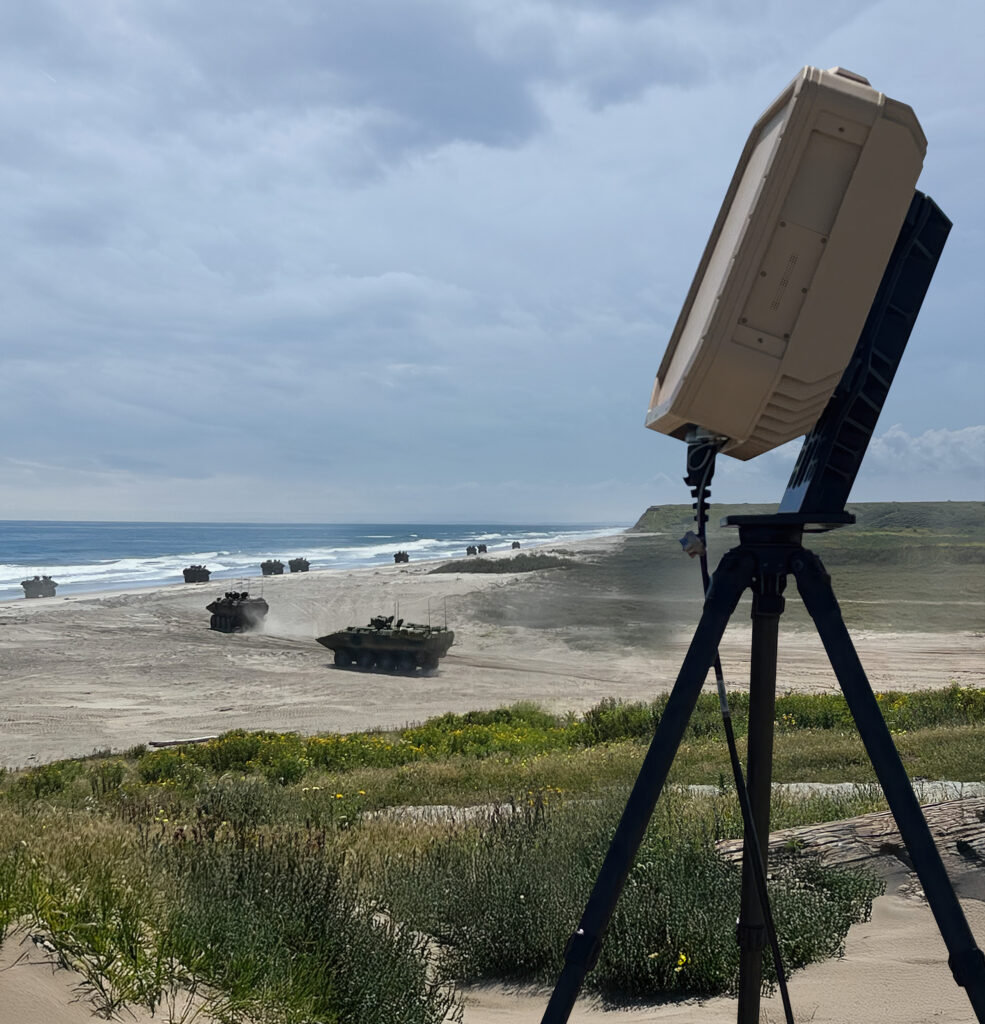
Walters emphasized that radar is “a good complement” to cooperative surveillance like ADS‑B and Remote Identification (Remote ID) because it “is basically looking for anything flying in that airspace,” day or night, in all weather and without getting tired or going off shift. With radar, “We know this is a bird, we know this is a drone, we know this is a manned aircraft,” he said. Echodyne’s ground‑based sensors detect, track and classify targets and feed that track data into a common command‑and‑control (C2) platform to enable automated alerts and air‑risk mitigation for DFR flights. (See prior AG coverage of Echodyne radars for public safety).
Host Duquette pushed the conversation toward the broader notion of e-conspicuity. She noted that the FAA’s longstanding blind spots involving general aviation (GA) activity will be replaced by a future where “every aircraft has to be able to detect and be detected in that low altitude airspace.” ADS‑B and Remote ID “are great for the ‘be detected’ side of things,” she observed, but non‑cooperative traffic still demands independent detection. This is where radar becomes “foundational” for both BVLOS and counter‑UAS.
Verizon’s Sanders underscored the stakes by reminding viewers that there are already “over 600 active DFR programs across the United States” with another “1500 in the hopper waiting for their waiver approvals.” This pipeline will make low‑altitude airspace “dense real quick” as drone delivery grows alongside public safety operations.
Adams from DroneShield, a former FBI bomb technician and counter‑drone operator, broadened the frame from DFR to a more unified “airspace awareness mission.” In his experience protecting high‑profile events, a lack of holistic awareness has led to misidentifying “authorized technologies…as drones,” such as confusing low‑Earth‑orbit (LEO) satellites and celestial bodies for threats. That is why he insists on thinking less about single “counter‑UAS” widgets and more about knowing “everything that’s in the low level airspace,” regardless of whether the mission is BVLOS public safety or a sensitive‑event security.
Walters connected all airspace awareness directly to regulatory change. He expressed hope that as the FAA’s forthcoming Part 108 emerges, radar‑enabled electronic observing will be “baked in” so agencies will no longer be trapped in a slow waiver cycle. The Part 108 rule should provide a permanent framework for routine BVLOS operations. It will move agencies from case‑by‑case Part 107 waivers toward risk‑based approvals anchored in technologies like radar, ADS‑B, Remote ID and robust C2 links. For public safety, that means DFR and other BVLOS missions could eventually be treated as normalized infrastructure, not handled by exception…as long as operators can show credible DAA and airspace awareness, exactly the capabilities He and Duquette highlighted as “fundamental” to scaling these missions safely. (See prior AG coverage of Part 108 and Public Safety).
C2, LTE and The System‑of‑Systems Of Public Safety Drones
If radar provides agencies with the picture, robust C2 links keep their drones safely and securely flying in that picture. The second article discussed on the show, “Drones: The Wireless Technologies That Enable Operation and Control,” (Data Alliance) unpacks the radio frequency (RF) heartbeat of modern aircraft, from 2.4 GHz RC, to 900 MHz telemetry, to Wi‑Fi and 5.8 GHz FPV, through LTE/4G/5G and emerging mesh networks. At its core, the article messaged that every public safety aircraft is “a system of systems” that generates and relies on multiple simultaneous links whose behavior changes dramatically between locations, whether “downtown New York City” or “northern Montana.”
Sanders, who leads crisis‑response UAS for Verizon Frontline, chose the piece because “a lot of people still don’t understand” how complex these systems truly are, especially when they fly BVLOS. “Just getting your 107 doesn’t really prepare you for everything, technology‑wise, that you’re dealing with,” he said. Basic training still glosses over spectrum, interference and electronic security at the exact moment when public safety agencies are adopting multi‑modem, LTE‑enabled aircraft for DFR and other BVLOS missions, he noted.
The article explains how cellular links can deliver “consistent coverage over long distances,” hyper‑precise positioning and networked Remote ID when properly integrated, especially when drones use multi‑band LTE antennas and Multiple Input, Multiple Output (MIMO) configurations. Sanders looked ahead to platforms with “multiple SIMs” that pull signals from several carriers simultaneously. (See, e.g., prior AG coverage of TEAL’s eSIMs for public safety).
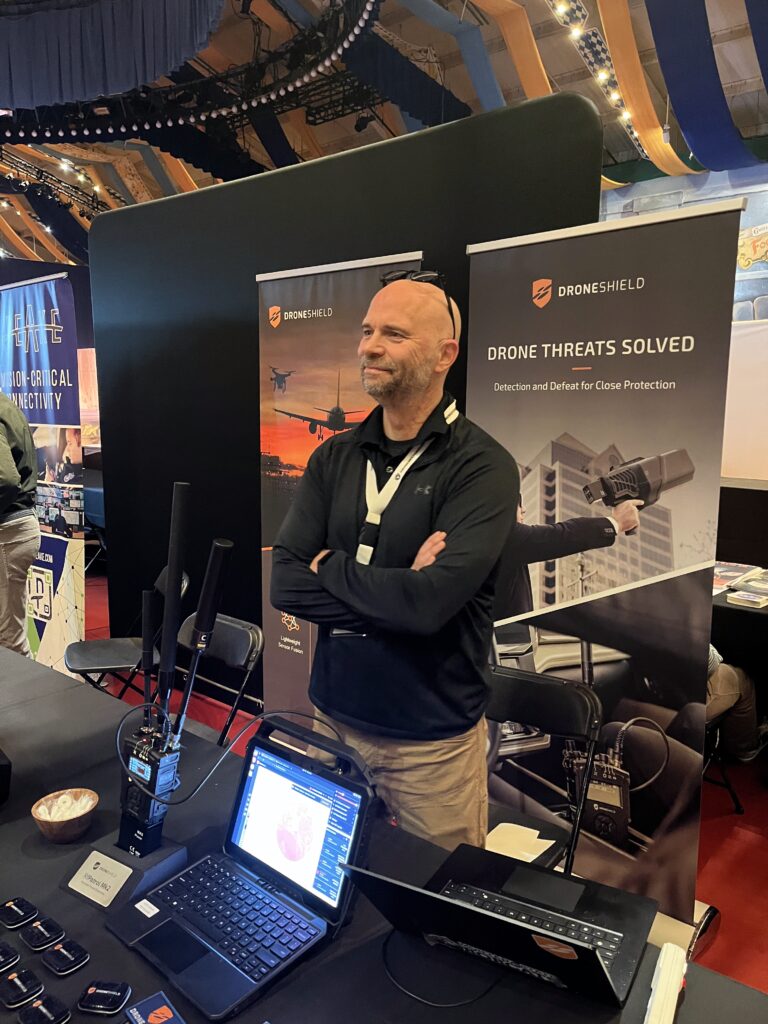
From a counter‑drone perspective, Adams sees that same connectivity evolution as a double‑edged sword. As “a big drone advocate” for public safety and critical infrastructure inspection, he warned that the very C2 sophistication that enables safe BVLOS also “makes it a challenge…for RF detection systems to keep up,” especially as platforms hop among 2.4, 5.8, 915 MHz, LTE and, increasingly, L‑band and other unconventional links. He cited a recent Autonomy Global article on Viasat’s L‑band C2 for public safety as a reminder that defenders cannot assume threats look like a stock DJI quadcopter. That complexity is precisely why Adams argues for a layered detection architecture, with radar as an indispensable backstop. “No matter what RF link or method that they’re using to communicate…radar has the ability to physically detect that drone,” even when RF signatures are intermittent, encrypted or absent.
Sanders agreed, adding that operating drones over LTE can actually help defenders by exposing richer telemetry, such as networked Remote ID, pilot location and the ability to integrate directly with ADS‑B and UTM services for more comprehensive “networked” awareness.
Duquette pulled those angles together into a single interoperability vision. Imagine radar “learning from what that C2 network is feeding back and forth, and that C2 network…also learning from the radar sensors.” In that world, an airspace picture based on fused cooperative and non‑cooperative, LTE‑connected and RF‑silent feeds, such as tools like DroneShield’s C2, will drive faster, more confident decisions about “friend versus foe” under intense time pressure.
This is where Part 108 intersects with telecom and spectrum policy. FAA’s BVLOS framework is being shaped in parallel with FCC rules on 5G and aviation bands, as well as with Department of Homeland Security (DHS) and Department of Justice (DOJ) guidance on how public safety can use networked Remote ID and UTM feeds in both routine ops and threat response. Sanders’ call to “get the three of them to the table” (technology vendors, carriers and regulators) captures the emerging consensus in industry that unmanned C2 links, air traffic services and counter‑UAS sensors must be designed as an ecosystem, not in silos.
Sanders also reminded agencies that none of this works without people. Public safety departments frequently spend heavily on hardware “and then no money on training.” This leaves them with sophisticated systems and under‑prepared operators. (See prior AG coverage of the need for nuanced training for Part 108 and cyber-security). “The effectiveness of your program is only going to be as good as the proficiency of your people,” he warned. He urged departments to invest in training and to empower personnel “who have a passion for it,” rather than just appointing a reluctant “drone guy.”
SAFER Skies, NYPD and The Layered Future Of Counter‑Drone Ops
All of this technology now converges with a historic policy shift. The SAFER Skies Act, folded into the FY 2026 National Defense Authorization Act, finally opens the door for state and local agencies to use federal‑style counter‑UAS tools under strict conditions. Adams’ chosen article on New York Police Department operations, “Drone ranger: NYPD primed to start defending against hostile drones in NYC airspace,” (New York Post) delves into how a leading urban force is preparing to wield those authorities in one of the most complex air and ground environments on Earth.
The piece explains that, after years of advocacy by DOJ, DHS and industry, the new law expands limited mitigation authority which had previously reserved for federal entities under the 2018 Preventing Emerging Threats Act, to “state and local law enforcement, critical infrastructure [and] corrections,” subject to training and certification at the FBI’s National Counter‑UAS Training Center and event‑specific coordination with federal partners. Adams, usually “fairly critical” of congressional language on counter‑UAS, called this one “pretty solid” because it balances homeland‑security needs with civil‑liberties safeguards and clear oversight. (See prior AG coverage by Adams on SAFER Skies’ implementation).
Several media outlets have reported that NYPD expects to receive authority to “disable and take out rogue drones” around major events, a move its commissioner tied to the reality that “tactics that once belonged to militaries are now increasingly accessible to smaller groups and individuals.” The department, which already runs both extensive DFR and counter‑UAS programs, is investing millions in mitigation equipment and training in anticipation of FIFA World Cup matches, America 250 celebrations and, down the road, Olympic events in Los Angeles and Oklahoma.
Adams focused on one particularly interesting tool highlighted in the NYPD‑focused article: hunter‑capture drones that shoot nets to snag suspicious drones in flight, either dropping them under parachute or carrying them to a safe location for bomb squad evaluation. He described these as “lower‑risk kinetic” options in a layered architecture that also includes cyber‑takeover, RF jamming and other mitigation techniques. In a dense urban environment where “you are trying not to do more harm to the critical infrastructure and people that you’re trying to protect,” he argued, these tools can offer a more controlled way to remove a threat than gunfire or traditional kinetic interceptors.
The operational challenge is time. While Sanders estimated that, in a real attack, “you’ve got…less than four minutes to make a decision” about mitigation, Adams noted that in one of his first successful mitigations he had “to make the decision within five seconds” of seeing a drone pop up inside restricted airspace. That kind of decision‑making under extreme pressure makes it imperative that “all that sensor information, whether it’s from your RF, camera, radar…all integrated into one dot on the map” be tuned and validated long before game day.
Both Walters and Adams urged agencies like NYPD to treat site design and tuning as an ongoing discipline, not a one‑time install. High‑rise rooftops often look ideal on paper but can create massive blind spots underneath. The right answer is rarely a perfect perch, but the “least worst location” layered with multiple, overlapping sensors and communications paths. Walters warned leaders not to accept easy demos. “Don’t test the easy scenarios,” he advised. Push vendors against modern, non‑cooperative threats: dark drones, night operations, RF‑silent or L‑band C2 and even swarms that resemble emerging conflicts overseas.
Duquette closed by tying these lessons back to the broader public safety community, from highly mature agencies like NYPD to small departments just entering the drone arena. Her counsel, echoed by the panel, was to seek out trusted third‑party expertise (from test sites, universities and seasoned operators), demand interoperability and layered sensing rather than siloed gadgets and, above all, invest in the human side through training, exercises and candid knowledge‑sharing across the DFR and counter‑UAS communities.
On the Beltway front, SAFER Skies marks a turning point in how Washington views low‑altitude risk. Congress has moved from a narrow, federal‑only approach to one that treats state and local partners as essential actors, while still insisting on federal training, certification and coordination to manage civil liberties and spectrum impacts. Coupled with Part 108’s drive to normalize BVLOS, the same law‑and‑policy machinery that will open the door for crewed aviation and commercial drone industry ops also remains paramount public safety, both to empower their own DFR and BVLOS missions, and to give them measured, accountable tools to counter aerial threats. In that world, robust C2, deep airspace awareness and true e-conspicuity become the non‑negotiable enablers that will keep public safety operations aloft…and keep communities safer on the ground.