
By: Pramod Raheja, AG Autonomy Ambassador
In modern warfare, drones have become indispensable tools on battlefields from Ukraine to the Middle East. First-Person View (FPV) drones, in particular, have proven their worth as low-cost, high-impact weapons capable of precision strikes and reconnaissance. However, the human element, specifically, the time-intensive training required to operate these systems, remains a bottleneck. Currently, aspiring FPV drone warriors undergo rigorous courses lasting weeks to months, with hundreds of hours of demanding practice to achieve battlefield proficiency. But what if autonomy & artificial intelligence (AI) could slash this timeline to just a single day? By automating key functions like navigation, targeting and evasion, AI autonomy could convert operator roles from hands-on piloting to strategic oversight. This shift would accelerate military readiness, democratize access to advanced drone technology and enable rapid deployment in high-stakes conflicts.
Drone Pilot Training Today: A Time-Intensive Hurdle
In speaking with and spending time with Ukrainian operators, training a competent FPV drone pilot today is no quick feat. There, FPV training can take up to five weeks or even 1-3 months for full proficiency. Training often requires anywhere from 20 to 200 hours of hands-on practice to master the nuances of high-speed, low-altitude operations in contested environments.

Similarly, in U.S. military contexts, programs emphasize a blend of classroom instruction, simulator sessions and live flights to build skills in maneuvering, obstacle avoidance and tactical decision-making. For instance, the U.S. Army’s Unmanned Advanced Lethality Course (UALC), launched this summer at Fort Novosel (formerly Fort Rucker), spans three weeks. Students log 20 to 25 hours in simulators before progressing to real-world exercises with commercial off-the-shelf (COTS) drones. Similarly, Pendleton UAS Range’s Journeyman-FPV course, which focuses on battlefield navigation and evasion runs for two weeks.
Private and tactical training providers echo these time lines. T1G’s FPV UAS Operator course adapts to skill levels. Entry-level operators need about 10 days; advanced ones can achieve proficiency in as little as five.
These durations stem from the inherent challenges of FPV piloting. Operators must develop muscle memory to control drones via live video feeds, anticipate environmental variables like wind or electronic jamming and integrate with team tactics. During fast-paced conflicts, such extended training periods can delay reinforcements and strain resources. A real need for innovation exists. Enter: AI autonomy.
AI Autonomy, Automation and Edge Computing
AI autonomy promises to offload the most demanding aspects of drone operations from humans. By integrating machine learning (ML) algorithms, drones can independently handle navigation through complex terrains, identify and prioritize targets using computer vision and execute evasion maneuvers against threats like anti-drone systems. AI can enable autonomous flight adjustments, such as mid-air data analysis to avoid hazards or identify objects of interest. AI/ML not only streamlines operations, but also addresses challenges like regulatory compliance and battery life by optimizing efficiency. This “human on the loop” approach, where operators supervise rather than micromanage, contrasts with the traditional “human in the loop” model by reducing the cognitive load on pilots.
Edge AI, processing intelligence directly on the device rather than relying on cloud servers, constitutes a cornerstone of this operational shift. Edge AI chips, such as NVIDIA’s Jetson platform, allow drones to operate offline in jammed or remote environments to make real-time decisions without constant connectivity. This is vital for military applications, where communication disruptions are common.
In defense scenarios, edge AI enhances tactical edge computing to enable drones to detect and track targets autonomously during airborne intelligence, surveillance, and reconnaissance (ISR) missions. For instance, systems like Intel’s EdgeRunner AI provide offline capabilities trusted by the military to ensure operations continue without internet access. By placing AI processing on the platform itself, whether in a drone or soldier’s kit, edge technology reduces latency and allows faster responses to threats like incoming vehicles or drones.
Edge AI also facilitates drone swarms, where multiple units coordinate without individual pilots, to exponentially scale operations. (See prior AG coverage of swarm autonomy). Tools like ABOps deploy computer vision and sensor fusion on rugged edge devices for real-time analysis at the tactical edge. This offline capability boosts energy efficiency. It also strengthens security by enabling forward units to process data independently, including under electronic warfare (EW) conditions.
One-Day Warriors: The Future of Rapid Training
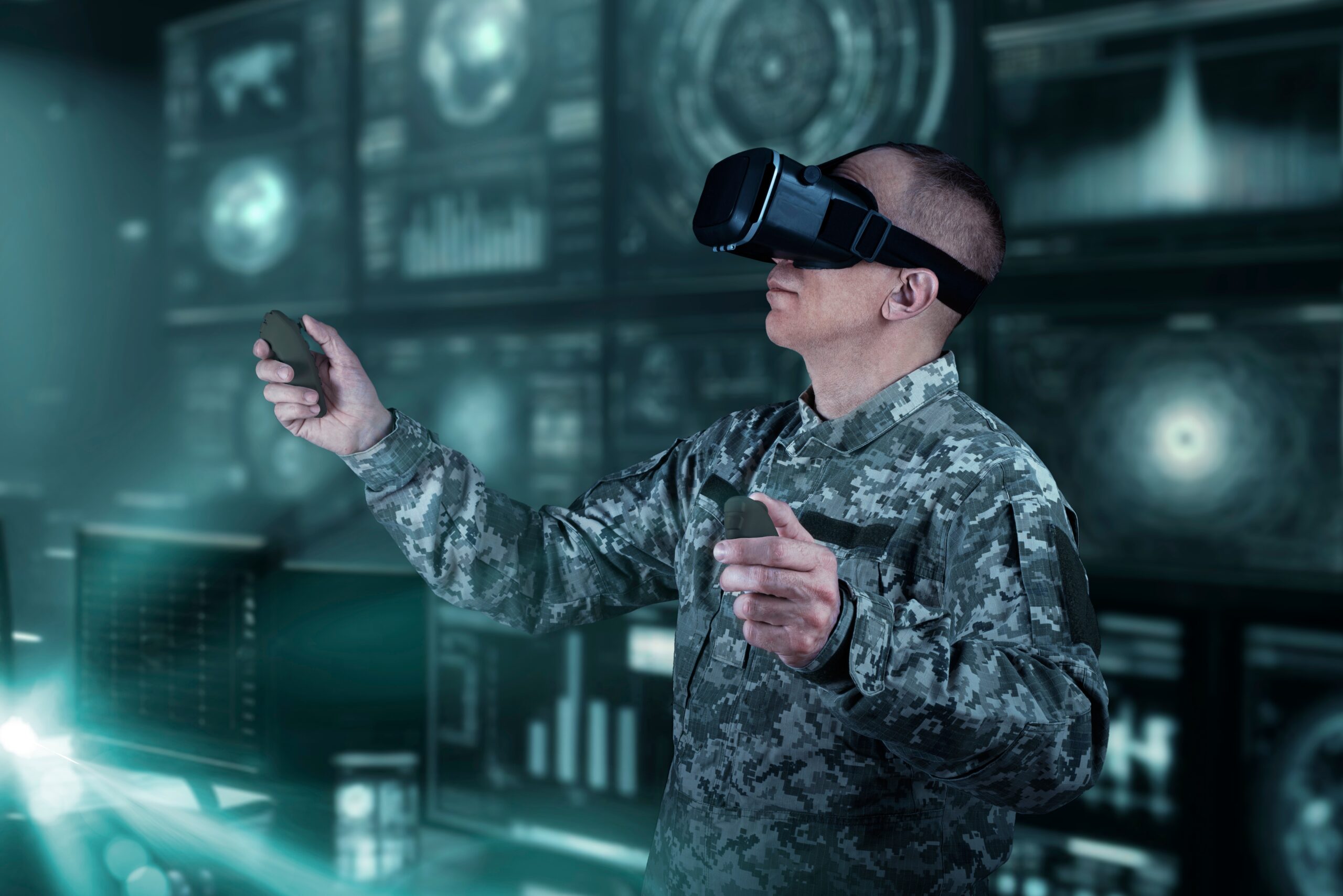
AI also can play an increased role in training. This is already evident in simulations, where it provides real-time feedback, personalizes learning paths and automates mission planning. For example, AI-driven simulators in traditional aviation training offer risk-free environments that adapt to individual progress and accelerate skill acquisition. Modern drone training programs are evolving to incorporate these features. Pilots now learn to operate systems with AI-powered automation, predictive analytics, and autonomous navigation, shifting focus from manual control to strategic oversight. This evolution is crucial to scale drone use in warfare, where autonomy could eventually replace or augment human pilots in routine tasks.

With these advancements, the dream of “one-day warriors” is within reach. AI could condense training to a single day by automating 80-90% of flight operations, so novices can focus on high-level tactics like mission objectives and ethical overrides. Edge AI ensures these systems function reliably offline, allowing quick familiarization without extensive manual practice.Just imagine a recruit spending morning sessions in AI-enhanced simulators that provide instant, adaptive feedback, followed by afternoon oversight of autonomous flights!
This time reduction would radically advance military strategy by enabling surge deployments in crises. For example, in a hypothetical escalation, forces could train and field drone operators overnight. They could overwhelm adversaries with swarms managed by minimal personnel. All of this must be done carefully, however, to ensure AI reliability and prevent errors, address ethical concerns over lethal autonomy and manage power demands that could limit flight times.
Implications for Warfare and Beyond
Ultimately, AI autonomy is about empowering humans to focus on what machines can’t: judgment and strategy. As drone warfare hurtles toward a robot-versus-robot future, slashing pilot training from months to days using AI autonomy will cause major changes in strategy, tactics and personnel considerations for global militaries.
Even beyond the battlefield, in civilian sectors, similar technologies could accelerate drone use in disaster response or agriculture, where quick training could enable rapid response. Shorter training timelines in any sector could lower barriers to entry and attract a broader pool of talent while reducing costs.
Yet, this shift raises questions about over-reliance on AI. Could it lead to skill atrophy or unintended consequences? While some hurdles must be overcome, the potential to save lives and resources makes this innovation a game-changer across all the skies of tomorrow. With edge AI chips driving offline capabilities, the possibility of one-day warriors seems to be, indeed, dawning.