

By: Sarah Nilsson, Autonomy Global Ambassador – Drone and AAM Law
When President Donald Trump signed Executive Order 14307, “Unleashing American Drone Dominance,” on June 6, 2025, he signaled support for uncrewed aircraft systems (UAS) as well as set the stage for a national push to bring electric vertical takeoff and landing (eVTOL) vehicles and Advanced Air Mobility (AAM) into everyday American life.
That directive tasked the U.S. Department of Transportation (DOT), working through the Federal Aviation Administration (FAA) and in coordination with the White House Office of Science and Technology Policy (OSTP), to establish the eVTOL Integration Pilot Program (eIPP), as an extension of the FAA’s earlier BEYOND initiative. The stated goal involves accelerating safe, lawful eVTOL operations across the United States (U.S.) while building the data and regulatory foundation for commercial scale.
“The Secretary of Transportation, acting through the Administrator of the FAA, and in coordination with the Director of OSTP, shall establish the eVTOL Integration Pilot Program (eIPP) as an extension of the BEYOND program to accelerate the deployment of safe and lawful eVTOL operations in the United States.”
– Executive Order 14307
On September 12, 2025, DOT Secretary Sean Duffy unveiled the framework for this new pilot program and a broader plan to fast-track AAM vehicles, including eVTOLs. The initiative aims to expand connectivity to rural communities, relieve gridlock in urban corridors, create high-value jobs, strengthen emergency and medical response and ensure the U.S. leads in next-generation aviation.
Inside the eIPP Mission
At its core, the eIPP is a public–private partnership framework. State, local, tribal and territorial governments will team up with U.S.-based private-sector partners to conduct real-world eVTOL and AAM operations under FAA oversight.
Initially, the FAA expected the eIPP to include at least five pilot projects and operate for three years after the first project becomes active. Interest was so high that DOT and FAA selected eight projects that span 26 states.
We will take the lessons learned from these projects to enable safe, scalable AAM operations nationwide.”
– FAA Administrator Bryan Bedford
The envisioned eVTOL and AAM operations cover a broad spectrum:

- Urban air taxi services for short-range city hops
- Longer-range fixed-wing AAM flights
- Regional passenger transport, including Short Takeoff and Landing (STOL) aircraft
- Cargo and logistics networks for emergency management and medical transport
- Emergency medical response and critical-care airlift
- Increased automation safety and autonomous flight technologies
- Offshore and energy-sector transportation missions
Participating aircraft will be piloted, optionally piloted or uncrewed AAM platforms generally over 1,320 lb and, in many cases, capable of carrying passengers. Projects will also bring in enabling technologies to safely integrate these aircraft into the National Airspace System (NAS).
More than 30 proposals were submitted nationwide. A joint DOT–FAA technical review team selected finalists. On March 9, 2026, DOT and FAA announced the eight winning proposals. All reflect geographic diversity, strong industry collaboration and a deliberate focus on safety and infrastructure readiness. Together, these projects will create one of the world’s largest real-world testbeds for AAM and eVTOL aircraft. The FAA expects operations to begin as soon as summer 2026.
Eight Projects, One National Testbed
1. Port Authority of New York and New Jersey
The Port Authority-led project will explore 12 operational concepts across one of the world’s most complex aviation regions. Multiple industry partners will use dense New York–New Jersey airspace as a proving ground for electric air taxis, regional AAM services and logistics missions:
- Archer will prepare for Midnight eVTOL flights, building local operating teams, infrastructure and procedures with an eye toward early operations in the second half of 2026. The company expects these activities to generate valuable experience for future U.S. deployments and to build public confidence ahead of its planned air taxi services for the 2028 Los Angeles Olympic Games.
- BETA will operate cargo and medical logistics missions in upstate New York and Vermont, partnering with Metro Aviation.
- Electra will support an ultra-short takeoff and landing route linking New Jersey and New York City in partnership with Signature Aviation and Vertiports by Atlantic, using existing heliports to offer lower-noise, faster alternatives to both ground congestion and conventional aviation.
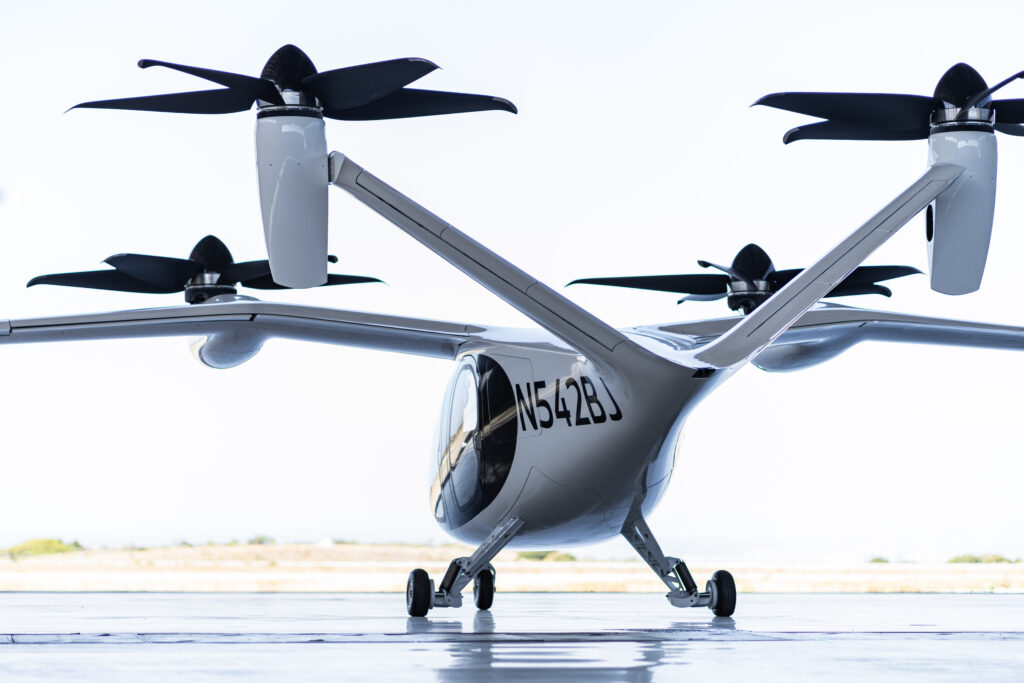
- Joby plans multiple AAM concepts across New England, including air taxi passenger operations from Manhattan’s heliport, starting as early as this year.
2. Texas Department of Transportation
Texas has positioned itself as a major AAM corridor. It will connect cities like Dallas, Austin, San Antonio and eventually Houston with regional AAM flights and urban air taxi networks.
Archer will again deploy its Midnight eVTOL, standing up operations teams and infrastructure as it moves toward commercial service in the latter half of 2026. BETA will support medical and cargo logistics across Texas in partnership with Metro Aviation, Bristow Group and Future Flight Global.
Joby could launch early air taxi operations in the state. This would mark a pivotal step for the U.S. air taxi industry and accelerate its path to full commercial services.
Perhaps the most forward-leaning element in Texas involves Wisk Aero, which brings an autonomy-first approach and its Gen 6, fully autonomous aircraft. Wisk’s participation follows a three-phase “crawl–walk–run” model:
- Initial Phase: Focused flight operations in dedicated areas to refine autonomous systems, procedures and ground coordination.
- Integration Phase: Dedicated routes to validate safety cases and prove seamless integration of autonomous aircraft in existing traffic.
- Advanced Operations Phase: High-frequency Gen 6 operations to supply the FAA with data needed for certification, policy, and Automated Flight Rules (AFR) development.
Data from these missions will inform regulatory gaps around airworthiness, ground risk, pilot or remote supervisor roles and scalable airspace management. Wisk’s Gen 6 aircraft, now in flight testing after a first flight in December 2025, remains the only U.S. eVTOL platform pursuing an autonomy-first certification strategy.
3. Utah Department of Transportation: uFLY – AAM Crossroads to the West
Utah leads a four-state coalition with Arizona, Idaho, Oregon and Oklahoma to test AAM concepts spanning the Pacific Northwest, Rocky Mountains and Plains.
The effort builds on “Project ALTA” (the Air Logistics Transportation Alliance) launched in May 2024 by 47G and public-sector partners to accelerate AAM planning, public–private partnerships and infrastructure readiness in Utah.
47G, now with more than 200 members, continues to position Utah as a premier ecosystem for aerospace and defense innovation. Utah’s selection should come as no surprise, given its designation of Salt Lake City as host for the Winter Olympics in 2034 (February 10–26, 2034).
The uFLY project pulls together over 30 public and private partners, including Alpine Air, Ampaire, ANRA Technologies, BETA Technologies, Future Flight Global (FFG), Joby Aviation, Jump Aero, Sikorsky (a Lockheed Martin company) and Skyway Technologies. (See prior AG News involving FFG and the eIPP).
BETA will execute cargo and medical logistics to rural communities with UPS, Alpine Air Express, and Bristow Group. Joby could again start early air taxi operations and serve as a springboard for commercial AAM services.
4. Pennsylvania Department of Transportation and the NASAO Multistate Collaborative
The Pennsylvania-led project leverages the National Association of State Aviation Officials (NASAO) AAM Multistate Collaborative to revitalize regional aviation. The Collaborative focuses on how states can shape AAM policy, infrastructure and integration into the NAS. Members span more than 30 states from Alabama and Alaska to Virginia, Washington, and Wisconsin. (See prior AG coverage of the NASAO AAM Multistate Collaborative).

Key missions include modernizing thin and underserved routes that today depend on programs similar to Essential Air Service, then extending that model with AAM platforms to restore and enhance 50–500‑mile regional links between smaller communities and larger hubs. These efforts focus on replacing or supplementing legacy turboprop service with quieter, lower‑emission aircraft, improving service frequency, reliability and access while keeping operating costs in check for carriers and communities.
BETA will partner in Maryland and Virginia on organ-delivery logistics with United Therapeutics. Electra Aero will demonstrate ultra-short access points from Atlantic City to regional destinations, including feeder service into Philadelphia International Airport. The company designed its hybrid-electric e-STOL aircraft to operate from compact 300- to 400-square-foot sites, using existing aviation and medical infrastructure to serve emergency response, medical flights and cargo missions. (See prior AG News coverage of Electra e-STOL and eIPP).
5. Louisiana
Louisiana’s project focuses on the Gulf of America and offshore energy operations, pairing AAM logistics with critical personnel and medical transport.
BETA, working with Bristow Group and Metro Aviation, plans onshore logistics support for offshore energy production and medical access in rural communities. Elroy Air will deploy its Chaparral cargo aircraft with Bristow Group and Houma–Terrebonne Airport to move freight around the Gulf region and to energy sites in Louisiana, Texas, and Mississippi. Martin Solutions is also a key part of this initiative. (See prior AG coverage of Martin Solutions & Elroy Air’s bid for the eIPP).
6. Florida Department of Transportation
Florida’s statewide initiative brings multiple partners together in three operational phases focused on cargo delivery, passenger transportation, aviation automation and medical response.
Archer will again prepare Midnight eVTOL operations as early as the second half of 2026 for air taxi services. BETA will run cargo and medical logistics with Republic Airways and Metro Aviation, with the goal of improving connectivity in both urban and rural parts of the state.
Electra will lead another ultra-short access point demonstration to show how AAM can link dense urban cores with regional destinations, working with Vertiports by Atlantic and regional airlines to validate scalable routes. Joby may begin early air taxi operations here as well, adding yet another beachhead for commercial AAM in the U.S.
7. North Carolina Department of Transportation
North Carolina will use AAM to connect communities that traditional commercial aviation simply does not reach. Its proposal emphasizes small electric aircraft that move people and goods between rural towns and major hospitals a few counties away to strengthen regional healthcare networks.
The state plans to launch activities within 90 days, including:
- A public electric aviation demonstration
- Deployment of charging infrastructure
- Operational demos focused on healthcare and emergency response
BETA will run healthcare access and disaster logistics missions with Metro Aviation. Joby, once again, could begin early air taxi operations.
8. City of Albuquerque
Albuquerque’s project zeroes in on autonomous operations by leveraging an existing partnership with Reliable Robotics. The city and Reliable Robotics will integrate autonomous cargo, air taxi and regional services into the NAS to improve logistics and emergency response. Reliable Robotics is known for its autonomous flight systems, including a remotely piloted Cessna Caravan that recently received FAA certification. This project offers the FAA a high-value sandbox for testing automation, remote piloting and system-level integration of autonomous operations.
Why the eIPP Matters for AAM and eVTOL
Taken together, these eight projects form a national laboratory for electric air taxis, hybrid-electric regional aircraft and autonomous flight. They touch almost every major AAM use case including urban air taxis, rural medical access, interstate regional flights, offshore energy logistics, and fully autonomous cargo and passenger operations.
For policymakers and regulators, the eIPP is about gathering operational data at scale, on safety, noise, community acceptance, workforce, traffic management and supply-chain impacts, to inform future rules and standards.
“These partnerships will help us better understand how to safely and efficiently integrate these aircraft into the National Airspace System…The program will provide valuable operational experience that will inform the standards needed to enable safe Advanced Air Mobility operations.”
– FAA Deputy Administrator Chris Rocheleau.
For industry, the eIPP provides a pathway to de-risk business models, prove technology in real environments and build public trust.
The FAA has been explicit that the eIPP does not equate to a shortcut around certification. Aircraft participating in the program must already be in the agency’s type-certification process. Instead, the eIPP will inform standards, policies and concepts like Automated Flight Rules that will eventually support routine AAM and eVTOL operations in U.S. airspace.
If these projects succeed, the American public could soon see eVTOL aircraft and advanced regional platforms move from concept and air shows to daily life: flying patients to trauma centers, moving organs between hospitals, connecting rural towns to major hubs, relieving traffic between cities and quietly shuttling passengers over clogged highways.
In short, through the FAA eIPP, AAM should stop being a future promise and start becoming an operational reality…one test flight, one route and one community at a time.