
By Arie Egozi, Autonomy Global – Ambassador for Israel
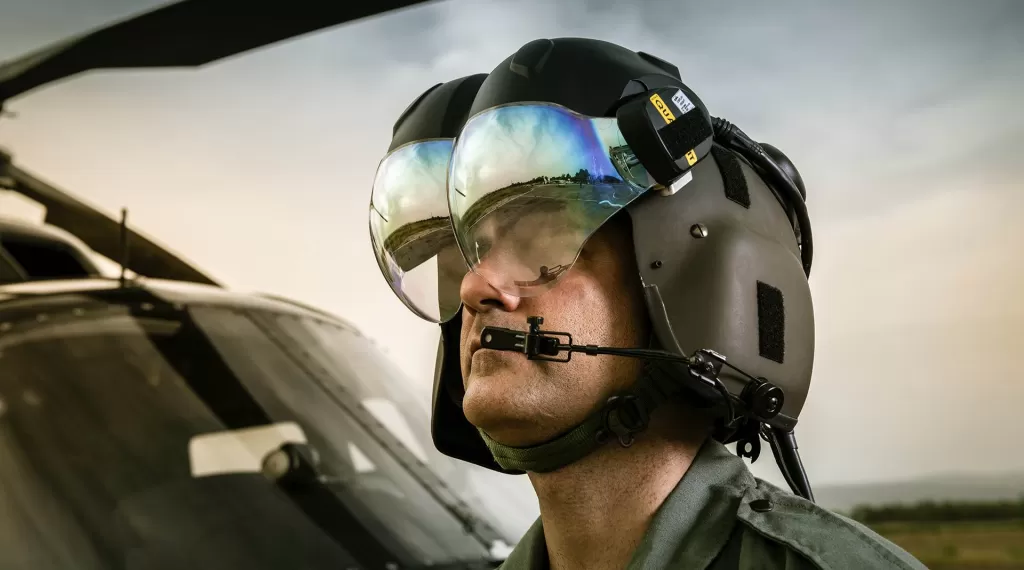
Elbit Systems has infused artificial intelligence (AI) into its latest generation of pilot helmets. Using AI-driven mission computers and advanced sensor fusion, this gives helicopter and fixed‑wing aircrews F‑35–style “see-through” awareness. The result is a class of AI-enabled helmet mounted systems (HMS) designed to cut pilot workload and improve survivability in complex, degraded visual environments.
Elbit Brings AI into the Cockpit
Israeli company Elbit Systems has integrated AI into some of its most advanced pilot helmets, including the X‑Sight augmented reality helmet for helicopters and F‑35‑heritage systems for fast jets. The company designed these AI-enabled helmets to help crews cope with dense threat environments where pure flying skill no longer guarantees air superiority.
In the X‑Sight helicopter helmet, Elbit pairs an AI-powered mission computer with a next-generation sensor suite that fuses inputs from multiple onboard sensors, pre-loaded databases and tactical networks. The result: a unified world model projected on the visor in real time. The same class of data-fusion and decision-support algorithms underpins its fixed‑wing helmets, which build on technology proven in the F‑35 Helmet Mounted Display System.
How the AI Pilot Helmet Works
X‑Sight and Elbit’s broader helicopter vision suite use AI, real-time analytics and machine learning (ML) to let pilots effectively “see through” the airframe. Neural‑network‑based back-end software combines terrain and satellite data with radar, LiDAR, electro‑optical/infrared and other sensors to deliver a stabilized, 360‑degree synthetic picture on the visor with minimal latency.
The AI side focuses on sensor fusion, adaptive processing and decision support to automatically highlight obstacles, wires, terrain and threats earlier than conventional systems. By keeping critical flight, navigation and tactical cues in the pilot’s line of sight, the helmets reduce head‑down time and cognitive load. This frees crews to concentrate on flying, maneuvering and mission execution.
Degraded Visual Environments and Survivability
Elbit’s AI-enabled helmets excel in degraded visual environments such as fog, snow, dust, smoke or urban clutter. X‑Sight and the associated helicopter vision suite combine wide‑field‑of‑view augmented reality (AR) symbology with fused sensor imagery to maintain a clear, color picture of terrain, power lines and obstacles even when the naked eye sees only a brownout or whiteout.
Elbit states that it intended this capability to improve safety in low‑level flight, landings to unprepared or obscured landing zones and high‑tempo combat operations. Earlier and more reliable cueing of threats and hazards supports faster decision‑making. This can extend the mission envelope in weather conditions that previously would have grounded aircraft or forced significant risk tradeoffs
Helmet Mounted Systems and Future Pilots
According to Elbit, its HMS’ allow pilots to view flight data, sensor feeds and 3D location-based information directly in their line of sight and to cue sensors and weapons simply by looking at a target. These systems, optimized for both day and night operations, can be delivered as part of full avionics upgrades or as stand‑alone enhancements.
As Elbit iterates on its X‑Sight, Zero‑G and related helmets, the company increasingly brands newer generations as AI-powered.For next‑generation helicopter and fighter pilots, AI in the helmet has become a core enabler of survivability, mission effectiveness and the ability to fight and land safely in the most challenging environments.