
By: Dawn Zoldi*
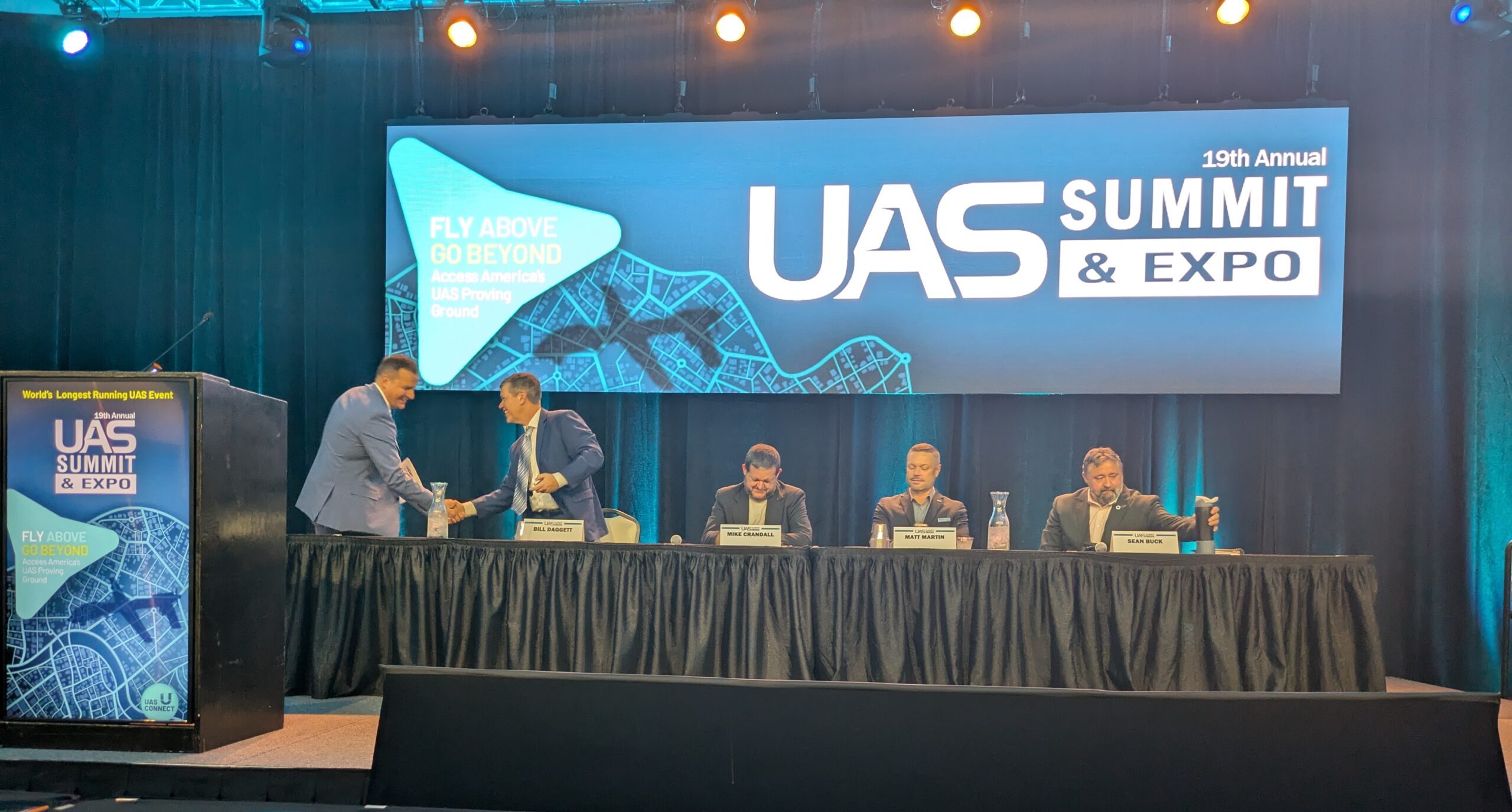
Modern defense is a moving target. Sweeping changes driven by emerging cyber threats, next-generation unmanned systems and artificial intelligence, compliance requirements and, most notably, the real-world lessons provided by the Ukraine conflict have forever impacted warfare. At this year’s UAS Summit, military leaders, technologists, policy experts and innovators came together to discuss building U.S. defense readiness in light of these developments. This article sheds light on some of the insights shared.
The Ukraine Catalyst: Accelerated Innovation and Multi-Domain Integration
The most compelling and urgent lessons at the Summit came from firsthand experiences in Ukraine, now widely recognized as the crucible for the world’s fastest-evolving unmanned systems campaign. What began as improvisational use of commercial drones has rapidly matured into an industrialized application of multi-domain unmanned warfare. This has changed strategy and expectations for every military power.
Panelists described how Ukraine and Russia now employ networks of air, ground and maritime drones in unified operations to enable everything from strike missions on distant targets and rapid casualty evacuation, to direct maritime attacks.

The Ukraine conflict’s most profound impact, however, has been how it forced the military and industry to rethink everything from how systems are built and used to how procurement, innovation cycles and field-testing must change to keep up. Three key takeaways for the U.S. defense ecosystem included:
- Necessary Rapid Iteration: Ukrainian forces have demonstrated an exceptional capacity to transition from prototype to operational deployment in mere months, not years.This dynamic has been driven by necessity. Fast, wartime adaptation is essential to survival. This also leads to continual iteration.
- Agile Procurement and Realistic Testing: The U.S. must address regulatory and bureaucratic bottlenecks that slow down similar innovation. This includes the need for more agile acquisition policies and realistic battlefield testing environments.
- Integration and Interoperability: Standards for unmanned assets must be widely agreed upon between allies, ensuring seamless multi-domain operations.
Training for Superior Readiness: AI and Autonomy Front and Center
Experts also dove deep into how autonomy and AI continue to transform both combat and training. The U.S. Air Force and its industry partners, for example, detailed their push to build robust, integrated training environments for both crewed and autonomous systems, such as collaborative combat aircraft (CCA) that will fly in complex formations with manned aircraft.
Simulations also now leverage intelligent agent models to replicate tactical behaviors of allies and adversaries. This pushes the fidelity of mission rehearsal to unprecedented levels. Training environments must now simulate everything from electromagnetic interference (EMI) to space-integrated command and control (C2), so operators learn to thrive in the same dynamics found on the modern battlefield. The essential nature of these next-generation synthetic environments has moved beyond pilots to teams tasked with supervising swarms of autonomous vehicles. In either case, human oversight, decision delegation and new adaptive human-machine interfaces are the new coin of the realm.
Importantly, studies presented at the Summit indicate that real-time measurement of operator cognitive load can be used to dynamically adjust automation within a system, to reduce the risk of overload and failure. This may prove crucial as the number and independence of autonomous wingmen grows. The ultimate vision is to create battle managers who can direct and trust AI-enabled assets to extend reach, survivability, and effectiveness in joint-force operations.
UAS Cyber Compliance: Foundational for Modern Defense
Besides the urgent need to change acquisition practices and update training, panelists urged U.S. defense contractors to master new cyber compliance frameworks, particularly Cybersecurity Maturity Model Certification (CMMC) standards, which will take effect across the defense industrial base. Speakers noted the transition to CMMC Level One or Two will become an unavoidable part of supplier requirements in the next three years. The process demands far more than technical controls. It hinges on exhaustive documentation, internal self-assessment and continuous monitoring. Compliance costs could range from $35,000 to $75,000 or more, depending on organizational complexity and network architecture.
A staggering observation from panelists was that currently 80 percent of companies assessed for compliance fail in Phase One, almost always due to insufficient or mismatched paperwork and a lack of real-world self-audits. Experts recommended regular mock assessments, continuous system monitoring and the use of experienced third-party auditors to offset the cost and risk of noncompliance. Mastery of the human and technical dimensions of cybersecurity, not just “checking boxes,” has become foundational for all advanced defense programs.
Bridging Gaps: Trust, Collaboration and Soft Skills in the UAS Domain
Beyond technology and processes, multiple speakers highlighted the human factors essential to advancing defense readiness. They viewed building trust between operators, commanders, industry partners and international allies as equally critical as any technical achievement. The ability to establish candid, mission-focused conversations early, manage expectations and maintain transparent feedback loops were all emphasized as keys to avoiding costly mistakes and strengthening the U.S. and allied defense posture.
Panelists recounted how the relationships and reputations forged in Ukraine’s crucible are now shaping global perceptions of American defense firms. While they acknowledged historical gaps in trust, a growing appreciation for collaboration and shared progress exists now. Streamlined partnerships and the development of secure, mission-aligned UAS solutions attest to that.
Future-Ready: Strategic Recommendations and Looking Ahead
The intersection of real-world conflict, regulatory shifts, exponential technological change and deep relationships all influence defense readiness. Key recommendations from the Summit for UAS stakeholders in defense include:
- Cybersecurity as a Priority: Commit to robust, continuous compliance and documentation. Weave security engineering into every stage of system design.
- Invest in Training: Intelligent, adaptive simulation environments that mirror real-world operational complexity and stress will make a difference.
- Learn from Others: Accelerate research and operational deployment through flexible acquisition models, leveraging lessons from the Ukraine theater.
- Cooperate to Graduate: Prioritize interoperability and joint-force cooperation at every level, from technical architecture to field exercises.
- Champion Human-Machine Teaming: Build workflows, training and technology that allow operators to manage and trust AI-driven assets.
- Relationships Matter: Foster trust, communication and relationship-building across military, government, industry and international partners.
The UAS Summit illuminated where the future of defense is heading and just how quickly and completely it is changing. From compliance-driven foundation building to collaborative combat simulations and the practical realities of combat innovation, the “new normal” in defense requires agility, collaboration and a commitment to continuous readiness. The experiences from Ukraine call for answers to immediate, pressing challenges and open up opportunities for every American defense and technology leader to heed. By embracing these realities and investing in accelerated, integrated and human-centered innovation, the U.S. and its allies can maintain the decisive edge needed for defense readiness in the age of autonomous war.
*This article was made possible with assistance from Bill Daggett, Founder/Managing Director, Delta Advisory Group.