
By Philip Hicks, Autonomy Global Ambassador – U.K. & Middle East
In Europe, autonomous systems have become the backbone of sovereignty, industrial capability and defence readiness. A continent that once watched others take the lead now moves ahead with a strong ecosystem of its own. The conflict in Ukraine has accelerated the pace and triggered what many are calling an autonomy gold rush across Europe.
Geopolitics, Sovereignty and the Numbers Game
Autonomous systems have moved from futuristic concepts to strategic infrastructure. As vehicles that navigate themselves and drones that monitor coastlines to industrial robots that keep supply chains running and defence systems that respond faster than any human, Europeans wonder: is autonomy a sustainable industrial model, or is the continent caught in a geopolitical rush disguised as innovation? The answer: Europe now treats autonomy as a matter of sovereignty, competitiveness and resilience. Like any endurance race, the real contenders are those that understand the terrain…not the early sprinters.
So what does that terrain look like? For more than a decade, autonomy has been framed as a form of liberation. Yet the aspirations of a driverless Europe, a robotic workforce and a logistics chain without friction still have not completely become reality.
This is where the numbers matter. Globally, the robotics sector is valued at close to 50 billion dollars and is forecast to exceed 110 billion by 2030. Europe accounts for a significant share of this through industrial robotics, defence automation and maritime autonomous systems. Physical AI, which blends sensing, control and autonomous decision making, is projected to grow from about 5 billion in 2025 to nearly 50 billion globally by the early 2030s. And Europe is one of the regions accelerating that shift.
As the promise of universal autonomy fades, a more grounded truth emerges. Autonomy performs best in structured, highly reliable environments with defined outcomes, particularly in industrial robotics, maritime systems, logistics and regulated sectors. Europe happens to excel in such environments.
The Strategic Reality: The European Autonomy Imperative
Autonomy has become a strategic frontier as much as a technological one. The United States sees it as essential to military dominance. China embeds autonomy into state strategy and national planning. Europe’s perspective is shaped instead by sovereignty, safety and industrial independence.
Autonomy in Europe lives between two competing expectations. Investors want software style growth. Defence customers want reliability, certification and integration. Within this tension, Europe has industrial patience. The region rewards systems that work, not systems that pitch well.
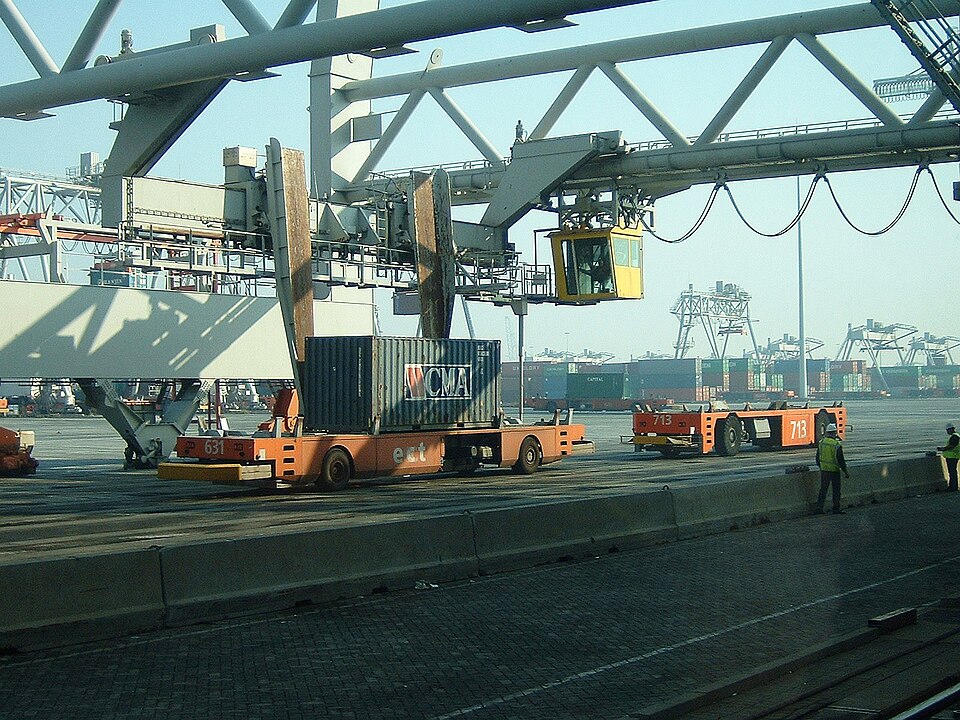
Europe already has numerous mature autonomous systems at work. They move containers in Rotterdam and Antwerp, orchestrate logistics in Germany and Poland, manage rail operations that bind the Single Market and support defence missions along the northern and eastern flanks. Many of these companies operate far from the spotlight.
The Companies Actually Building Europe’s Autonomous Future
If autonomy is more than a geopolitical rush, we should be able to name the companies that are building real systems rather than polished demonstrations. And indeed we can. Across Europe, this new set of autonomy builders is moving from concept to deployment. Their work spans sensors, compute, energy systems, airframes and AI infrastructure. Together they form an ecosystem rather than a list.
Zürich-based ABB Robotics & Discrete Automation provides a great example of how physical autonomy scales beyond drones into factories. ABB deploys industrial and collaborative robots, cells and controls that execute perception, planning and manipulation at production speed. The division generated about $2.3B revenue in FY2024 and continues to invest in AI‑enabled workflows for discrete automation.
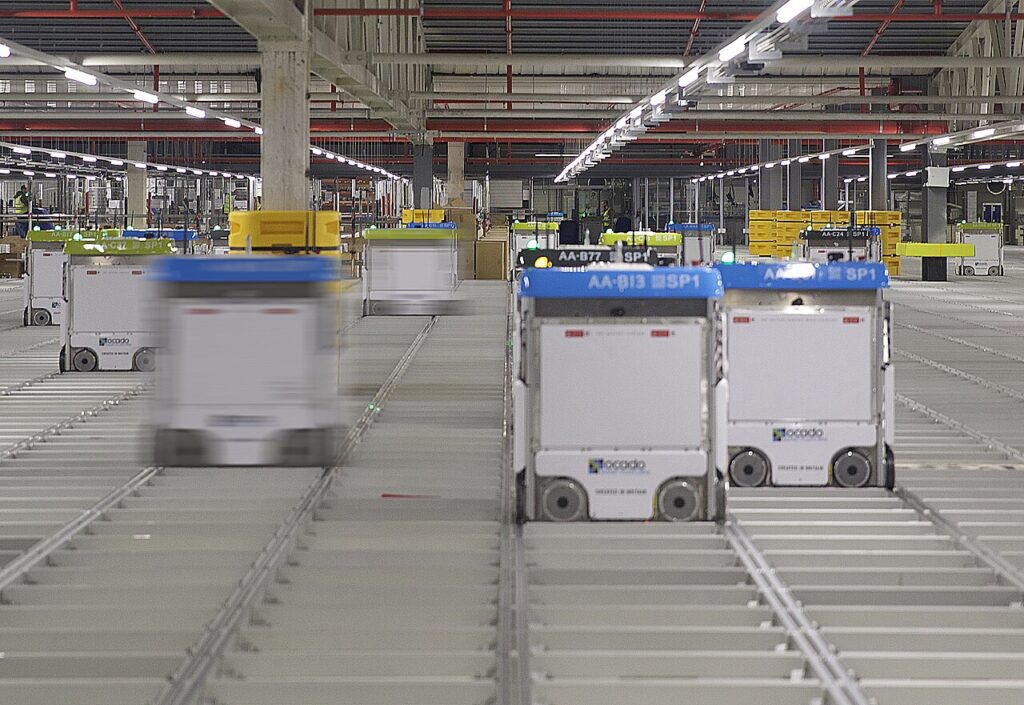
Ocado Group provides end‑to‑end warehouse autonomy on a UK-wide scale. Its Ocado Smart Platform combines Automated Storage and Retrieval System (AS/RS), Autonomous Mobile Robots (AMRs), advanced orchestration and control software to deliver grocer‑grade fulfilment that it now rolls out to partners globally.
In London, Vizgard, a UK based developer of visual autonomy systems, is one of several European firms already contributing autonomous capabilities incorporated into defence and security programmes. Its FortifAI is already moving from lab to field, with integration underway in UK government programmes and unmanned platforms supporting Ukraine. As CEO Alex Kehoe put it, “Sovereign autonomy only matters when it leaves the lab and survives in the field. With FortifAI we are delivering visual autonomy at the edge for UK programmes and allied partners, designed to operate when comms drop, GPS is denied, and decisions cannot wait.”
Palantir, the defence data and AI platform provider with partnerships across European ministries, is embedding AI enabled decision systems that accelerate targeting, command and control and joint operational planning. What began as analytics software has become part of Europe’s tactical and operational backbone.
In Portugal, Tekever, Europe’s leading maritime surveillance uncrewed aerial vehicle (UAV) provider, has built an autonomy as a service model. CEO Ricardo Mendes described the company’s airframes as computing platforms, and the AR3 and AR5 fleets show why. These aircraft provide persistent maritime intelligence for European agencies in a way that blends autonomy, endurance and high-grade sensing. He has stated that drones are here to stay, much like cars, or planes, or computers, or the internet. They will be built into the fabric of our society.
Meanwhile, ePropelled, which develops high-efficiency propulsion systems across its US, UK, and India operations, focuses on the foundational layer of autonomous platforms: energy and motion. Spanning commercial and defence applications, CEO Nick Grewal reframed the issue with a dose of realism. “Autonomy only becomes meaningful when propulsion performance keeps pace. If an aircraft or unmanned system cannot autonomously extend endurance, increase payload, or reduce energy loss,” he argued, “then the autonomy layered above it is not a system. It is a demonstration.” Grewal highlights a blind spot in many autonomy programmes. True autonomy depends on the seamless integration of intelligent energy management, high-efficiency propulsion and onboard decision-making. When any of these lag, the entire system becomes a demo rather than a capability.
In Germany, Helsing, a defence AI company, operating across Germany, France and the UK, has become central to Europe’s autonomy rise. Chairman Daniel Ek has explained, “There is an urgent need for investments in advanced technologies that ensure [Europe’s] strategic autonomy and security readiness.” Europe’s next generation defence Prime, Helsing’s work spans electronic warfare upgrades, AI infrastructure for future combat air systems and classified land, sea and cyber projects shaped by real world lessons from Ukraine.
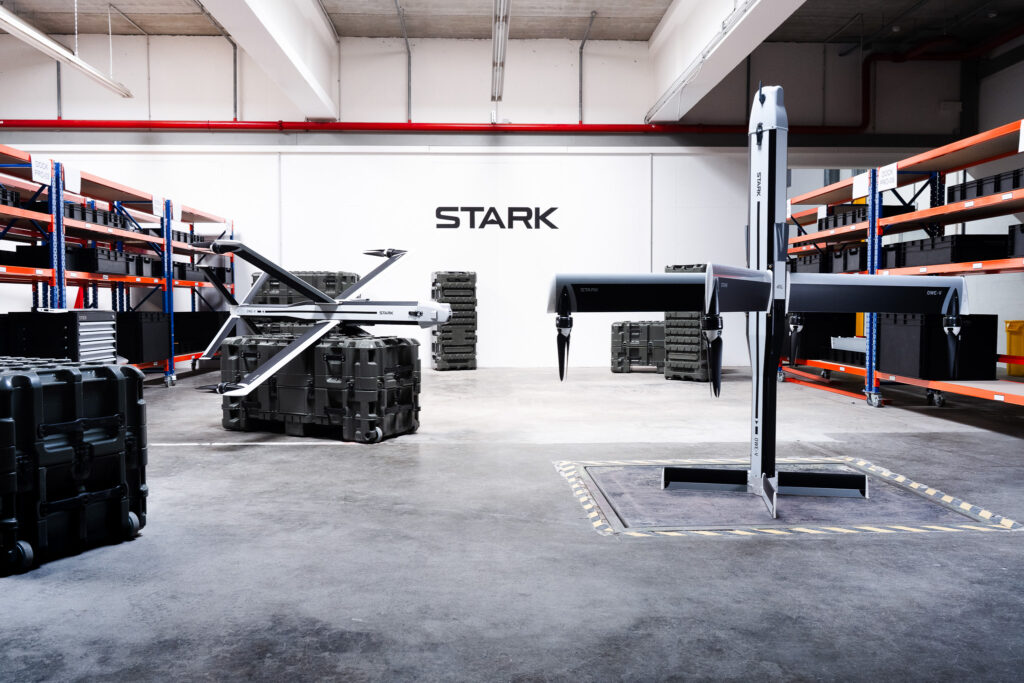
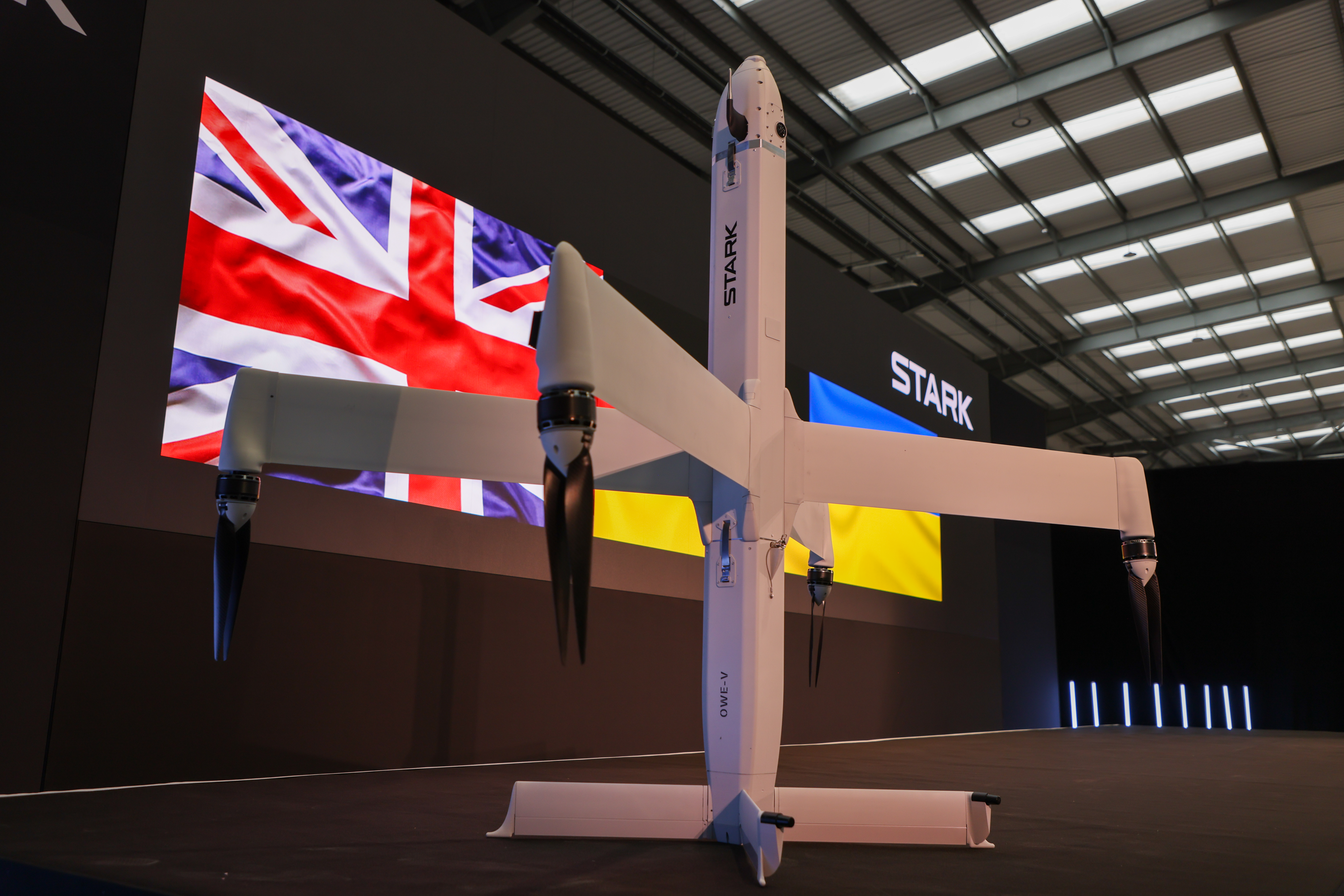
Alongside it, Stark, a German strike drone and autonomous weapons developer, is emerging as one of Europe’s fastest moving companies in contested environment autonomy. Built with feedback from Ukrainian frontline units, Stark’s vertical take off strike drone shows unusual maturity for a young defence firm. When unveiling the system, Philip Lockwood, Managing Director of STARK said, “We cannot win tomorrow’s conflicts with the systems designed for yesterday’s wars.” Stark’s expansion into the UK suggests a strengthening European supply chain for autonomous systems designed for high threat conditions.
At the foundation layer, Nvidia continues to provide the compute infrastructure for physical AI and embodied autonomy across Europe’s industrial and defence programmes. Anduril’s expanding presence in the region reflects Europe’s growing appetite for deployable AI enabled deterrence.
The picture that emerges is not a list of companies but a continental ecosystem. Vision autonomy in London. Decision engines in Berlin and Paris. Maritime intelligence in Lisbon. Propulsion innovation in the UK. Factory autonomy in Zürich and warehouse autonomy in Hatfield. Combat autonomy shaped in Germany and tested in Ukraine. Europe is not waiting for autonomy to arrive. It is building it.
Top Europe Autonomy Companies
Ranking reflects overall autonomy leadership ,not revenue ,based on breadth, maturity and strategic impact of each company’s autonomy technologies. Financials from public sources. Dates reflect the most recent fiscal year each company has published as at time of writing. Currency conversion rate used: 1 EUR ≈ 1.17 USD.
| # | Company | HQ location | What they sell in autonomy terms | FY revenue (EUR) | FY revenue (USD) |
|---|---|---|---|---|---|
| 1 | Thales Group | Paris, France | Multi-domain autonomy and C4ISR platforms across defense, aerospace, sensors and mission systems | €20.6B (FY2024) | ~$21.4B reported |
| 2 | Safran | Paris, France | Avionics, propulsion and autonomy-enabling systems for aircraft and UAVs | €27.3B (FY2024, adjusted) | ~$31.9B converted |
| 3 | Hexagon AB | Stockholm, Sweden | Autonomy stack for industry: sensing, positioning, digital twins and robotic control | ~€5.4B (FY2024) | ~$6.3B converted |
| 4 | ABB Robotics & Discrete Automation | Zürich, Switzerland | Industrial and collaborative robots, cells and controls that underpin physical autonomy | ~$2.3B division revenue (FY2024) | $2.3B reported |
| 5 | AutoStore | Nedre Vats, Norway | Goods-to-person robotic storage system used in autonomous warehouses | $601.4M (FY2024) | $601.4M reported |
| 6 | Ocado Group | Hatfield, UK | End-to-end robotic fulfillment technology, AMRs, control software and orchestration | Not available embedded within group figures, | Not available embedded within group figures, |
| 7 | QinetiQ Group | Farnborough, UK | Robotics and autonomous systems, test and evaluation, mission autonomy for defense | £1.93B (FY2025) | ~$2.49B reported/TTM |
| 8 | Parrot | Paris, France | Professional micro-UAVs and photogrammetry software for ISR and mapping | €78.1M (FY2024) | ~$91.3M converted |
| 9 | Exotec | Croix, France | Skypod robotic AS/RS and software for autonomous intralogistics | €284.6M (FY2023) | ~$332.0M converted |
| 10 | Tekever | Lisbon, Portugal | Maritime ISR autonomy as a service with AR3 and AR5 UAVs | Not disclosed (private) | Not disclosed |
From Gold Rush to Industrial Backbone
Autonomy may have begun as a speculative rush. But in Europe it is becoming something more disciplined and enduring. It is evolving into a strategic and industrial backbone rooted in sovereignty, safety, resilience and operational value. Europe does not chase hype. It builds systems. The real shape of sustainable autonomy: a long-distance race toward systems that deliver measurable value in the real world. Europe has stopped treating autonomy as a future promise. It has started treating it as an industrial responsibility.