
By Arie Egozi, Autonomy Global – Ambassador for Israel
The growing underwater threat from Iran and its proxies has reshaped how Israel, and the world, must think about maritime security. This has driven Rafael Advanced Defense Systems and its subsidiary DSIT to field a new generation of AI-enabled anti-submarine and anti-torpedo systems. These systems combine advanced acoustics, real-time signal processing and deep learning to detect, classify and counter submarines, divers and torpedoes in some of the most challenging environments at sea.
The Rising Tide of Underwater Threats and AI Response
Israeli officials increasingly point to Iranian undersea capabilities and proliferating underwater platforms as a strategic concern in both shallow coastal waters and deep blue water. In response, Rafael has expanded and upgraded its portfolio of passive and active underwater systems, adding AI to improve detection speed, classification accuracy and automatic response.
Rafael’s underwater systems now embed these operational AI elements across anti-submarine warfare (ASW), anti-torpedo defense and underwater communications. This allows naval forces to shorten the kill chain against stealthy underwater threats. Deep learning models, including Convolutional Neural Networks (CNN), are used to analyze acoustic data and underwater imagery in real time to predict target motion even in noisy, cluttered conditions.
Protected Submarine Connectivity
Modern undersea warfare depends on secure, low‑probability-of-detection connectivity, an area where Rafael has focused heavily:
The FloatLink system is launched from a submarine torpedo tube and rises to the surface, where it deploys a SATCOM antenna to provide two-way communications with headquarters while keeping the submarine hidden below the surface.
Deep Link delivers low-probability-of-intercept acoustic networking for divers and submarines, supporting multi-hop messaging in harbors, coastal areas and deep water.
BROADLINK is a wideband modem tailored for high-rate data exchange between underwater assets such as unmanned underwater vehicles (UUVs) and submarines, supporting collaborative undersea operations.
Rafael designed these systems to preserve stealth while ensuring reliable command-and-control (C2), a critical requirement as more autonomous and semi-autonomous underwater platforms enter service.
AI-Enabled Torpedo Defense
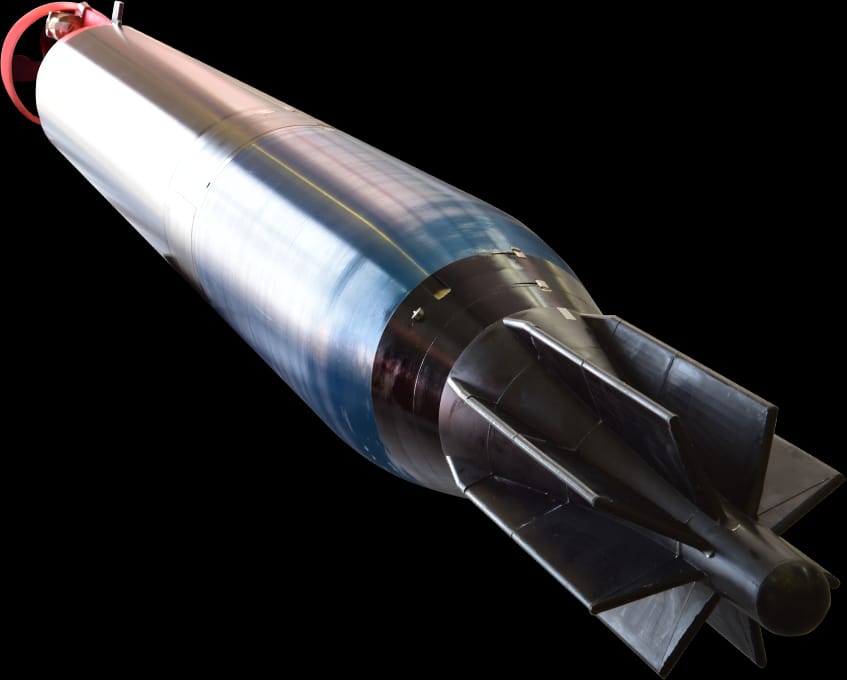
Rafael has also fielded a layered torpedo defense suite that blends soft-kill deception and hard-kill neutralization, with AI for faster, more accurate threat recognition and response decisions.
Lescut is an intelligent decoy for surface ships that autonomously detects incoming acoustic torpedoes, consults a threat library and emits tailored deception signals before self-destructing after about ten minutes of operation.
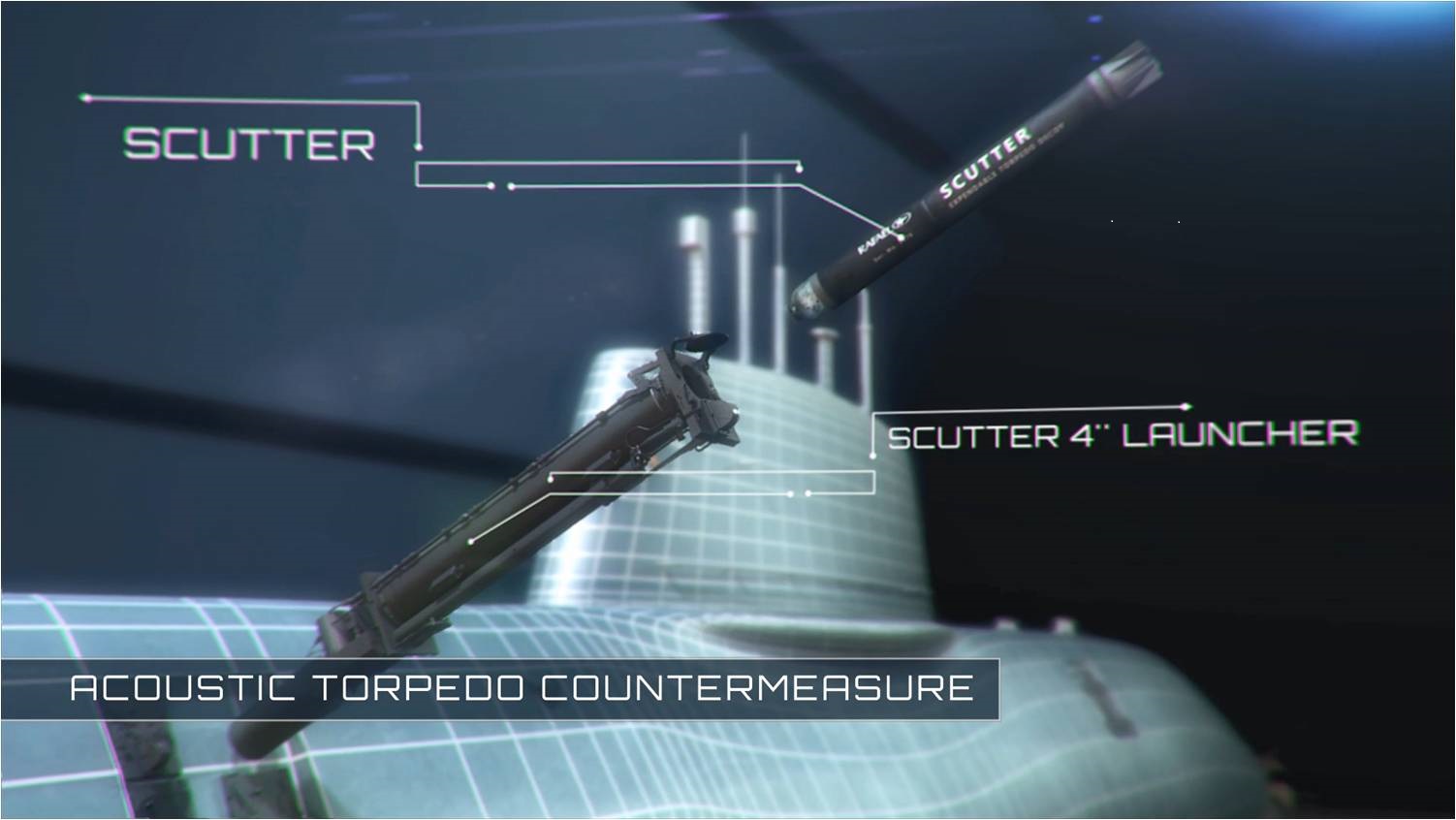
Scutter protects both submarines and surface vessels by launching into the water, analyzing active and passive torpedo signatures,and generating customized acoustic deception patterns to draw weapons away from the protected platform.
Torbuster combines soft-kill and hard-kill in one system. It initially seduces the torpedo and then maneuvers to a safe distance before detonating to destroy the incoming weapon, including in shallow littoral waters where engagements are particularly complex.
This integrated approach gives navies multiple layers of defense against sophisticated torpedoes, including those that can change depth and course mid-run.
DSIT Sonar and Coastal Surveillance
Rafael’s subsidiary DSIT has emerged as a key player in fixed and mobile sonar solutions that rely on AI to handle complex acoustic environments with minimal false alarms.
SeaShield is a fixed, long-range coastal surveillance sonar designed to detect submarines, divers, and other underwater threats approaching critical infrastructure or naval bases.
AquaShield is a shorter-range diver detection sonar optimized for ports, offshore platforms, and high-value maritime facilities, and can be integrated with SeaShield for layered coverage.
These systems use AI to distinguish between benign underwater sounds and true threats. They automatically classify contacts and reduce the operator workload while maintaining high sensitivity.
Deep Learning for Real-Time Classification
Across Rafael and DSIT’s underwater product lines, deep learning algorithms remain central to performance. CNNs process acoustic signatures and underwater video feeds on the fly. This enables the systems to not only identify and classify objects, but also predict their future position based on motion history.
This predictive capability is particularly important in high-clutter coastal zones, where fast, accurate classification and tracking can mean the difference between intercepting an adversary or losing contact in background noise.
As adversaries invest in quieter submarines, UUVs and novel torpedo designs, Rafael’s AI-enabled undersea systems are positioned to play a growing role in securing strategic waterways for Israel and its partners.